
Getting new clients as an accountant can feel like a challenge, especially when you’re competing with larger firms that have bigger marketing budgets. Traditional methods like referrals and networking still work, but they take time to build momentum. That’s where modern marketing tools come in to help level the playing field.
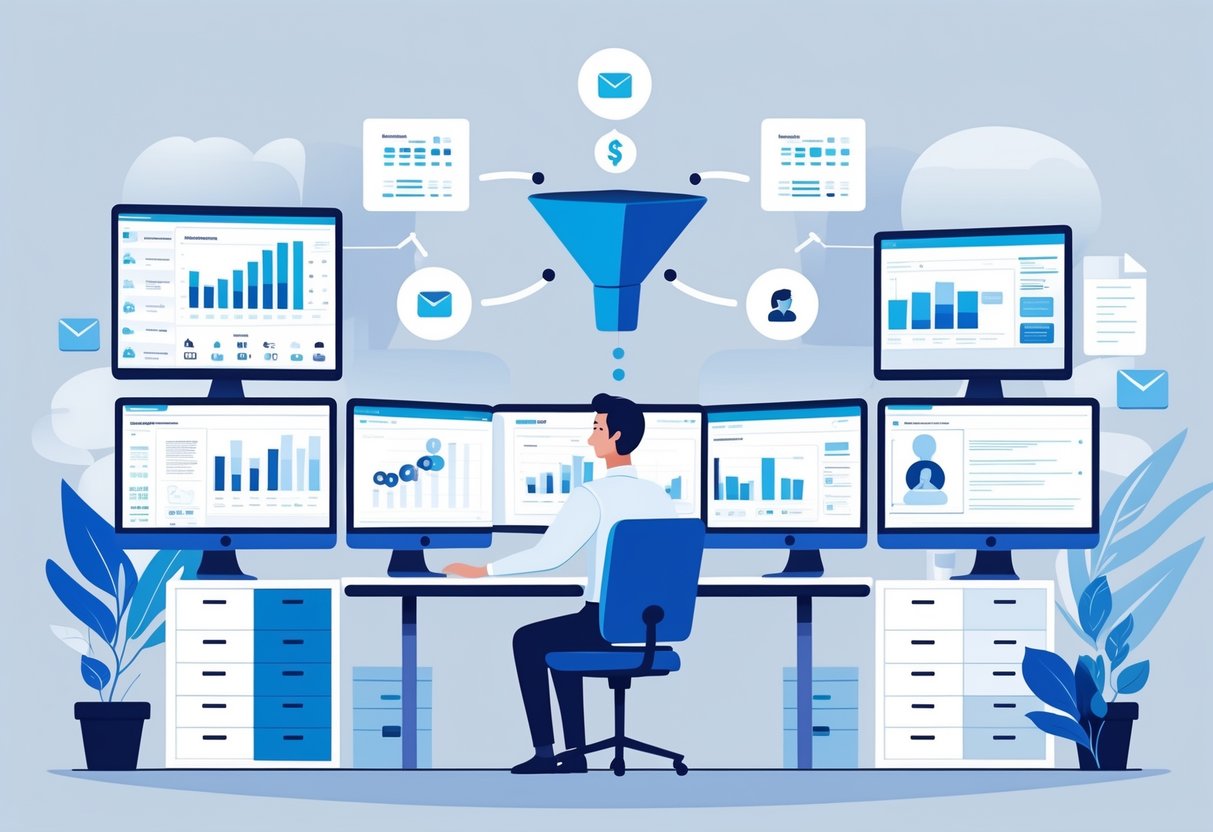
ClickFunnels is a software platform that helps accountants create websites and automated systems to attract leads, showcase their services, and convert visitors into paying clients. Instead of hiring a web developer or marketing team, you can build professional landing pages and set up email campaigns yourself. The platform gives you templates and tools designed specifically for selling services rather than physical products.
We’ll walk you through how ClickFunnels works for accounting businesses and show you practical ways to use it. You’ll learn about the key features that matter most, how to build pages that actually convert visitors, and ways to automate your marketing so you can focus on serving clients. Whether you’re a solo practitioner or running a small firm, this guide will help you understand if ClickFunnels is the right fit for your practice.
What Is ClickFunnels for Accountants?
ClickFunnels is a cloud-based software platform that helps us build marketing funnels specifically designed to attract potential clients and convert them into paying customers. For accountants, it offers tools to create landing pages, automate client communication, and manage the entire journey from first contact to signed agreement.
How ClickFunnels Supports Accountants
ClickFunnels gives us a complete system for managing our accounting practice’s online presence. We can build landing pages that capture leads, set up automated email sequences, and create booking systems for consultations.
The platform lets us design multiple pages that work together as a funnel. A visitor might first see an educational page about tax services, then move to a page offering a free consultation, and finally reach a scheduling page. Each step guides potential clients closer to hiring us.
We can also automate follow-up messages and reminders. When someone fills out a form, ClickFunnels can automatically send them relevant information about our services. This saves us time while keeping prospects engaged.
The software includes templates built specifically for service businesses like accounting firms. We don’t need to know how to code or design websites from scratch.
Difference Between Marketing Funnels and Traditional Accounting Websites
Traditional accounting websites typically function as online brochures. They list our services, show our credentials, and provide contact information. Visitors can browse freely but often leave without taking action.
Marketing funnels guide visitors through a specific path. Each page has one clear goal, whether that’s downloading a tax guide or scheduling a call. We eliminate distractions and focus visitors on the next step.
Traditional websites give us limited data about visitor behavior. Marketing funnels track exactly where people enter, which pages they visit, and where they drop off. This information helps us improve our conversion rates.
Funnels for accountants also qualify leads automatically. We can ask questions that help us understand if someone needs tax preparation, bookkeeping, or business consulting before they book time with us.
Key Features of ClickFunnels for Accountants
ClickFunnels provides accounting professionals with tools to attract clients and grow their practice online. The platform combines funnel creation, page editing, scheduling tools, and payment systems into one place.
Sales Funnel Builder
The funnel builder is the main tool that helps us guide potential clients from their first visit to becoming paying customers. We can create different types of sales funnels for various accounting services like tax preparation, bookkeeping, or financial consulting.
ClickFunnels offers pre-built templates designed specifically for service businesses. These templates include pages for lead capture, service descriptions, and booking confirmations. We don’t need to start from scratch.
The platform lets us set up multi-step funnels that educate prospects about our services. For example, we can offer a free tax planning guide on the first page, then direct visitors to a consultation booking page. The funnel builder connects all these steps automatically.
We can also track how people move through our funnels with built-in analytics. This data shows us where potential clients drop off so we can improve our conversion rates.
Drag-and-Drop Editor
The drag-and-drop editor makes it simple to customize landing pages and forms without coding skills. We just click on any element and move it where we want it on the page.
We can add text blocks, images, videos, buttons, and form fields by dragging them from a menu onto our page. Each element can be customized with different colors, fonts, and sizes to match our brand.
The editor shows us exactly how our pages will look on phones and tablets. We can adjust the mobile version separately to make sure everything displays correctly on smaller screens. This matters because many people browse on their phones.
Changes appear instantly as we make them. We can preview our pages before publishing to catch any issues.
Appointment Scheduling Integration
ClickFunnels connects with popular scheduling tools to automate our appointment booking process. When someone wants a consultation, they can pick an available time slot right from our funnel.
The integration syncs with our calendar to show only our open time slots. This prevents double-bookings and reduces back-and-forth emails about availability.
After booking, clients receive automatic confirmation emails with meeting details. We can also set up reminder emails that go out a day or an hour before the appointment. This cuts down on no-shows.
The scheduling feature works directly in our funnels. Potential clients never have to leave our page to book a meeting, which increases the chances they’ll follow through.
Payment Processing Capabilities
ClickFunnels includes built-in payment processing so we can collect payments directly through our funnels. We can charge for consultations, accept retainer fees, or sell packages of services.
The platform connects with major payment gateways including Stripe and PayPal. We just link our existing merchant account, and payments flow directly to us. ClickFunnels handles the secure checkout process.
We can set up one-time payments or recurring billing for ongoing services like monthly bookkeeping. The system automatically charges clients on their billing date and manages subscription renewals.
The payment system also creates order receipts and sends them to clients automatically. We get notifications when payments come through and can view all transactions in our dashboard.
Building Effective Accountant Sales Funnels
A well-designed accountant sales funnel guides potential clients from initial awareness to becoming long-term customers. The key is creating a structured path that builds trust while demonstrating your expertise at each stage.
Structuring an Accountant Sales Funnel
We need to organize our accountant sales funnel into clear stages that move prospects toward hiring us. The top of the funnel attracts people who need accounting help through content like blog posts or social media. The middle stage warms them up with educational resources and demonstrations of our expertise.
The bottom of the funnel is where we convert interested prospects into paying clients. This includes consultation calls, service presentations, and proposals. Each stage should naturally lead to the next without overwhelming potential clients.
We should map out what happens at each point. For example, someone might download a tax guide, then receive email tips, then book a discovery call. This creates a smooth journey that feels helpful rather than pushy.
Value Ladder Sales Funnel Model
The value ladder works perfectly for accounting services because we can offer increasing levels of service. We start by giving away something free or low-cost to prove our expertise. This might be a tax checklist or a 15-minute consultation.
The next step up might be a specific service like tax preparation. After clients see results, we can offer more comprehensive services like monthly bookkeeping or financial planning. The highest level includes ongoing advisory services and strategic consulting.
This model works because clients can test our services without major commitment. As they experience wins, they naturally want more help. We build the relationship over time instead of trying to sell everything at once.
Incorporating Lead Magnets
Lead magnets are free resources we offer in exchange for contact information. For accountants, effective lead magnets solve specific problems our ideal clients face. A tax deduction guide for small business owners works better than a generic financial tips PDF.
We can create lead magnets like calculators, checklists, templates, or short video trainings. The key is making them immediately useful and relevant to services we offer. If someone downloads our “Quarterly Tax Planning Worksheet,” we know they need tax help.
ClickFunnels makes it easy to create landing pages for these lead magnets. We can set up automatic email sequences that deliver the resource and continue providing value. This keeps us top of mind when they’re ready to hire an accountant.
Optimizing for Recurring Revenue
Recurring revenue creates stability for our accounting practice. We want to guide clients toward monthly retainer services rather than one-time projects. Our funnel should emphasize ongoing relationships and continuous support.
We can structure our offers to make monthly services the obvious choice. Show the cost difference between ad-hoc work versus a monthly package. Highlight benefits like priority access, regular check-ins, and proactive financial guidance.
Recurring service examples:
- Monthly bookkeeping and financial reporting
- Quarterly tax planning sessions
- Ongoing advisory calls
- Year-round tax preparation and filing
We should build retention into our funnel from the start. Set expectations that accounting is ongoing, not a once-per-year task. Use ClickFunnels to create membership areas where monthly clients access exclusive resources and support.
Creating Compelling Landing Pages and Squeeze Pages
Landing pages and squeeze pages serve as the foundation for capturing client information and converting website visitors into accounting clients. Effective design choices, strategic page elements, and ongoing testing help us maximize conversions and grow our accounting practice.
Design Choices for Landing Pages
We need to keep our landing page design simple and focused on one clear action. A clean layout with plenty of white space helps potential clients focus on our message without distraction.
Our color scheme should align with our accounting brand while using contrast to highlight important elements like call-to-action buttons. Professional images of our team or office space build trust better than generic stock photos.
The page layout should follow a natural reading pattern. We place our headline at the top, followed by benefits in the middle, and a strong call-to-action near the bottom. Mobile responsiveness is critical since many clients will view our page on their phones.
Key design elements to include:
- Clear headline stating the main benefit
- Brief description of our accounting services (2-3 sentences)
- Trust indicators (certifications, client testimonials, years in business)
- Single, prominent call-to-action button
- Contact information or chat option
Elements of High-Converting Squeeze Pages
Squeeze pages focus entirely on collecting email addresses through an opt-in form. We offer something valuable in exchange, like a free tax planning guide or bookkeeping checklist.
The opt-in form should be short and easy to complete. We typically ask for just a name and email address. Adding too many fields decreases conversions.
Our headline needs to clearly communicate the benefit clients will receive. “Download Your 2026 Tax Deduction Checklist” works better than “Sign Up For Our Newsletter.”
Essential squeeze page components:
| Element | Purpose |
|---|---|
| Benefit-driven headline | Captures attention immediately |
| Brief bullet points | Shows what clients will receive |
| Opt-in form | Collects contact information |
| Privacy statement | Builds trust and compliance |
| Strong CTA button | Prompts action with clear text |
We remove navigation menus from squeeze pages to keep visitors focused on the single goal of signing up.
A/B Testing for Conversion Optimization
A/B testing lets us compare two versions of a page to see which performs better. We change one element at a time to understand what impacts conversion rates.
We start by testing major elements like headlines or call-to-action button text. For example, we might test “Get Your Free Guide” against “Download Now” to see which generates more opt-ins.
Button colors, form placement, and image choices are all worth testing. Small changes can lead to significant improvements in conversion rates over time.
We run each test until we have enough data to make a confident decision. This usually means at least 100 conversions or two weeks of traffic. ClickFunnels provides built-in analytics to track which version performs better.
Once we identify a winner, we implement it and move on to testing the next element. This ongoing process helps us continuously improve our landing pages and squeeze page funnels.
Email Marketing and Automation Strategies
ClickFunnels gives us powerful tools to connect with clients and prospects through email. We can set up automated sequences that send the right message at the right time without manual work.
The Follow-Up Funnels feature lets us create email sequences that nurture relationships automatically. When someone fills out an opt-in form on our landing page, they enter a pre-written email series. This means we can send welcome emails, tax reminders, and service information while focusing on client work.
Key automation strategies we can use:
- Welcome sequences for new subscribers
- Seasonal tax deadline reminders
- Educational content about accounting topics
- Service promotion emails
- Re-engagement campaigns for inactive contacts
Marketing automation helps us stay consistent with our messaging. We can segment our email list based on client needs and send targeted content. For example, small business owners might receive emails about bookkeeping services while individuals get tax planning tips.
We should track important metrics like open rates and click rates to see what works. This data helps us improve our campaigns over time.
The platform lets us personalize emails with client names and specific details. Personal touches make our messages feel less robotic and more genuine. We can also set up triggers based on client actions, like visiting our pricing page or downloading a guide.
Email marketing through ClickFunnels keeps us connected to our audience without requiring hours of manual effort each week.
Advanced Tools and Opportunities with ClickFunnels
ClickFunnels offers features that go beyond basic funnel building, which can open new revenue streams for our accounting practices. We can create and sell online courses about tax planning, bookkeeping basics, or financial management. The platform’s course creation tools let us build professional training programs without technical skills.
Membership funnels are another powerful option. We can set up exclusive content areas where clients pay monthly for ongoing support, templates, or financial resources. This creates predictable recurring income for our firm.
The affiliate management system helps us grow through partnerships. We can recruit other professionals or satisfied clients to refer new business, and the platform tracks commissions automatically. This takes the headache out of managing referral programs.
Key Advanced Features:
- Course creation tools with video hosting
- Membership site management
- Built-in affiliate tracking
- Payment processing integration
- Email automation for course delivery
Analytics give us data about what’s working in our funnels. We can see where potential clients drop off and make improvements. The platform tracks conversion rates, page views, and sales metrics in one dashboard.
We can also combine these tools. For example, we might create a free mini-course to attract leads, then offer a paid membership program with advanced content. The affiliate management feature lets satisfied members promote our services to other business owners.
These advanced capabilities turn ClickFunnels into more than just a marketing tool. It becomes a complete platform for expanding our accounting practice into new areas.
Getting Started with ClickFunnels as an Accountant
Setting up ClickFunnels for your accounting practice is straightforward, even if you’ve never built a sales funnel before. We recommend starting with the free trial to explore the platform without any financial commitment.
Once you create your account, you’ll need to configure a few basic settings. This includes connecting your custom domain name and setting up your email preferences. The dashboard gives you access to all the main features you’ll use regularly.
Here’s what to focus on first:
- Create your workspace and add billing information
- Connect your domain for professional branding
- Set up email integrations for client communication
- Explore the pre-built templates designed for service providers
ClickFunnels offers templates specifically for accountants and CPAs. These templates help you build landing pages for tax services, bookkeeping packages, or consultation bookings. You can customize them using the drag-and-drop editor without any coding skills.
We suggest starting with a simple lead generation funnel. This type of sales funnel collects contact information from potential clients who want to learn more about your services.
If you’re completely new to building funnels, consider joining the One Funnel Away Challenge. This training program walks you through creating your first funnel step by step. It’s designed for beginners and gives you daily lessons to follow.
The platform also includes analytics tools to track how many visitors view your pages and how many become leads. This data helps you understand what’s working and what needs improvement in your marketing efforts.