

Getting more photography clients doesn’t have to feel like an uphill battle. ClickFunnels is a marketing tool that helps photographers capture interested leads and turn them into paying clients through automated sales funnels and custom landing pages. Instead of relying only on social media or word of mouth, we can use this platform to build a system that works for us around the clock.

We know how hard it is to juggle actual photo shoots while trying to market our services. ClickFunnels takes care of the tech side so we can focus on what we do best. The platform lets us create professional pages in minutes without needing to code or hire expensive web developers.
In this guide, we’ll walk through exactly how ClickFunnels works for photography businesses. We’ll cover everything from building your first funnel to designing pages that convert visitors into bookings. By the end, you’ll have a clear plan for using this tool to grow your photography business and make more money.
Why Photographers Need ClickFunnels

Traditional photography websites often leave money on the table, while sales funnels guide potential clients through a clear path from initial interest to booking. We need systems that turn website visitors into paying customers, not just showcase our work.
The Limitations of Traditional Photography Websites
Most photography websites function as online portfolios. Visitors look at beautiful images, check prices, and then leave without taking action. There’s no clear next step for them to follow.
We lose potential clients because traditional websites don’t capture leads or build relationships. When someone visits our site, we have no way to follow up with them unless they contact us first. This puts us at the mercy of timing – if a visitor isn’t ready to book immediately, we lose them forever.
Traditional websites also make it hard to segment different types of clients. Wedding photographers, for example, need different messaging than corporate headshot clients. A static website shows everyone the same information, regardless of their specific needs or interests.
How Sales Funnels Transform Photography Businesses
Sales funnels create a step-by-step journey for potential clients. We start by offering something valuable, like a free pricing guide or photography tips. This exchange lets us collect email addresses and contact information.
Once we have their information, we can nurture these leads over time. We send helpful content, showcase our work, and build trust before asking for a booking. This approach works because not everyone is ready to hire a photographer immediately.
Sales funnels also help us automate our marketing. Instead of manually responding to every inquiry, we can set up automated email sequences that answer common questions and highlight our services. This saves us hours each week while still providing value to potential clients.
Core Benefits for Photographers
Lead capture is the biggest advantage we gain with ClickFunnels. Every visitor becomes a potential future client instead of a lost opportunity. We build an email list of people who have already shown interest in our photography services.
We also get better conversion rates. Sales funnels guide people toward one specific action at a time, which makes them more likely to follow through. Traditional websites overwhelm visitors with too many options and no clear direction.
ClickFunnels helps us segment our audience effectively. We can create different funnels for weddings, portraits, commercial work, or any other photography niche. Each funnel speaks directly to that specific client’s needs and concerns.
Understanding Sales Funnels for Photographers
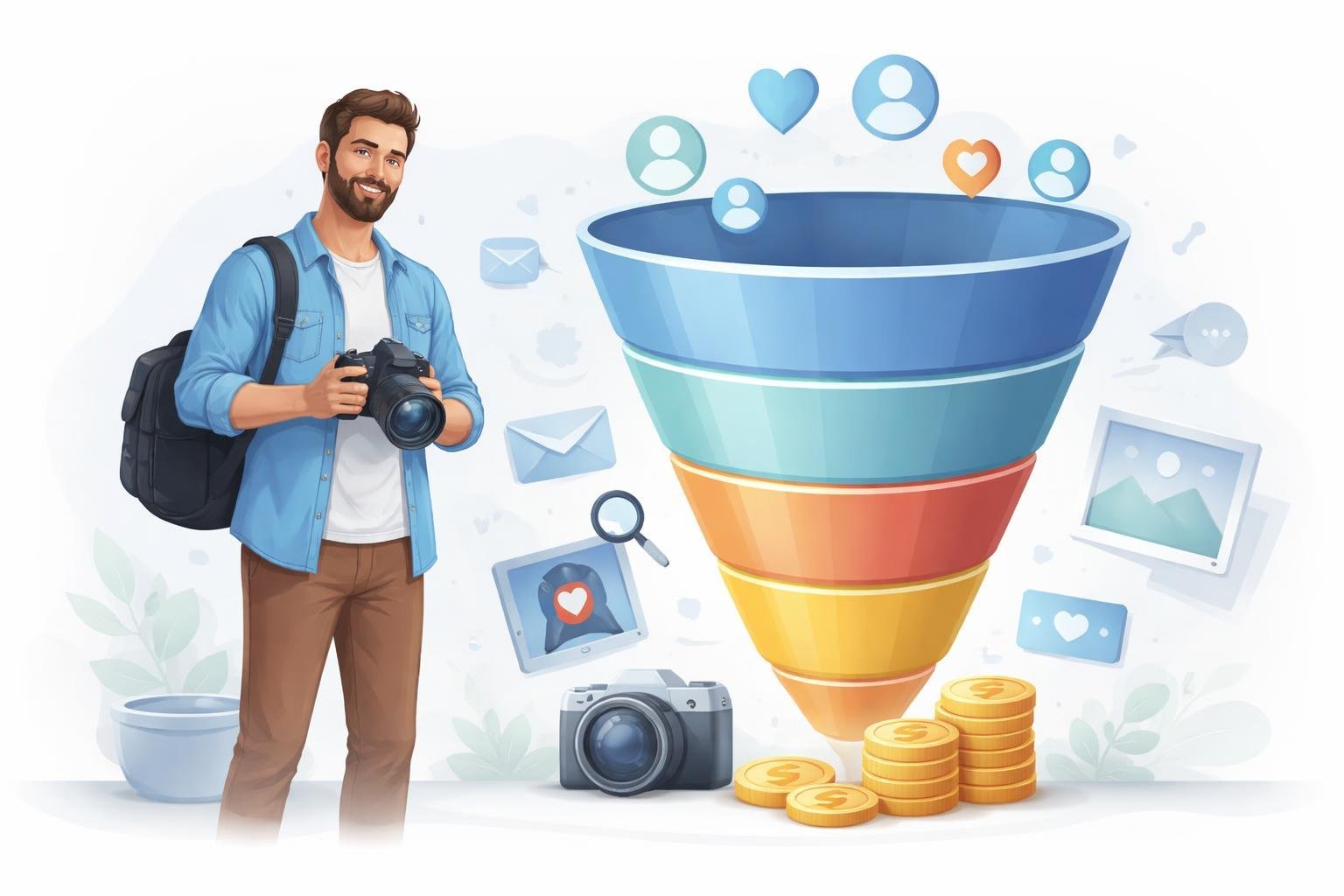
A sales funnel guides potential clients through a clear path from discovering your work to booking your services. We’ll break down what makes a photography sales funnel work, the stages clients move through, and how funnels differ from traditional websites.
What Is a Photography Sales Funnel?
A photography sales funnel is a step-by-step system that moves potential clients toward hiring us. Unlike a regular website where visitors can click anywhere, a sales funnel creates a specific path for people to follow.
Think of it like a real funnel. Many people enter at the top when they first see our work. As they move down through each stage, some drop off while others get more interested. The people who reach the bottom are ready to book our services.
Sales funnels work because they remove distractions and focus on one goal at a time. Each page in the funnel has a clear purpose. We might start by offering a free guide to get someone’s email address. Then we send them helpful content about our photography style. Finally, we invite them to schedule a consultation call.
Stages of an Effective Sales Funnel
Most photography sales funnels have three main stages that work together:
Top of Funnel (Awareness)
This is where people first discover us. We use social media posts, blog articles, paid ads, or search engines to attract attention. The goal is simple: get our photography in front of the right people.
Middle of Funnel (Consideration)
Now potential clients are learning more about our services. We might share our portfolio, send educational emails, or offer free resources like pricing guides. This stage builds trust and shows why we’re the right choice for their needs.
Bottom of Funnel (Decision)
At this stage, people are ready to take action. We present our packages, offer consultations, or provide special booking incentives. The focus shifts to making it easy for clients to say yes and complete the booking process.
Comparing Sales Funnels and Websites
Traditional photography websites and sales funnels serve different purposes. Understanding these differences helps us choose the right tool for our business goals.
| Feature | Traditional Website | Sales Funnel |
|---|---|---|
| Navigation | Multiple menu options and pages | Single path with limited clicks |
| Purpose | Showcase portfolio and provide information | Convert visitors into clients |
| Visitor Control | Users explore freely | Guided step-by-step experience |
| Call to Action | Multiple options on each page | One clear action per page |
Websites work well for established photographers who need to display their full portfolio and services. Visitors can browse different galleries, read about our process, and explore at their own pace.
Sales funnels excel at conversion. We use them when we want someone to take a specific action, like booking a session or downloading a pricing guide. Every element on the page points toward that one goal.
We can use both tools together. Our website serves as our online home base while our sales funnels target specific services or promotions.
Building a High-Converting Funnel with ClickFunnels
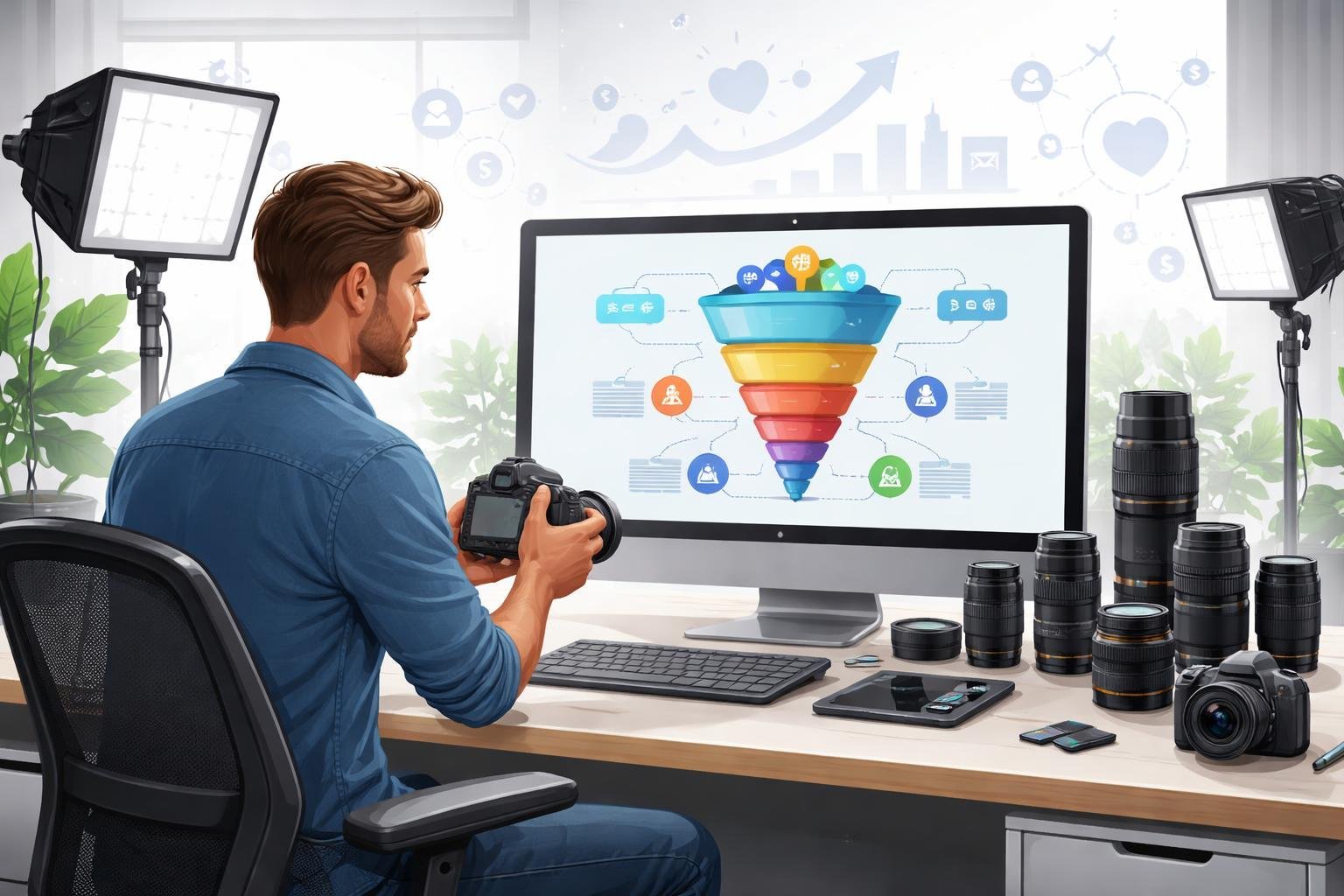
A successful photography funnel needs three core elements: a clear value ladder that guides clients from free content to premium packages, the right funnel structure for your business model, and an irresistible lead magnet that captures contact information from potential clients.
Setting Up Your Value Ladder
Your value ladder sales funnel starts with identifying what we can offer at each price point. At the bottom, we might offer a free photography guide or preset pack. The next step could be a mini session at $150-$300.
Mid-tier offerings might include full portrait sessions ($500-$800) or small wedding packages. At the top, we place our premium services like destination weddings or commercial photography projects.
Each step should naturally lead clients to consider the next level. A bride who books an engagement session should see the value in booking us for her wedding. ClickFunnels lets us map this journey visually and automate the transition between steps.
We need to make sure each offer delivers real value and builds trust. When clients see results at one level, they feel confident investing more at the next.
Choosing the Right Funnel Type
ClickFunnels offers several funnel templates that work well for photographers. The lead generation funnel works best when we want to build our email list with a free offer. A tripwire funnel adds a small paid offer right after the lead magnet.
For photographers selling specific packages, a sales letter funnel presents our services with compelling copy and booking options. Wedding photographers often use webinar funnels to explain their process and show portfolio highlights.
We can start with a pre-built template and customize it for photography. The platform includes drag-and-drop editors that don’t require coding skills. Most photographers find success with a simple two-page funnel: a landing page offering the lead magnet, followed by a thank you page that presents the next offer.
Creating a Lead Magnet Offer
Our lead magnet needs to solve a specific problem for our ideal client. Portrait photographers might offer “5 Tips for Looking Natural in Photos” or a wardrobe guide. Wedding photographers could create a venue comparison checklist or timeline template.
The best lead magnets for photographers are visual. We can offer Lightroom presets, posing guides with example images, or location scouting PDFs. These showcase our expertise while providing immediate value.
When we create a lead magnet in ClickFunnels, we upload it as a downloadable PDF or send it via email automation. The key is making the offer specific enough that only our target clients want it. A generic “photography tips” guide attracts everyone, but “How to Prepare Your Home for a Newborn Photo Session” attracts exactly who we want to book.
Designing Effective Landing Pages

Landing pages serve as focused entry points where potential photography clients can learn about our services and take action. The right template, compelling copy, and optimized forms work together to turn visitors into leads.
Using Proven Landing Page Templates
Starting with a proven landing page template saves time and increases our chances of success. ClickFunnels offers pre-designed templates specifically built for photographers that already include the key elements we need.
These templates come with conversion-driven layouts that guide visitors naturally toward our call to action. We don’t need to guess where to place images or text because the templates follow tested patterns that work.
When choosing a template, we should look for designs that put our photography front and center. The template should have clear spaces for our portfolio images, client testimonials, and service descriptions. We can customize colors and fonts to match our brand while keeping the proven structure intact.
The best templates also work well on mobile devices. Since many people browse on their phones, our landing page must look good and function properly on smaller screens.
Crafting Compelling Headlines and Copy
Our headline is the first thing visitors see, so it needs to grab attention immediately. We should focus on the specific benefit clients get from working with us rather than generic statements.
A strong headline speaks directly to our ideal client’s needs. For example, “Wedding Photography That Captures Your Most Important Moments” works better than “Professional Photography Services.” The first version tells people exactly what they’ll get.
The body copy should be short and easy to scan. We can use bullet points to list our services or what’s included in our packages. Each sentence should move the reader closer to taking action.
We need to highlight what makes us different from other photographers. This might be our editing style, quick turnaround time, or experience with specific types of shoots.
Optimizing Opt-In Forms and CTAs
The opt-in form is where visitors give us their contact information. We should only ask for what we really need at this stage. A name and email address is usually enough to start the conversation.
Long forms with too many fields make people give up. We can always collect more details later through follow-up emails or phone calls.
Our call-to-action button must stand out visually and use action-oriented language. Instead of “Submit,” we should use phrases like “Book Your Session” or “Get Pricing Info.” These specific words tell people exactly what happens when they click.
The call to action should appear at natural points throughout the landing page. We can place one near the top for eager visitors and another at the bottom after they’ve read our full pitch. Testing different button colors and text helps us find what converts best for our specific audience.
Turning Leads into Loyal Clients
Getting someone interested in your photography is just the start. The real work happens after they give you their contact information, when you need to build trust and show them why they should book with you.
Follow Up with Email and Video Courses
We need to stay in touch with potential clients after they sign up. An email sequence keeps us on their mind without being pushy. We can send 5-7 emails over two weeks that share helpful tips, behind-the-scenes stories, and examples of our work.
A video course works even better than plain emails. We can create short videos that teach people how to prepare for a photo shoot or how to choose the right package. An email course with embedded videos feels personal and shows off our personality.
The key is to give value first. We don’t want every email to be a sales pitch. Instead, we share useful information that helps them trust us as experts.
The Thank You Page and Next Steps
The thank you page appears right after someone downloads our free guide or signs up for our email list. This page does more than just say thanks. We can add a special discount code or limited-time offer to create urgency.
We should include our contact information clearly on this page. Some people are ready to book right away and want to call or text us immediately. We can also add a calendar link so they can schedule a free consultation call.
This page is our chance to keep the momentum going. If someone just showed interest in our work, we want to make the next step as easy as possible.
Establishing Trust with Social Proof
Social proof shows new leads that other people love working with us. We can add client testimonials to our landing pages and emails. Real names and photos make testimonials more believable than anonymous quotes.
Reviews from Google, Facebook, or other platforms work great too. We should showcase our best ratings and specific comments about what clients loved. Before-and-after photos or examples of finished galleries prove we deliver quality results.
We can also share numbers that matter. “We’ve photographed over 200 weddings” or “Trusted by 50+ local families” gives people confidence. Awards or features in local publications add credibility too.
Maximizing Revenue with Advanced Funnel Tactics
Once we have a basic sales funnel running, we can add specific features that increase how much money we make from each client. These tactics help us earn more from people who already trust our work.
Upsells, Downsells, and Recurring Offers
An upsell happens right after someone books a session with us. We can offer them an album upgrade or additional hours of coverage at a special price. The key is timing – we present this offer when they’re already excited about working with us.
Downsells work differently. If someone says no to our main package, we offer them something smaller instead of losing them completely. Maybe they can’t afford a full wedding package, but they might want just ceremony coverage.
Recurring revenue changes our business model entirely. Instead of finding new clients every month, we set up offers where clients pay us regularly. A family might sign up for quarterly photo sessions throughout the year. Portrait studios can offer monthly print subscriptions where clients receive new prints of their favorite photos.
These recurring offers create predictable income. We know how much money is coming in each month, which makes planning easier.
Memberships, Continuity Programs, and Shopping Cart
A continuity program is a membership where clients pay monthly or yearly for ongoing benefits. We might offer business owners monthly headshot updates or families an annual package with four seasonal sessions included.
The ClickFunnels shopping cart lets clients buy multiple products at once. Someone ordering prints can add frames, digital files, and albums all in one purchase. This increases our average order value without extra selling effort from us.
We can also create VIP memberships where clients get priority booking, discounts on prints, and free mini sessions. The membership fee gives us steady income while clients feel they’re getting exclusive value.
Driving Traffic and A/B Testing Funnels
Getting people to our funnel requires paid traffic from platforms like Facebook, Instagram, or Google Ads. We target people in our area who recently got engaged or searched for family photographers.
A/B testing helps us figure out what works. We create two versions of a landing page – one with a video and one with just photos. We send half our traffic to each version and see which one gets more bookings.
We should test one thing at a time. Maybe we test different headlines first, then button colors, then pricing displays. Small changes often make big differences in how many people book with us.
Running these tests costs money upfront through paid traffic, but the data tells us exactly what our potential clients respond to. Once we know what works, every dollar we spend on ads becomes more effective.
Tips, Resources, and Getting Started
Getting started with ClickFunnels becomes easier when you tap into the right learning resources and community support. Russell Brunson offers valuable training materials, and the ClickFunnels community provides real-world insights from other photographers who have built successful funnels.
Learn from Russell Brunson and the ClickFunnels Community
Russell Brunson created ClickFunnels and shares his marketing knowledge through several books and training programs. His book “DotCom Secrets” teaches the basic funnel strategies we can apply to our photography business. The ClickFunnels Facebook community connects us with thousands of users who share their experiences.
We can join weekly training webinars where Russell Brunson breaks down funnel strategies in simple terms. The ClickFunnels YouTube channel offers free tutorials on building landing pages and setting up email sequences. Other photographers in the community often share their funnel templates and results.
The platform’s help center includes step-by-step guides for beginners. We can ask questions in the community forums and get answers from experienced users within hours.
Essential Resources for Funnel Success
ClickFunnels provides pre-built templates specifically designed for service businesses like photography. These templates save us hours of design work and come ready to customize with our photos and pricing.
The platform includes these key tools:
- Landing page builder with drag-and-drop features
- Email automation for follow-ups
- Payment processing for booking deposits
- Analytics dashboard to track visitor behavior
We should start with the 14-day free trial to test the platform without commitment. The ClickFunnels blog publishes case studies from photographers who share their conversion rates and booking numbers. We can also access the Funnel Flix library, which contains courses on photography marketing and client acquisition strategies.