

Choosing the right marketing tool can feel overwhelming when you’re trying to grow your business. ActiveCampaign and ClickFunnels are two popular platforms that often come up in conversations, but they serve different purposes. ActiveCampaign focuses on email marketing and automation, while ClickFunnels specializes in building sales funnels and landing pages. Understanding which one fits your needs can save you time and money.
We’ve put together this guide to help you understand what makes each platform unique. You’ll learn about their core features, pricing structures, and how they stack up against each other in real-world use. We’ll also explore which types of businesses benefit most from each tool.
By the end of this comparison, you’ll have a clear picture of whether ActiveCampaign or ClickFunnels is the better choice for your business goals. We’ll walk you through everything from automation capabilities to integration options, so you can make an informed decision.
Core Differences Between ActiveCampaign and ClickFunnels
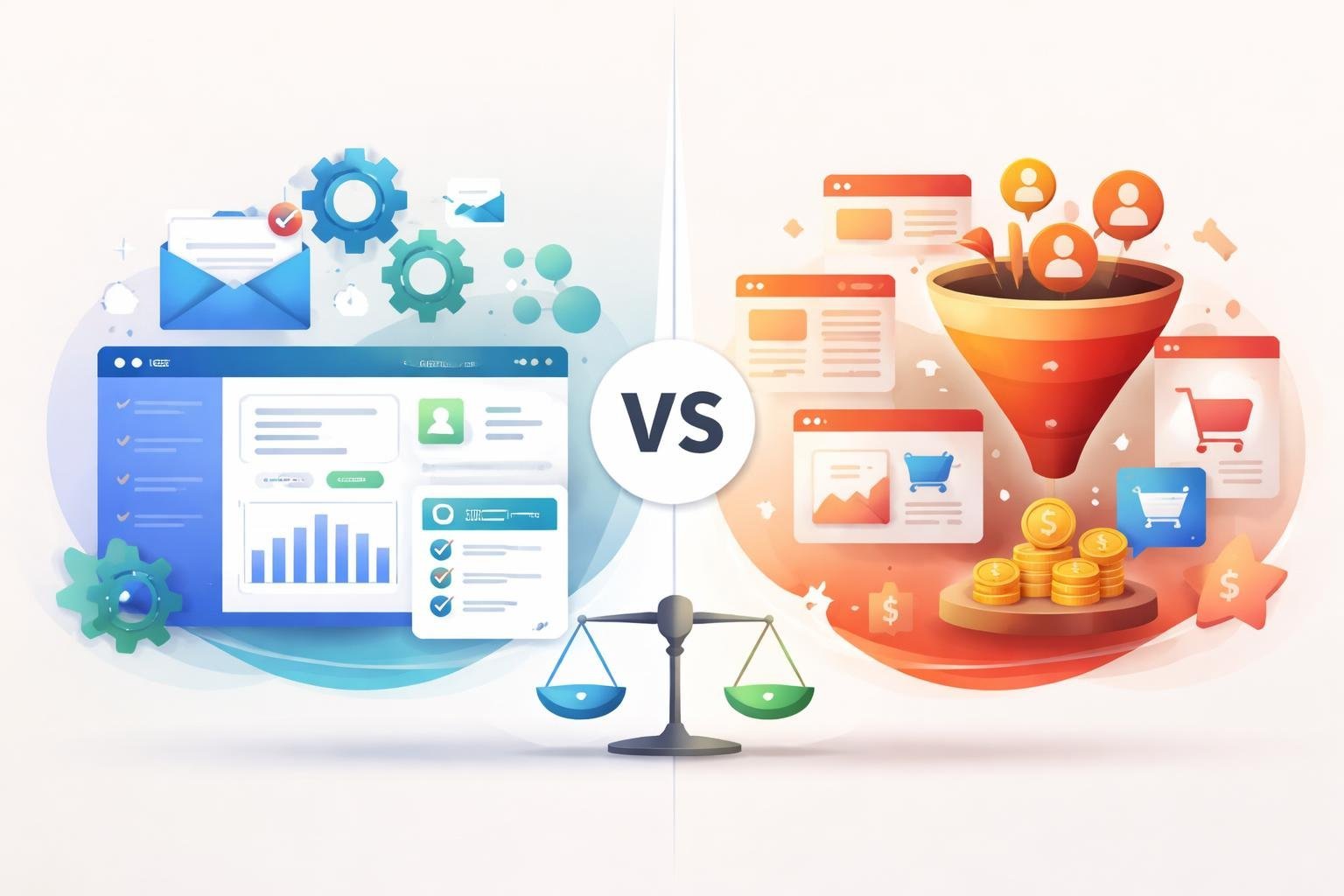
ActiveCampaign functions as a marketing automation platform focused on email marketing and customer relationship management, while ClickFunnels operates as sales funnel software designed to build landing pages and guide customers through purchase journeys.
Primary Purpose and Target Users
ActiveCampaign serves businesses that need powerful email marketing and automation tools. We’ve found it works best for companies that want to nurture leads through personalized email campaigns and track customer interactions across multiple touchpoints. The platform excels at creating automated workflows based on customer behavior.
ClickFunnels targets entrepreneurs and businesses focused on converting visitors into buyers. It’s built specifically as a funnel builder to create sales pages, order forms, and checkout processes. We see it used most often by digital product creators, coaches, and online course sellers who need to move prospects through a clear buying path.
The target users differ significantly. ActiveCampaign appeals to marketing teams and small to medium businesses that prioritize relationship building. ClickFunnels attracts solopreneurs and sales-focused teams who want to launch products quickly without hiring developers.
All-in-One vs Specialized Platforms
ClickFunnels positions itself as an all-in-one platform for building complete sales funnels. It includes landing page creation, payment processing, membership sites, and basic email features all in one package. You can launch an entire product without connecting multiple tools.
ActiveCampaign specializes in marketing automation and email campaigns. It offers deep features for segmentation, behavioral tracking, and automated sequences. However, you’ll need to connect it with other tools to build landing pages or process payments.
We’ve noticed that ClickFunnels trades depth for convenience. Its email tools are basic compared to dedicated email platforms. ActiveCampaign takes the opposite approach by focusing on what it does best and integrating with other specialized tools for additional functionality.
Ease of Use and Onboarding
ClickFunnels offers a simpler starting point for beginners. The drag-and-drop editor and pre-built funnel templates let you launch quickly. We can typically set up a basic sales funnel in under an hour. The visual editor shows exactly what customers will see.
ActiveCampaign has a steeper learning curve due to its extensive automation features. The interface requires time to master, especially when building complex workflows. We usually need several days to fully understand the automation builder and segmentation options.
Both platforms offer training resources. ClickFunnels provides video tutorials focused on funnel strategies. ActiveCampaign offers detailed guides on email marketing best practices and automation recipes you can import directly into your account.
Feature Comparison Overview
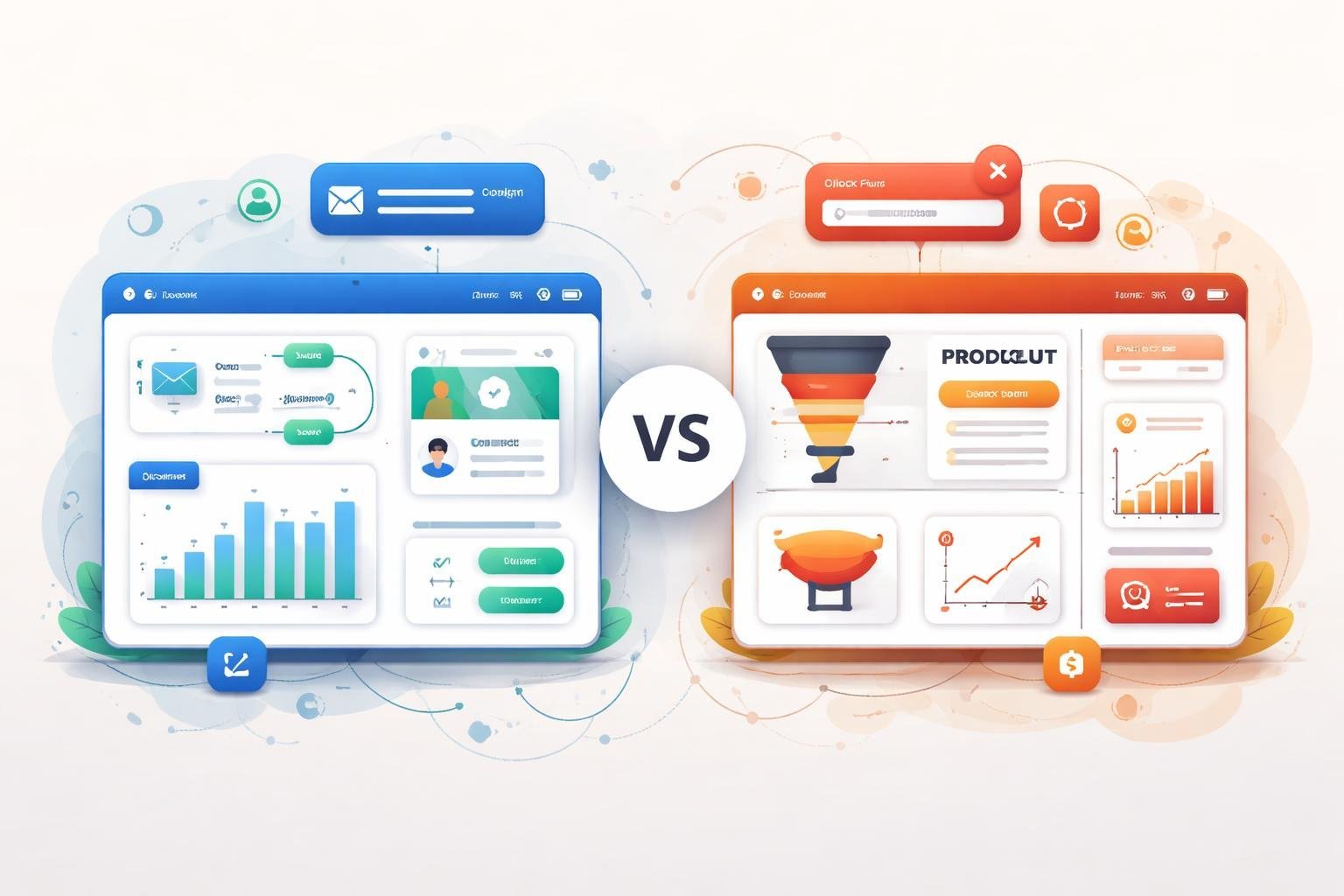
ActiveCampaign excels at email marketing and automation, while ClickFunnels specializes in building sales funnels and landing pages. Both platforms offer CRM tools, but they approach customer relationship management differently based on their core strengths.
Email Marketing Capabilities
ActiveCampaign built its reputation on email marketing. The platform gives us advanced segmentation tools, A/B testing, and detailed analytics for every campaign we send. We can create personalized emails based on customer behavior, purchase history, and engagement levels.
ClickFunnels includes basic email features, but they’re more limited. We get simple autoresponders and broadcast emails to support our funnels. The email tools work fine for following up with leads, but they lack the depth that dedicated email platforms offer.
ActiveCampaign lets us build complex email sequences with conditional logic. We can send different messages based on what subscribers click or which pages they visit. ClickFunnels keeps things simpler with straightforward email sequences tied to funnel steps.
For serious email marketing campaigns, ActiveCampaign provides more power and flexibility. ClickFunnels handles basic email needs but focuses more on the funnel-building side of things.
Sales Funnel and Landing Page Builder
ClickFunnels was designed specifically as a funnel builder. We get pre-built funnel templates for webinars, product launches, membership sites, and sales pages. The drag-and-drop landing page builder makes it easy to create high-converting pages without coding skills.
ActiveCampaign added landing pages and forms later in its development. We can build basic landing pages and capture forms, but the options are more limited. The platform focuses on what happens after someone enters our funnel rather than building the funnel itself.
ClickFunnels includes a full website builder too. We can create entire websites with multiple funnels, shopping carts, and membership areas. The templates are optimized for conversions and sales.
ActiveCampaign’s forms integrate smoothly with our automation workflows. When someone fills out a form, we can trigger specific email sequences and tag contacts automatically. But for complete funnel creation, ClickFunnels offers more robust tools.
Marketing Automation and Workflow Builder
ActiveCampaign’s automation builder stands out as one of the most powerful on the market. We can create complex workflows with multiple triggers, conditions, and actions. The visual automation map shows us exactly how contacts move through our campaigns.
We can automate based on website visits, email clicks, purchase behavior, and custom events. ActiveCampaign lets us score leads, assign tasks to team members, and send internal notifications. The automation possibilities are nearly endless.
ClickFunnels includes basic automation tied to funnel actions. We can trigger emails when someone opts in, purchases, or abandons a cart. The workflows are simpler and more focused on moving people through our sales process.
ActiveCampaign gives us deeper automation for nurturing leads over time. ClickFunnels keeps automation straightforward and funnel-focused. For businesses that need sophisticated marketing workflows, ActiveCampaign provides more options.
CRM and Contact Management
ActiveCampaign includes a sales CRM built into the platform. We can track deals, manage pipelines, and see all contact interactions in one place. The CRM connects directly to our email marketing, so sales teams see which emails prospects opened and what links they clicked.
ClickFunnels offers contact management through its dashboard. We can see who entered our funnels, what they purchased, and their activity history. The system tracks customer journey through our funnels but doesn’t provide a full-featured sales CRM.
ActiveCampaign’s customer relationship management tools help sales teams follow up with leads. We can assign contacts to specific salespeople, set tasks, and automate reminders. Deal tracking shows us exactly where each opportunity stands in our pipeline.
ClickFunnels focuses more on funnel performance than traditional CRM functions. We get contact lists and basic segmentation, but not the deal management and sales pipeline features that ActiveCampaign includes.
In-Depth Look at ActiveCampaign
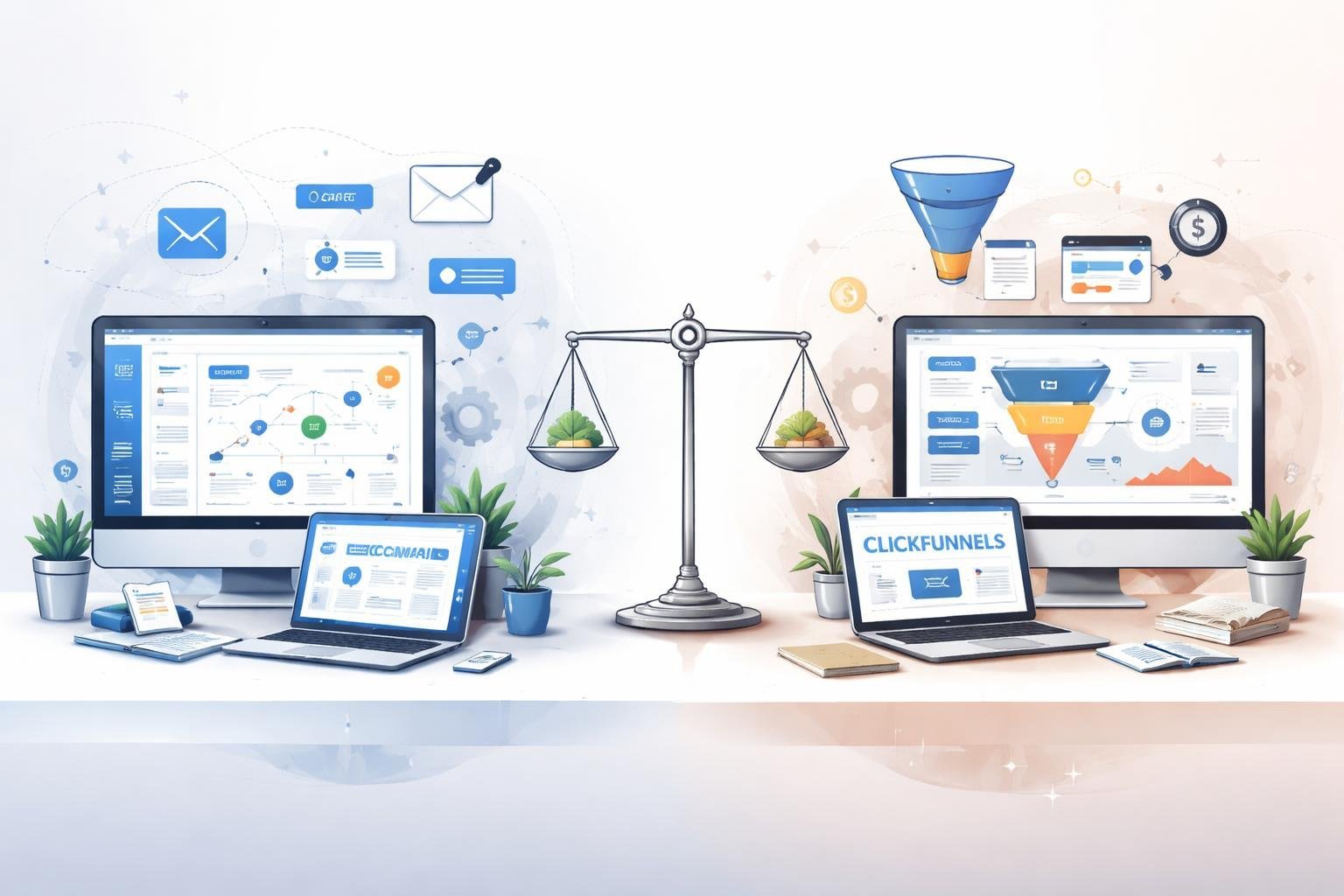
ActiveCampaign stands out as a robust email marketing automation platform that combines powerful automation workflows with built-in CRM capabilities. The platform excels at creating detailed customer journeys through segmentation and personalized messaging.
Marketing Automation and Email Sequences
ActiveCampaign’s automation workflows form the core of what makes this platform powerful. We can build complex customer journeys that trigger based on specific actions, like when someone opens an email or visits a particular page on our website.
The platform offers automation recipes (pre-built templates) that help us get started quickly. These templates cover common scenarios like welcome sequences, abandoned cart reminders, and re-engagement campaigns. We can also create custom automation from scratch using the visual builder.
Email campaigns in ActiveCampaign use a drag-and-drop email builder that makes designing professional messages simple. The builder includes responsive templates that look good on any device. We can set up ongoing sequences that nurture leads over weeks or months without manual intervention.
CRM Features and Lead Scoring
ActiveCampaign includes CRM-lite features that connect our marketing and sales efforts. The system tracks every interaction a contact has with our business, from email opens to website visits.
Lead scoring assigns point values to different actions our contacts take. We can award points when someone opens multiple emails, downloads a resource, or visits our pricing page. This helps us identify which leads are most engaged and ready to buy.
The platform supports custom fields that let us store specific information about each contact. We can track details like company size, industry, or purchase history. These fields integrate directly into our automation workflows and segmentation.
Segmentation and Personalization
Segmentation in ActiveCampaign goes beyond basic list management. We can create dynamic segments based on contact behavior, demographics, and engagement levels. These segments update automatically as contacts meet or stop meeting our criteria.
The platform supports unlimited contacts on most plans, which removes the stress of list growth. We can combine multiple conditions to create highly specific audience groups. For example, we might target contacts who opened our last three emails but haven’t made a purchase yet.
Personalization extends throughout the entire platform. We use contact data to customize email content, adjust automation paths, and deliver relevant messages at the right time.
In-Depth Look at ClickFunnels
ClickFunnels is a sales funnel builder designed to help businesses create complete marketing funnels without needing technical skills. The platform focuses on converting visitors into customers through pre-built funnel templates, a drag-and-drop page builder, and tools specifically made for increasing sales.
Sales Funnel Creation and Funnel Templates
ClickFunnels makes building sales funnels straightforward with its template library. We get access to funnel templates for different business goals like product launches, webinar registrations, and membership sites.
The platform offers unlimited funnels on most plans. Each funnel can include multiple steps like opt-in pages, sales pages, and thank you pages. The templates are pre-designed for specific industries and purposes.
Countdown funnels add urgency to offers by displaying timers that encourage quick decisions. We can set these to reset for each visitor or count down to a specific deadline.
The funnel types include:
- Lead generation funnels
- Product launch funnels
- Webinar funnels
- Membership funnels
- Application funnels
Members of the Funnel Hacker community share their successful funnels. We can clone these proven funnels and customize them for our own business.
Landing Pages and Page Builder
The page builder uses drag-and-drop functionality. We can add elements like text, images, videos, and buttons without writing code.
Landing page templates come ready to use for different conversion goals. Each template is mobile-responsive and includes sections designed to guide visitors toward taking action.
The editor lets us customize colors, fonts, and layouts to match our brand. We can also add custom CSS and HTML for advanced modifications.
Landing pages connect directly to email services and payment processors. This means visitors can complete their entire journey on our pages without leaving for external sites.
Conversion Optimization Tools
ClickFunnels includes features built specifically to increase sales at checkout. Order bumps appear on checkout pages as small add-on offers that customers can accept with one click.
Upsell and downsell pages show additional offers after the initial purchase. These pages appear automatically based on customer actions.
A/B testing lets us compare different versions of our sales pages. We can test headlines, images, or entire page layouts to see which converts better.
The platform tracks metrics like conversion rates, average cart value, and total revenue for each funnel. These analytics help us identify where visitors drop off and what needs improvement.
Integrations and Third-Party Ecosystem
ActiveCampaign offers over 950 native integrations while ClickFunnels provides essential connections with a more focused approach. The platforms differ significantly in how they connect with external tools and the flexibility they offer for custom integrations.
E-commerce Platform Integrations
ActiveCampaign connects natively with major e-commerce platforms including Shopify, WooCommerce, and BigCommerce. These integrations let us sync customer data, track purchases, and trigger automated campaigns based on shopping behavior. We can segment contacts by purchase history and send targeted emails based on cart activity.
ClickFunnels takes a different approach by building payment processing directly into its platform. It works with Stripe and PayPal for transactions without requiring separate e-commerce software. The platform focuses on creating its own checkout pages rather than integrating with existing stores. This works well if we’re starting fresh but can be limiting if we already run a WordPress or WooCommerce site.
APIs, Webhooks, and Zapier Connections
ActiveCampaign provides robust API access and webhook capabilities for custom integrations. We can build unique solutions for specific business needs through their API. The platform also connects with Zapier, letting us link to thousands of apps without coding.
ClickFunnels offers API access but with fewer pre-built options compared to ActiveCampaign. Their integration ecosystem prioritizes core marketing tools over extensive third-party connections. We’ll need Zapier or similar tools to connect ClickFunnels with many business applications. The platform supports webhooks for triggering actions in other systems.
Other Notable Third-Party Tools
ActiveCampaign integrates with Salesforce, Unbounce, and various SMTP services. We can connect our CRM, landing page builders, and email delivery systems directly. The platform’s native integrations require minimal setup and work immediately after authorization.
ClickFunnels offers fewer native integrations but covers essential marketing tools. We can connect email marketing platforms, webinar software, and payment processors. The platform works as a standalone system in many cases, reducing the need for multiple tool connections. However, businesses with complex tech stacks may find the limited integration options restrictive.
Analytics, Reporting, and Optimization
ActiveCampaign delivers detailed analytics across email, SMS, and messaging campaigns, while ClickFunnels focuses on funnel performance and conversion tracking. Both platforms offer A/B testing, but they differ in reporting depth and customization options.
Analytics and Conversion Tracking
ActiveCampaign provides multi-channel campaign reporting that tracks email open rates, click-through rates, and conversion rates across different marketing channels. We can monitor how contacts interact with emails, forms, and automated workflows in real-time. The platform shows engagement metrics for every campaign we send, making it easy to see which messages perform best.
ClickFunnels centers its analytics on funnel performance. We get visibility into each step of our sales funnels, showing where visitors enter, exit, and convert. The dashboard displays conversion rates for individual funnel pages and overall funnel completion rates. ClickFunnels tracks revenue generated through each funnel, which helps us understand ROI at a glance.
ActiveCampaign includes industry benchmarking data so we can compare our metrics against similar businesses. ClickFunnels lacks this feature but compensates with clearer sales-focused metrics.
A/B Testing Features
ActiveCampaign allows us to test email subject lines, send times, and content variations. We can split test up to five different versions of an email simultaneously. The platform automatically sends the winning version to the remaining contacts based on our chosen success metric.
ClickFunnels enables A/B testing on landing pages and funnel steps. We can test different headlines, images, copy, and layouts to optimize conversion rates. The system splits traffic between variations and tracks which version generates more sales or leads.
Both platforms make it simple to run tests without technical knowledge. ActiveCampaign focuses on testing communication elements, while ClickFunnels tests page design and funnel structure.
Custom Reports and Conversion Attribution
ActiveCampaign offers custom reports that we can build to track specific metrics important to our business. We can create reports showing deal attribution, revenue by campaign, and contact engagement over time. The platform provides conversion attribution that connects sales back to the marketing touches that influenced them.
ClickFunnels provides standard reports focused on funnel metrics and sales data. The reports show us order values, customer lifetime value, and product performance. However, custom report building is limited compared to ActiveCampaign.
ActiveCampaign excels at tracking the customer journey across multiple touchpoints. ClickFunnels keeps reporting simpler and more focused on direct sales metrics within funnels.
Pricing, Plans, and Value for Money
ActiveCampaign and ClickFunnels take different approaches to pricing, with ActiveCampaign scaling based on contact count and ClickFunnels using flat-rate tiers. We’ll break down how much you can expect to pay and which platform offers better value as your business grows.
ActiveCampaign Pricing Structure
ActiveCampaign pricing starts at $15 per month for up to 1,000 contacts when billed annually. This gets you the Starter plan with basic email marketing features.
The pricing increases as your contact list grows. At 5,000 contacts, the Starter plan jumps to $99 per month. For 10,000 contacts, you’re looking at even higher costs depending on which plan you choose.
ActiveCampaign offers four main tiers:
- Starter: Basic email marketing and automation
- Plus: CRM, landing pages, and advanced automation
- Pro: Machine learning and predictive sending
- Enterprise: Custom reporting and dedicated support
The Starter plan has a 5-actions-per-automation limit, which can feel restrictive. We found that most businesses need to move up to the Plus plan ($239/month at 10,000 contacts) to access meaningful automation features.
ClickFunnels Pricing and Starter Plan
ClickFunnels uses a simpler pricing model with flat monthly rates. The basic plan starts at $97 per month, with no pricing changes based on contact count.
This flat-rate approach means you know exactly what you’ll pay each month. There’s no surprise cost increase when your email list grows from 1,000 to 10,000 subscribers.
ClickFunnels focuses on funnel building and page creation rather than pure email marketing. The platform includes basic email features, but it’s designed primarily for sales funnels and landing pages.
Pricing Comparison and Scalability
ActiveCampaign wins on starting price if you have a small contact list. At $15 per month, it’s significantly cheaper than ClickFunnels’ $97 entry point.
However, ClickFunnels becomes more affordable as your contact list grows. When you reach 10,000 contacts, ActiveCampaign’s Plus plan costs $239 per month compared to ClickFunnels’ flat $97 rate.
We recommend ActiveCampaign if you prioritize email automation and have fewer than 5,000 contacts. ClickFunnels makes more sense if you need funnel-building tools and have a large or rapidly growing email list. The cost difference becomes substantial at higher contact volumes, making ClickFunnels the better value for larger operations.
Use Cases and Choosing the Right Platform
ActiveCampaign works best when email marketing and automation are your main focus, while ClickFunnels shines for building sales funnels and selling digital products. Many businesses actually use both tools together to cover their complete marketing stack.
Best for Email Marketing and Automation
We recommend ActiveCampaign when email campaigns are central to your business strategy. The platform excels at lead nurturing through automated email sequences that respond to customer behavior and preferences.
ActiveCampaign handles complex automation workflows better than most platforms. You can segment contacts based on their actions, send targeted messages at the right time, and track engagement across your entire sales pipeline. The built-in CRM connects your marketing and sales teams so everyone sees the same customer data.
The platform works well for lead generation too. You can create forms for lead capture and automatically add new contacts to specific email automations based on their interests. This makes it easier to move leads through your sales process without manual work.
E-commerce businesses benefit from ActiveCampaign’s ability to track purchases and send personalized product recommendations. You can also recover abandoned carts and follow up with customers after they buy.
Best for Sales Funnels and Digital Products
ClickFunnels is our choice when you need to build complete sales funnels quickly. The platform specializes in creating landing pages, order forms, and checkout processes without requiring technical skills.
Digital product creators find ClickFunnels especially useful. You can set up membership sites, sell online courses, and deliver content to customers all within one platform. The funnel templates help you launch faster since they’re designed for specific business models.
The platform handles the entire sales process from lead capture to payment processing. This means fewer tools in your marketing stack and less switching between platforms. You can also run upsells and downsells automatically to increase your average order value.
ClickFunnels includes basic email features for sales engagement, but they’re not as advanced as dedicated email platforms. The focus stays on moving people through your funnel rather than long-term relationship building.
Combining ActiveCampaign and ClickFunnels
Many businesses use both platforms together to get the best results. ClickFunnels captures leads and processes sales while ActiveCampaign handles ongoing email automations and relationship building.
This combination works because each tool does its main job extremely well. We can use ClickFunnels to create high-converting landing pages and sales funnels, then connect it to ActiveCampaign for email marketing. The integration between them passes contact data automatically so your email campaigns stay updated.
For example, when someone buys through a ClickFunnels page, we can trigger specific email automations in ActiveCampaign based on what they purchased. This creates a smooth experience where your sales pipeline and email marketing work together instead of separately.
Support, Training, and Customer Experience
Both platforms offer support channels and learning resources, but they differ in availability and community engagement. We’ll look at how each handles customer inquiries and what kind of learning curve users can expect.
Customer Support and Resources
ActiveCampaign provides 24/7 email and chat support across most of its plans. This means we can get help whenever issues come up, regardless of time zones or business hours.
The platform also includes a detailed knowledge base with articles and guides. Their support team is known for being responsive and helpful with technical questions.
ClickFunnels offers email and chat support, though availability varies by plan level. Higher-tier plans get priority support access.
The platform provides a regularly updated knowledge base filled with tutorials and how-to guides. They also offer webinars and training resources to help users build effective funnels. Both platforms give us the tools to solve problems independently through self-service options.
Learning Curves and User Community
ActiveCampaign has a moderate learning curve due to its advanced automation features. The interface takes time to master, especially for users new to email marketing automation.
However, they provide extensive training materials to speed up the process. We can access video tutorials, documentation, and step-by-step guides.
ClickFunnels has an active online community where users share templates, strategies, and tips. This peer-to-peer support helps new users learn faster from experienced funnel builders.
The platform’s drag-and-drop builder makes it easier to get started quickly. New users can choose from pre-built funnels and customize them rather than starting from scratch. Both communities offer valuable shared resources that extend beyond official support channels.
Alternatives and Final Thoughts
While both platforms offer unique strengths, you might find that neither perfectly fits your needs or budget. Other tools on the market can handle sales funnels or email marketing, and understanding your options helps you make the best choice.
ClickFunnels Alternatives and Competitors
If ClickFunnels doesn’t match your requirements, several alternatives deserve consideration. Kartra offers similar funnel-building features with built-in email marketing and membership sites at competitive prices. Leadpages focuses on landing pages and is more affordable for businesses that don’t need full funnel capabilities.
HubSpot combines CRM, email marketing, and sales tools in one platform. It works well for companies wanting an all-in-one solution, though the learning curve is steeper.
For budget-conscious users, Systeme.io provides funnel building and email automation at lower price points. GoHighLevel targets agencies and includes white-label options plus client management features.
Each alternative has different strengths. We recommend testing free trials to see which interface and features work best for your specific business model.
Summary of Key Points
ActiveCampaign excels at email marketing and automation. Its sophisticated automation workflows and detailed contact segmentation make it ideal for businesses prioritizing customer communication. The platform integrates smoothly with hundreds of other tools.
ClickFunnels specializes in building sales funnels and landing pages. It helps convert visitors into customers through pre-built funnel templates and simplified page builders. The platform works best for businesses focused on online sales and course creation.
Your choice depends on your primary goal. Pick ActiveCampaign if email marketing drives your strategy. Choose ClickFunnels if you need dedicated funnel-building tools. Many businesses use both platforms together to leverage their combined strengths.