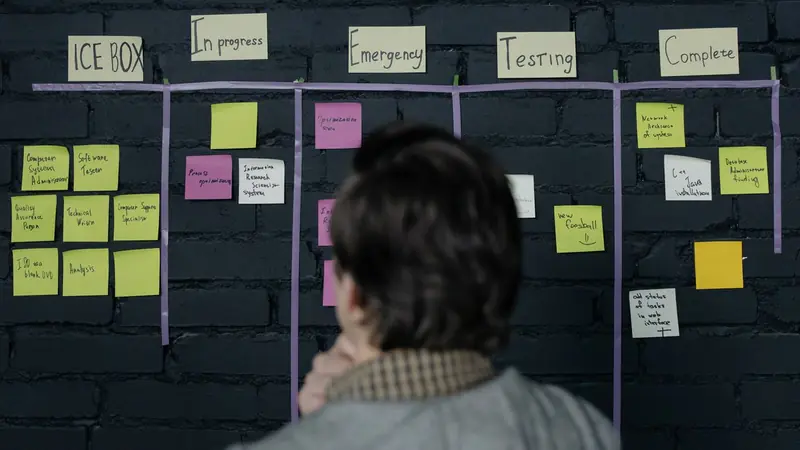
Sales funnel management is the ongoing job of moving leads through clear stages and fixing the stage where they get stuck. It rests on four habits: define each stage with an entry and exit rule, follow up fast and on a schedule, review open deals every week, and measure the conversion rate between stages so you know where to work. A CRM with a visual pipeline keeps all of it in one place.
Building a funnel gets people in. Managing it decides how many of them become customers. This guide covers the stages you manage, an eight-step management process, forecasting, the CRM tools that make it easier and the mistakes that quietly leak deals. Tool prices were checked on vendor pages on November 19, 2026.
What Is Sales Funnel Management?
A sales funnel is the path a buyer takes from first hearing about you to paying you. Sales funnel management is what you do to that path every week: decide what each stage means, move leads forward, chase the ones that stall and remove the ones that are dead.
It answers three practical questions:
- Where is every lead right now? Each lead or deal sits in exactly one stage.
- What happens next, and who does it? Every open deal has a next step, an owner and a date.
- Where is the funnel leaking? Conversion rates between stages show which step loses the most people.
If you are new to funnels, start with what a sales funnel is and the six sales funnel stages. This page assumes you have a funnel and want to run it well.
Who Manages the Funnel?
In a larger company, marketing owns the top of the funnel, sales owns the middle and bottom, and a sales operations or revenue operations person owns the system, the CRM and the reports. In a small business or agency, one person often does all of it. The tasks are the same either way; only the number of people changes.
In This Article
- What Is Sales Funnel Management?
- Sales Funnel vs Sales Pipeline: What You Are Managing
- Why Sales Funnel Management Matters
- The Stages You Manage
- How to Manage a Sales Funnel in 8 Steps
- Using a CRM to Manage Your Sales Funnel
- Other Sales Funnel Management Tools
- Managing a Funnel as a Small Business
- Common Sales Funnel Management Mistakes
- Our Verdict
- Frequently Asked Questions
Sales Funnel vs Sales Pipeline: What You Are Managing
People search for "sales pipeline funnel" because the two ideas overlap. They describe the same journey from two angles.
| Sales Funnel Management | Sales Pipeline Management | |
|---|---|---|
| Looks at | The whole group of leads | Individual deals |
| Main question | What share of leads moves to the next stage? | What is the next step for this deal? |
| Key numbers | Conversion rate by stage, cost per lead, sales cycle length | Deal value, close date, stage, owner |
| Typical view | A funnel chart or report | A Kanban board of deal cards |
| Used for | Fixing leaks and planning marketing | Daily selling and forecasting revenue |
You need both. The pipeline board tells a salesperson what to do today. The funnel report tells the business where to invest next month. A good CRM produces both from the same data, as long as every lead is recorded and every deal sits in the right stage.
Why Sales Funnel Management Matters
An unmanaged funnel does not stop working. It just leaks quietly. Leads wait days for a reply, deals sit in "proposal sent" for months, and nobody knows which ad or channel produces customers rather than clicks.
Active management fixes that in four ways:
- Faster follow-up. A rule such as "every new lead is contacted the same business day" stops warm leads from going cold.
- Focus. Sales time goes to qualified deals instead of everyone who downloaded a checklist.
- Forecasting. When stages and probabilities are consistent, you can estimate next month's revenue with some confidence.
- Better marketing decisions. When every lead carries its source, you can see which channel produces paying customers and shift budget toward it.
The Stages You Manage

The labels vary by business, but most managed funnels use a version of the stages below. What matters is the exit criteria: the specific thing that must be true before a lead moves on. Without it, "qualified" means something different to every person on the team, and the conversion rates mean nothing.
| Stage | Exit Criteria (Move On When...) | Usual Owner | Number to Watch |
|---|---|---|---|
| New lead | Contact details captured and source recorded | Marketing | Leads by source, cost per lead |
| Contacted | A real two-way conversation has happened | Sales or owner | Time to first response |
| Qualified | Need, budget, decision maker and timing confirmed | Sales | Lead-to-qualified rate |
| Meeting or demo | The call or demo took place, not just booked | Sales | Show rate, meeting-to-proposal rate |
| Proposal | A written price and scope was sent | Sales | Proposal-to-close rate, days in stage |
| Closed won or lost | Signed and paid, or lost with a recorded reason | Sales | Win rate, loss reasons |
| Onboarding and retention | Customer is live and getting results | Delivery or success | Retention, repeat purchases, referrals |
A self-serve online funnel, where people buy from a checkout page, compresses the middle. The stages become visitor, lead, engaged lead, buyer and repeat buyer, and "management" means watching page conversion rates and email follow-up rather than calls. Our sales funnel stages guide shows both shapes.
How to Manage a Sales Funnel in 8 Steps
- 1Define your stages and the exit rule for each one
- 2Record the source of every lead automatically
- 3Qualify leads before sales time is spent on them
- 4Set a speed-to-lead rule and a follow-up cadence
- 5Give every open deal an owner and a dated next step
- 6Review the pipeline every week
- 7Forecast with stage probabilities from your own history
- 8Measure conversion by stage and fix the weakest one first
1. Define Stages and Exit Criteria
Write your stages down before you build anything in software. Keep the list short. Five to seven stages are enough for most businesses, and every stage should describe something the buyer did, such as "attended demo," not something the seller hopes, such as "very interested."
2. Record Every Lead Source
Every form, call and chat should tag the contact with where it came from: the ad campaign, the organic page, the referral partner. Hidden form fields that capture UTM parameters, tracking phone numbers and tracked links do this automatically. If the source is missing, you cannot tell which marketing works. Our guide to sales funnel metrics explains how to track this end to end.
3. Qualify Before You Sell
Not every lead deserves a call. Use a simple qualification checklist, such as need, budget, authority and timing, or a points-based lead score built from form answers and engagement. Leads that do not qualify yet go back into email nurturing rather than out of the funnel.
4. Follow Up Fast and on a Schedule
Speed matters most at the top. Set a rule for first contact, then a cadence for leads who do not answer: for example, a text and an email right away, a call the next business day, and two more touches over the following week. Automation tools can send the first messages and create the call task, so nothing depends on memory.
5. Give Every Deal a Next Step
An open deal without a next step and a date is a deal that is drifting. Make "next step" and "next step date" required fields in your CRM. If a deal has no realistic next step, close it as lost and record the reason.
6. Run a Weekly Pipeline Review
A short weekly review keeps the pipeline honest. A simple agenda:
- Deals that moved forward since last week, and why.
- Deals that have sat in the same stage longer than your normal cycle.
- Deals with a close date in the past (update or close them).
- New qualified deals and their next steps.
- Lost deals and the recorded reasons.
Thirty minutes is usually enough. The point is not to discuss every deal but to catch the stuck and the stale.
7. Forecast With Stage Probabilities
The simplest forecast is the weighted pipeline. Give each stage a close probability, multiply each deal's value by its stage probability and add the results. ClickFunnels' Opportunities app, for example, lets you set a close probability per stage for this purpose.
The figures below are an illustration, not benchmarks:
| Stage | Open Deal Value | Probability | Weighted Value |
|---|---|---|---|
| Qualified | $40,000 | 10% | $4,000 |
| Meeting held | $30,000 | 25% | $7,500 |
| Proposal sent | $20,000 | 50% | $10,000 |
| Verbal yes | $10,000 | 80% | $8,000 |
| Total | $100,000 | $29,500 |
Set the probabilities from your own history: of all deals that ever reached "proposal sent," what share closed? Revisit them every quarter. Invented probabilities produce confident but wrong forecasts.
8. Measure Conversion by Stage and Fix the Weakest Step
Once a month, calculate the conversion rate from each stage to the next and the average days spent in each stage. Fix the biggest relative drop first. A low lead-to-qualified rate points to targeting or the offer; a low proposal-to-close rate points to pricing, proof or follow-up. The sales funnel metrics guide has the formulas and a step-by-step funnel analysis.
Quick Tip
Change one thing at a time and give it enough time to judge. If you rewrite the offer, change the follow-up and switch ad audiences in the same month, you will not know which change helped.
Using a CRM to Manage Your Sales Funnel
A CRM (customer relationship management system) is the tool that makes funnel management practical. It holds one record per contact, shows deals as cards on a pipeline board, logs every email, call and message, and reminds people of their next step.
What to Look for in a Sales Funnel CRM
| Feature | Why It Matters for Funnel Management |
|---|---|
| Visual pipelines with custom stages | Mirrors your stage list and exit criteria |
| Deal value, owner and close date | Makes weighted forecasts and accountability possible |
| Lead source capture | Connects revenue back to the channel that produced it |
| Automation and tasks | Sends follow-up and creates reminders without manual work |
| Stage-change triggers | Moves deals and starts sequences when something happens |
| Conversion and pipeline reports | Shows where leads stall without exporting to a spreadsheet |
| Integrations | Brings in leads from forms, ads, calls and checkout pages |
Sales Funnel CRM Options Compared
| CRM | Best For | Pipelines | Starting Price (Checked Nov 2026) |
|---|---|---|---|
| GoHighLevel | Agencies and service businesses that want capture, follow-up and pipelines together | Multiple pipelines with custom stages, won and lost tracking | $97/mo, unlimited contacts and users, 14-day trial |
| HubSpot CRM | Teams that want a free start and room to grow | Deal pipelines on the free plan | Free plan (up to 2 users, 1,000 contacts); Starter from $15 per seat per month |
| Pipedrive | Sales teams focused on deal pipelines | Deal-focused pipeline board | $14 to $79 per seat per month, billed annually, 14-day trial |
| ClickFunnels CRM | Funnel sellers who want a simple built-in pipeline | Opportunities app with close probability per stage | From $97/mo on the Launch plan (10K contacts) |
Sources: gohighlevel.com/pricing, hubspot.com/products/crm, pipedrive.com/en/pricing and clickfunnels.com/pricing, checked in November 2026.
HighLevel's help center describes its pipelines as "visual workflow tools that show the progress of leads, deals, or customers from start to finish," with each opportunity marked won or lost at the end. Our GoHighLevel CRM guide covers its contacts, pipelines and workflows in detail, and the ClickFunnels CRM guide does the same for ClickFunnels.
Funnel-Builder CRMs vs Dedicated Sales CRMs
The choice usually comes down to where your leads come from and who closes them.
- Choose a funnel-builder CRM (GoHighLevel, ClickFunnels) when leads come from your own landing pages, forms and booking calendars, and you want the follow-up texts, emails and pipeline in one account. This suits coaches, agencies and local service businesses.
- Choose a dedicated sales CRM (Pipedrive, HubSpot) when a team of salespeople works many deals at once, needs deeper sales reporting and already uses other tools for pages and email.
- Connect the two when you need both: many businesses build pages in a funnel builder and send leads to a sales CRM through a native integration or Zapier.
For a head-to-head, see GoHighLevel vs Pipedrive and GoHighLevel vs HubSpot.
Setting Up Your Pipeline in a CRM
- 1Create one sales pipeline with your agreed stages
- 2Add required fields for deal value, owner, next step and close date
- 3Create lead source tags or fields before importing anyone
- 4Connect your forms, calendars and phone numbers so new leads land in the first stage
- 5Build an automation that sends first contact and creates a call task
- 6Set stage probabilities from past win rates
- 7Create a dashboard with leads by source, conversion by stage and weighted pipeline
Start with one pipeline. Add a second only when a process truly differs, such as onboarding or renewals.
Other Sales Funnel Management Tools
A CRM is the center, but a managed funnel usually draws on a few other tools.
| Job | Tool Type | Examples on This Site |
|---|---|---|
| Capture leads | Funnel builder or landing page builder | Best sales funnel software |
| Nurture leads | Email marketing and automation | Email software for funnels |
| Track clicks and sales by source | Click tracker and attribution tool | ClickMagick review |
| Track phone leads | Call tracking | CallRail review |
| Book meetings | Scheduling and calendars | Built into GoHighLevel and ClickFunnels |
| Analyze the funnel | Analytics and dashboards | Sales funnel metrics guide |
All-in-one platforms combine several of these jobs. The trade-off is depth: a dedicated tool usually does its one job in more detail.
Managing a Funnel as a Small Business

You do not need a sales operations team to manage a funnel well. A lean version:
- One pipeline, five stages. New lead, contacted, call booked, proposal, won or lost.
- One automation. Instant text and email when a lead arrives, plus a task to call.
- One weekly habit. Fifteen minutes every Monday to clear stale deals and set next steps.
- One monthly number. Leads to customers by source, so you know where to spend.
This is often enough to stop the most common leak in small businesses: leads that never get a reply.
Common Sales Funnel Management Mistakes
- Stages based on feelings. "Hot" and "warm" are not stages. Use buyer actions with clear exit criteria.
- No lead source. Without it, you cannot tell which marketing produces revenue.
- Slow first response. Leads contacted days later have often already talked to someone else.
- Zombie deals. Deals with no next step and old close dates inflate the pipeline and the forecast. Close them.
- Too many pipelines and fields. Complexity makes people stop updating the CRM. Start small.
- Chasing benchmarks. Generic conversion rates rarely match your offer and traffic. Track your own numbers over time.
- Selling to unqualified leads. Calls with people who cannot buy waste the time that should go to people who can.
- Ignoring lost reasons. Lost deals are free research. Record why they were lost and look for patterns every quarter.
Our Verdict
Sales funnel management is less about software than about discipline: clear stages, fast follow-up, a dated next step on every deal and a weekly review. Get those right and the funnel becomes predictable enough to forecast and improve.
The CRM is what makes the discipline easy to keep. If your leads come from your own pages and you want follow-up and pipelines in one account, GoHighLevel is a strong fit. If you run a sales team on a separate stack, a dedicated sales CRM such as Pipedrive or HubSpot may suit you better. Either way, measure conversion by stage with the help of our sales funnel metrics guide and fix the weakest step first.
Try GoHighLevel Free for 14 Days
Funnels, CRM, email, SMS, calendars and client accounts in one platform built for agencies, with a free 14-day trial on any plan.
Frequently Asked Questions
What Is Sales Funnel Management?
Sales funnel management is the ongoing work of moving leads through defined stages, from first contact to closed deal, and fixing the stages where they stall. It covers stage definitions, follow-up, pipeline reviews, forecasting and the CRM that records it all.
What Is the Difference Between Sales Funnel Management and Pipeline Management?
Funnel management looks at the buyer's journey as a whole and the conversion rate between stages. Pipeline management looks at individual deals, their value, owner, next step and close date. Most teams do both in the same CRM.
What Is the Best Software for Sales Funnel Management?
It depends on how you sell. Dedicated sales CRMs such as Pipedrive and HubSpot suit sales teams, while GoHighLevel and the ClickFunnels CRM combine pipelines with lead capture pages and automated follow-up. A spreadsheet works only while you have a handful of deals.
Do I Need a CRM to Manage a Sales Funnel?
Not on day one, but a spreadsheet breaks once several people work deals or you handle more than a few dozen leads at a time. A CRM records every touch automatically, reminds you of next steps and reports conversion by stage.
How Often Should I Review My Sales Funnel?
Most teams review open deals weekly and funnel conversion rates monthly. The weekly review keeps each deal moving, and the monthly review shows which stage is leaking.
What Does a Sales Funnel Manager Do?
A sales funnel manager owns the stage definitions, the CRM setup and the reporting. They run pipeline reviews, watch conversion rates between stages and work with marketing and sales to fix the weakest step. In small businesses the owner usually does this job.
How Do You Forecast Sales from a Funnel?
A common method is the weighted pipeline. Multiply each open deal's value by the close probability of its stage and add the results. Probabilities should come from your own historical win rates, not from generic benchmarks.
Put Your Funnel and Pipeline in One Place
Build one pipeline, one lead form and one follow-up workflow during GoHighLevel's 14-day free trial, then see where your deals stall.
Start a 14-Day GoHighLevel Trial