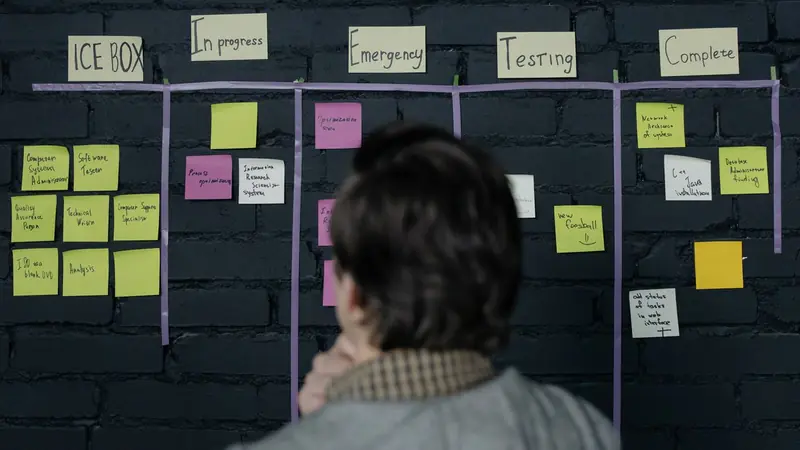
A lead generation funnel turns anonymous visitors into known leads, then into prospects ready to buy or book a call. The classic version has four parts: a traffic source, an opt-in page offering a lead magnet, a thank-you page and a follow-up sequence that nurtures and qualifies each lead.
It is the front half of a full sales funnel. The lead funnel ends when someone becomes a qualified lead; the sales funnel continues through the offer and purchase. This guide covers the five stages, lead magnet ideas, the anatomy of each page, a nurture sequence outline, qualification, compliance basics, metrics and a step-by-step build.
What Is a Lead Generation Funnel?
A lead generation funnel is a planned path that collects contact details from people who might buy, then moves the right ones toward a sale. "Lead" simply means a person or business who has shown interest and given you a way to reach them.
The funnel shape comes from the numbers. Many people see your content, fewer visit the opt-in page, fewer still sign up, and only some of those become sales-ready. Each step filters and warms the audience.
A lead funnel is useful for almost any business where the buyer is not ready to purchase on the first visit:
- Service businesses that sell through a call or consultation, such as coaches, agencies, financial advisors and trainers.
- B2B companies with longer buying cycles.
- Course creators and info product sellers who sell after a webinar, challenge or email series.
- Ecommerce brands that capture emails with a discount or quiz before the first order.
Lead Generation Funnel vs Sales Funnel
| Lead Generation Funnel | Sales Funnel | |
|---|---|---|
| Goal | Capture and qualify leads | Turn leads into paying customers |
| Ends with | A subscriber, a booked call or a sales-qualified lead | A purchase, then retention and repeat sales |
| Main pages | Opt-in page, thank-you page | Sales page, order form, upsells, checkout |
| Key metric | Cost per lead, lead-to-qualified rate | Conversion rate, revenue per lead |
| Usual owner | Marketing | Marketing and sales together |
In practice the two connect: the lead funnel feeds the sales funnel. Our landing page vs sales funnel guide explains how single pages fit inside a larger funnel.
In This Article
- What Is a Lead Generation Funnel?
- The 5 Stages of a Lead Generation Funnel
- Lead Magnet Ideas That Work
- B2B vs B2C Lead Generation Funnels
- Lead Generation Funnel Examples
- Anatomy of a High-Converting Opt-In Page
- The Thank-You Page: Your Second Offer
- A Simple Lead Nurture Sequence
- How to Qualify Leads Before Sales
- How to Build a Lead Generation Funnel Step by Step
- Lead Generation Funnel Metrics
- Compliance Basics for Lead Funnels
- Tools for Building a Lead Generation Funnel
- Common Lead Generation Funnel Mistakes
- Our Verdict
- Frequently Asked Questions
The 5 Stages of a Lead Generation Funnel
The general sales funnel stages model applies, but lead funnels focus on the early part of the journey.
| Stage | What Happens | Your Assets | Number to Watch |
|---|---|---|---|
| Attract | The right people discover you | Content, ads, social posts, partnerships | Click-through rate, visits |
| Capture | Visitors trade contact details for a lead magnet | Opt-in page, form, pop-up, quiz | Opt-in rate, cost per lead |
| Nurture | Leads get value and learn to trust you | Email or SMS sequence, webinar, content | Open, click and reply rates |
| Qualify | You separate ready buyers from browsers | Scoring, application form, short survey | Lead-to-qualified rate |
| Convert | Qualified leads take the sales step | Sales call, demo, offer page | Booked calls, close rate |
Stage 1: Attract
You cannot capture leads without the right visitors. Choose one or two channels where your buyers already spend time, then create content that leads naturally to your lead magnet.
- Organic: search-optimized articles, YouTube videos, podcasts and social posts.
- Paid: social ads, search ads and paid newsletter or solo ad placements. If you buy traffic, track every link; our guide to tracking solo ads shows how.
- Partners: joint webinars, guest posts and referrals from businesses that serve the same audience.
Stage 2: Capture
The visitor lands on an opt-in page (also called a squeeze page) and decides whether your offer is worth an email address. This is the heart of the lead funnel.
- Match the message. The page headline should echo the ad or link that brought the visitor.
- Ask for little. Name and email are usually enough. Ask for more only if you need it to qualify leads.
- Deliver quickly. Send the lead magnet immediately, on the thank-you page and by email.
Stage 3: Nurture
Most new leads are not ready to buy. Nurturing builds trust with useful content and moves them toward a decision.
- Email is the default channel. Text messages suit appointment-based businesses where leads expect fast contact.
- Content: quick wins, stories, case examples, answers to objections and a clear next step.
- Timing: front-load value in the first week while interest is highest.
Stage 4: Qualify
Qualification decides who gets a sales conversation and who stays in nurture. This protects your time and the lead's.
- Explicit signals: budget, timeline, company size or role, collected on a form or application.
- Behavioral signals: pages visited, emails clicked, webinar attendance.
- Lead scoring: points for fit and engagement, with a threshold that triggers sales follow-up.
Stage 5: Convert
Qualified leads take the next step: a discovery call, a demo, a webinar offer or a purchase. At this point the lead funnel hands over to your sales process or sales funnel.
Lead Magnet Ideas That Work

A good lead magnet solves one specific problem for your ideal customer and points toward what you sell.
| Lead Magnet | Example | Best For |
|---|---|---|
| Checklist or cheat sheet | "Pre-launch checklist for a new online store" | Fast, broad appeal |
| Template or swipe file | Email templates, spreadsheet, contract template | Practical, action-oriented audiences |
| Quiz or assessment | "What is your business's marketing score?" | Segmentation and personalized follow-up |
| Calculator | ROI, pricing or savings calculator | B2B and financial topics |
| Mini course or challenge | Five-day email or video course | Coaches, course creators |
| Webinar or workshop | Live or automated training with an offer at the end | Higher-priced offers |
| Free consultation or audit | "Free 20-minute website review" | Service businesses |
| Discount or first-order offer | 10% off the first order | Ecommerce |
| Guide or report | Industry report, buyer's guide | B2B, complex purchases |
The challenge format is popular with coaches and course creators. Russell Brunson's free training on this model is covered in our 5 Day Lead Challenge review.
Lead Magnet Examples by Business Type
- Personal trainers: a meal plan or a free first session. See ClickFunnels for personal trainers.
- Insurance agents: a coverage checklist or quote request. See ClickFunnels for insurance agents.
- Real estate agents: a home valuation or a buyer's guide for the local area. See ClickFunnels for real estate.
- Coaches: a quiz, a workbook or a short challenge. See ClickFunnels for coaches.
- Software companies: a template, a tool or a trial. See our SaaS sales funnel guide.
B2B vs B2C Lead Generation Funnels
The stages are the same, but the details change with the buyer.
| B2B Lead Funnel | B2C Lead Funnel | |
|---|---|---|
| Typical lead magnet | Report, calculator, template, webinar, demo | Discount, quiz, checklist, mini course, free session |
| Form fields | Name, work email, company, sometimes role or size | Name and email, sometimes phone |
| Nurture length | Weeks to months | Days to weeks |
| Qualification | Lead scoring, BANT, sales review | Behavior and simple application forms |
| Conversion step | Demo, discovery call, proposal | Purchase, booked session, webinar offer |
| Main channels | Search, LinkedIn, webinars, partners | Social, search, creators, email |
A B2B lead may need several decision makers to agree before a sale, so content should help your contact make the case internally. A B2C lead usually decides alone, so clarity, social proof and a timely offer matter more.
Lead Generation Funnel Examples
These are illustrations of common setups, not case studies.
Webinar Funnel for a Coach
A paid social ad promotes a free 45-minute training. The registration page collects name and email. The thank-you page asks one question about the attendee's biggest challenge and links a calendar. Reminder emails and texts go out before the session. The training ends with an application for a coaching call, and attendees who do not apply get a three-email follow-up with the replay. See ClickFunnels webinar funnels for how the pages are set up.
Quote Funnel for a Local Service Business
A search ad for an urgent service sends visitors to a short page with a two-step form: the service needed first, then contact details. The thank-you page confirms a call-back time. A text goes out within minutes, and a CRM pipeline tracks each quote from request to booked job. Speed of response is the main lever in this funnel.
Quiz Funnel for an Online Store
A quiz asks shoppers four questions about their needs. Results show three recommended products and offer a discount code in exchange for an email. The welcome series repeats the recommendations, adds reviews and ends with a reminder before the code expires. Our ecommerce sales funnel guide covers the store side.
Anatomy of a High-Converting Opt-In Page

| Element | What to Include | Common Mistake |
|---|---|---|
| Headline | The specific result the lead magnet delivers | Vague promises such as "Grow your business" |
| Subheadline | Who it is for and how fast they get it | Repeating the headline |
| Visual | A mockup or preview of the lead magnet | Stock photos unrelated to the offer |
| Bullets | Three to five things they will learn or get | Listing features instead of outcomes |
| Form | Name and email, sometimes one qualifying question | Long forms on a free offer |
| Button | Specific text such as "Send Me the Checklist" | "Submit" |
| Trust and privacy | A short line on how you use their email, with a link to your privacy policy | No privacy information |
Keep the page focused. Remove site navigation and extra links so the only choice is to opt in or leave.
The Thank-You Page: Your Second Offer
The thank-you page is one of the most overlooked steps. The new lead has just said yes, so attention is high.
Use the page to do one of these:
- Deliver and set expectations. Link the lead magnet and tell them what emails to expect.
- Make a low-priced offer (tripwire). A small product related to the lead magnet turns some leads into buyers right away.
- Invite a call or demo. For service businesses, a calendar booking widget can follow the opt-in.
- Ask a qualifying question. A one-question survey helps segment follow-up.
- Invite them to a community or social channel. This builds a second way to stay in touch.
Pick one primary action so the page does not compete with itself.
A Simple Lead Nurture Sequence
This is a starting outline you can adapt. Space emails one or two days apart.
- 1Email 1 (right away) - deliver the lead magnet and say what is coming next
- 2Email 2 - a quick win that builds on the lead magnet
- 3Email 3 - a story or case example showing the result is possible
- 4Email 4 - answer the top objection or common mistake
- 5Email 5 - make a clear offer such as a call, demo, webinar or product, with a reason to act now that is true
After the sequence, move leads who did not act into a regular newsletter so they keep hearing from you. Leads who clicked the offer but did not buy can get a short follow-up sequence of their own. For more on writing these, see ClickFunnels email marketing and our email marketing software for funnels guide.
How to Qualify Leads Before Sales
Not every lead deserves a sales call. A simple qualification system saves time and improves close rates.
| Method | How It Works | Best For |
|---|---|---|
| Application form | Leads answer questions before booking a call | High-ticket coaching and services |
| Lead scoring | Points for fit (role, budget) and engagement (clicks, visits) | B2B and larger lists |
| Survey on the thank-you page | One or two questions after opt-in | Segmenting nurture content |
| BANT check | Budget, authority, need and timing confirmed on a short call | B2B sales teams |
| Product usage | Trial or free plan activity shows intent | Software companies |
Leads that are not qualified yet should stay in nurture rather than be dropped. Many will be ready later. The B2B sales funnel guide covers the handoff from marketing to sales in more depth.
How to Build a Lead Generation Funnel Step by Step

Step 1: Define Your Ideal Lead
Write down who you want, what problem they have right now and what they need to believe before they buy. Everything else follows from this.
Step 2: Create the Lead Magnet
Choose a format from the table above that solves one part of the problem. Make it short enough to consume in one sitting.
Step 3: Build the Opt-In Page
Use the anatomy table. A funnel builder template saves time; see ClickFunnels funnel templates for the opt-in layouts available.
Step 4: Build the Thank-You Page
Deliver the lead magnet and add one next step: a tripwire offer, a booking calendar or a survey.
Step 5: Write the Nurture Sequence
Start with the five-email outline above. Write it before launch so new leads never land in silence.
Step 6: Connect Your Tools
Connect the form to your email tool or CRM, tag leads by source and lead magnet, and set up any lead scoring or notifications for sales.
Step 7: Drive Traffic
Start with one channel. Send a small amount of traffic, check that every step works, then scale what produces qualified leads.
Step 8: Measure and Improve
Track the metrics below weekly at first. Improve the weakest step before adding traffic.
Lead Generation Funnel Metrics
| Metric | Formula | What It Tells You |
|---|---|---|
| Opt-in rate | Leads / opt-in page visitors | Strength of the offer and page |
| Cost per lead | Ad spend / leads | Efficiency of paid traffic |
| Email engagement | Opens and clicks / emails delivered | Whether nurture holds attention |
| Lead-to-qualified rate | Qualified leads / all leads | Lead quality by source |
| Booked call or demo rate | Calls booked / qualified leads | Strength of the call to action |
| Lead-to-customer rate | Customers / leads | Overall funnel effectiveness |
| Cost per acquisition | Total spend / new customers | What a customer really costs |
| Revenue per lead | Revenue / leads | How much you can afford to pay per lead |
Judge sources by cost per customer and revenue per lead, not cost per lead alone. Cheap leads that never buy are expensive. The sales funnel metrics guide explains how to report these.
Compliance Basics for Lead Funnels
Collecting contact details comes with legal duties. This is general information, not legal advice.
- US email (CAN-SPAM): the FTC's guide says commercial emails must include a valid physical postal address and a clear way to opt out, and opt-out requests must be honored within 10 business days. Each separate email in violation can bring penalties of up to $53,088.
- EU and UK: marketing consent rules under data protection and electronic marketing laws are stricter. Use clear, unticked consent checkboxes where required and keep records of when and how consent was given.
- Text messages: SMS marketing has its own consent rules, and US business texting also requires carrier registration. GoHighLevel users can read our A2P 10DLC guide.
- Privacy policy: link it near every form and say how you will use the data.
Tools for Building a Lead Generation Funnel

| Tool | Best For | Starting Price | Free Trial or Plan |
|---|---|---|---|
| ClickFunnels | Full funnels with opt-in, thank-you, email and checkout in one place | $97/mo (Launch) | Free trial |
| Leadpages | Landing pages and opt-in pages with simple forms | $29/mo (Pro) | 7-day trial, card required |
| Systeme.io | Low-cost funnels and email | Free plan; paid from $17/mo | Free plan |
| GoHighLevel | Agencies and local businesses that need CRM, SMS and calendars | $97/mo (Starter) | 14-day free trial |
Prices were checked on each vendor's pricing page in November 2026. Leadpages says "Save 20% with annual billing" without listing annual prices.
If you only need opt-in pages, a landing page builder such as Leadpages is enough; see our Leadpages review and ClickFunnels vs Leadpages.
If you want the opt-in, follow-up and sales offer in one platform, a funnel builder is simpler. Compare options in the best sales funnel software, the Systeme.io free plan and GoHighLevel's CRM.
Common Lead Generation Funnel Mistakes
- A lead magnet nobody wants. Generic ebooks rarely convert. Solve one specific, urgent problem.
- Sending traffic to the home page. Use a dedicated opt-in page with one action.
- No follow-up. Leads that receive nothing after opting in forget you within days.
- Asking for too much too soon. Long forms on a free offer cut opt-ins.
- Pitching before trust. Lead with value, then make a clear offer.
- Judging by cost per lead only. Measure revenue per lead and cost per customer.
- Ignoring consent and privacy. It risks fines and damages deliverability.
- Never testing. Test the headline, the lead magnet and the thank-you offer one at a time.
Our Verdict
A lead generation funnel works when every step has one job: the content attracts the right people, the opt-in page captures them with a useful lead magnet, the thank-you page makes one next offer, and the nurture sequence builds enough trust to start a sales conversation.
Start simple: one lead magnet, one opt-in page, one thank-you page and five emails. Measure revenue per lead, fix the weakest step and only then add traffic. A funnel builder such as ClickFunnels lets you run all of it in one place, while a landing page tool such as Leadpages is enough if you only need the opt-in.
Build Your Funnel With ClickFunnels
Pages, checkout, email and courses in one account, with a free trial and a 30-day money-back guarantee.
Frequently Asked Questions
What Is a Lead Generation Funnel?
A lead generation funnel is the path that turns an anonymous visitor into a known lead and then into a sales-ready prospect. It usually runs from a traffic source to an opt-in page with a lead magnet, a thank-you page and a follow-up sequence.
What Is the Difference Between a Lead Generation Funnel and a Sales Funnel?
A lead generation funnel ends when you have a qualified lead, such as a subscriber or a booked call. A sales funnel goes further and includes the offer, the purchase and what happens after it. A lead funnel is usually the front part of a sales funnel.
What Are the Stages of a Lead Generation Funnel?
A common model has five stages - attract, capture, nurture, qualify and convert. Visitors arrive, opt in for something useful, receive follow-up, are scored or screened, and then move to a sales offer or a call.
What Is a Lead Magnet?
A lead magnet is something useful you give away in exchange for contact details, such as a checklist, template, guide, quiz result, mini course, webinar or free consultation. It should solve one specific problem for the person you want as a customer.
How Many Emails Should a Lead Nurture Sequence Have?
There is no fixed number. Many funnels start with three to seven emails over one to two weeks - delivery, a story or case example, objection handling and a clear offer - then move leads into a regular newsletter.
What Tools Do You Need for a Lead Generation Funnel?
You need a page or funnel builder for the opt-in and thank-you pages, an email tool for follow-up and a way to track where leads come from. A CRM helps when leads go to a sales call.
Do I Need Consent to Email Leads?
Rules depend on where your leads live. In the US, CAN-SPAM requires a working opt-out and a physical postal address in commercial email, and opt-outs must be honored within 10 business days. In the EU and UK, marketing consent rules are stricter.
Launch Your Lead Generation Funnel
Start a ClickFunnels free trial, pick an opt-in template, add your lead magnet and a short email sequence, and send a test lead through it.
Start Your Free ClickFunnels Trial