

Choosing the right all-in-one marketing platform can make or break your online business. If you’re comparing Kajabi, Kartra, and ClickFunnels, you’re looking at three powerful tools that each take a different approach to helping you sell online.
Each platform has its own strengths, and the best choice depends on what you’re trying to build and how you like to work.

Kartra offers the most complete feature set at the lowest price point starting at $59/month, Kajabi focuses on polished course delivery but costs significantly more at $179/month for its Basic plan, and ClickFunnels specializes in sales funnels but requires additional tools for a complete business system.
Understanding these core differences will save you time and money as you build your online presence.
This guide breaks down everything you need to know about these three platforms. You’ll learn how they compare in terms of features, ease of use, automation capabilities, pricing, and which one fits your specific business model best.
Core Functionalities and Platform Focus

Each platform takes a different approach to helping you run your online business. Kartra gives you a complete business system, Kajabi focuses on course creation and content delivery, and ClickFunnels specializes in sales funnel optimization.
Sales Funnels and Funnel Builders
All three platforms let you build sales funnels, but they handle them differently.
ClickFunnels built its entire reputation on funnels. You get access to tons of funnel templates designed for specific campaigns like webinar funnels, product launches, and membership signups.
The funnel builder is powerful, with advanced split testing and conversion tracking. However, you’ll need to connect other tools for email and course delivery.
Kartra includes a drag-and-drop funnel builder that connects directly to your email campaigns, checkouts, and membership areas. You can create complete sales pipelines without leaving the platform.
The funnel templates cover coaching, courses, and service-based businesses.
Kajabi offers basic funnel capabilities through its “Pipelines” feature. You can build simple sales funnels, but the options are more limited compared to Kartra and ClickFunnels.
Kajabi works best when your funnel leads directly into a course or membership.
Course and Membership Site Capabilities
Kajabi excels at course creation and hosting. The course builder is intuitive, and the player looks professional.
You can drip content, track progress, and create coaching programs. The membership site platform includes community features and content organization tools.
Kartra handles online courses and membership sites well. You can upload videos, PDFs, and other materials.
The platform includes content dripping, progress tracking, and member management. While it’s not as polished as Kajabi’s course player, it gives you everything you need at a lower price.
ClickFunnels struggles with course hosting. You can create basic membership areas, but you’ll likely need third-party tools for a complete course experience.
It’s built for selling courses, not delivering them.
Digital and Physical Product Sales
Kartra supports both digital products and physical products through its checkout system. You can sell coaching packages, courses, software, and tangible goods.
The platform handles inventory tracking, shipping options, and fulfillment.
Kajabi focuses primarily on digital products like courses, memberships, and coaching offers. You can’t easily sell physical products without workarounds.
ClickFunnels works for both product types. The sales funnel builder is designed to maximize conversions for any offer, whether it’s a digital download or a physical item.
You get upsells, downsells, and order bumps built into your checkout process.
User Experience and Design Flexibility
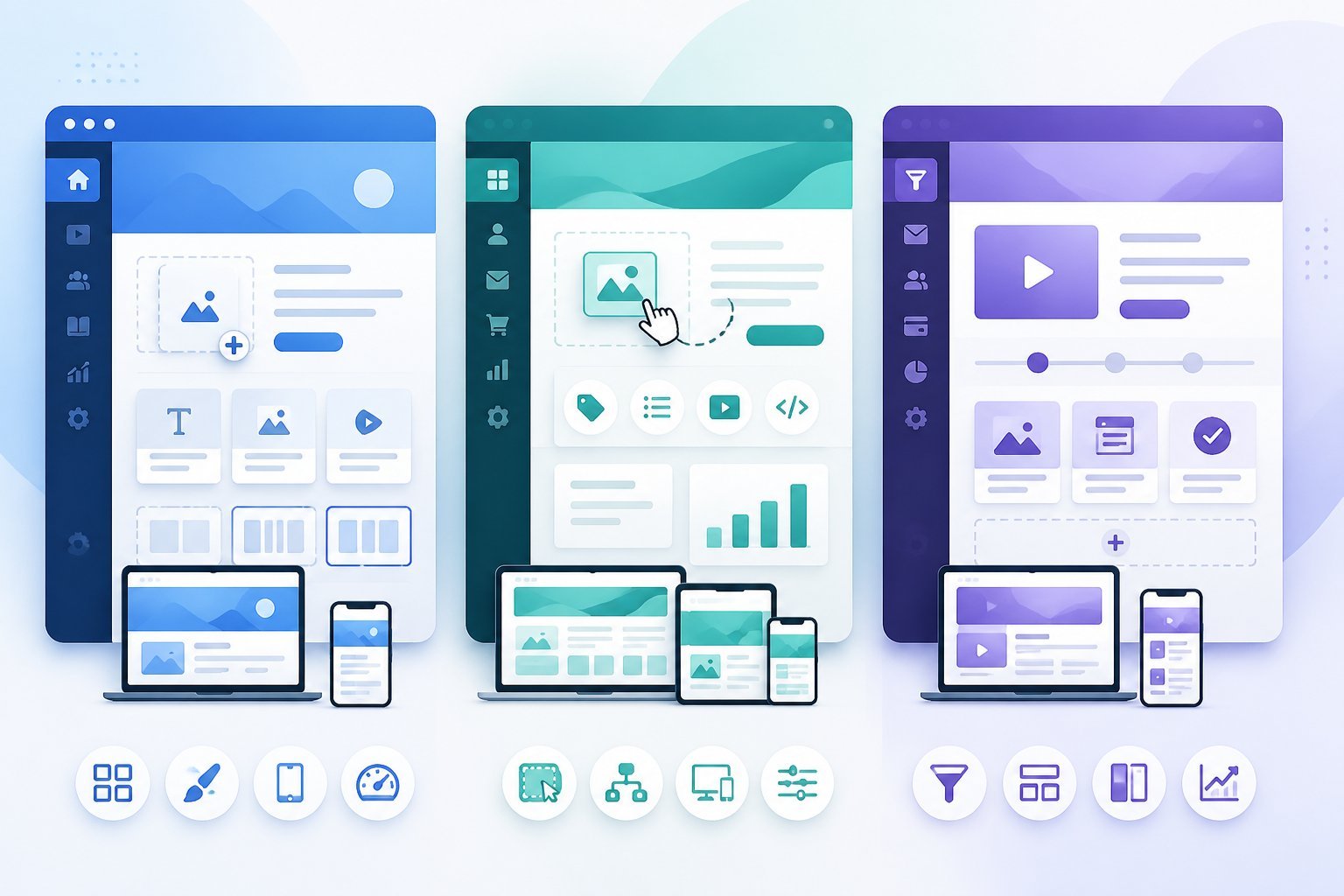
The platforms differ significantly in how you’ll interact with them daily and customize your pages. Kajabi focuses on simplicity and polish, Kartra emphasizes complete control, and ClickFunnels prioritizes conversion-focused design.
Interface and Ease of Use
Kajabi offers the cleanest interface of the three platforms. You’ll find everything organized in a simple dashboard that makes sense even if you’re not tech-savvy.
The learning curve is minimal, and most users can create their first course or landing page within hours.
Kartra takes a different approach with a more feature-rich dashboard. You get access to everything from one login, but the interface requires more time to learn.
The trade-off is that you won’t need to switch between multiple tools or tabs to manage your business.
ClickFunnels focuses entirely on funnel building, which means a steeper learning curve. The interface is designed for marketers who want to optimize every step of their sales process.
You’ll spend more time upfront learning the system, but you gain powerful funnel customization options.
Templates and Page Builders
Kajabi provides premium design templates that look professional right out of the box. The page builder is straightforward but somewhat limited in customization.
You can create landing pages and course content quickly, though you might feel restricted if you want specific design elements.
Kartra’s page builder offers the most flexibility. You get drag-and-drop functionality with extensive customization options for landing pages, checkout pages, and membership areas.
The platform supports custom domains and lets you control nearly every design element without touching code.
ClickFunnels specializes in high-converting funnel templates. The page builder focuses on elements that drive sales rather than creative design freedom.
You’ll find dozens of proven templates, but customization beyond the standard options requires more technical knowledge.
Mobile App Support
Kajabi stands out with its dedicated mobile app for both creators and students. You can manage your business, communicate with members, and check analytics from your phone.
Your students also get a branded app experience for consuming course content.
Kartra offers mobile-responsive pages but doesn’t currently provide a native mobile app. Everything works on mobile browsers, and your landing pages and membership sites adjust to different screen sizes automatically.
ClickFunnels also relies on mobile-responsive design rather than dedicated apps. Your funnels and pages display correctly on phones and tablets, but you’ll manage everything through a web browser.
Marketing and Automation Tools

Kartra includes native email marketing with behavioral triggers and advanced segmentation, while Kajabi offers basic email tools focused on course delivery.
ClickFunnels lacks built-in email marketing entirely, requiring third-party integrations for most email automation needs.
Email Marketing and Automation
Kartra provides complete email marketing built into the platform. You can create unlimited email sequences, broadcasts, and behavioral automations without connecting external tools.
The platform includes drag-and-drop email templates and an AI writing assistant to help you write your messages faster.
Kajabi offers email marketing focused mainly on course-related communications. You get basic automation for drip content and student engagement.
The email builder is simple to use but lacks advanced features like split testing or complex conditional logic.
ClickFunnels doesn’t include native email marketing in most plans. You’ll need to connect tools like ActiveCampaign or Mailchimp to send emails.
This creates extra costs and requires you to manage multiple logins for your marketing campaigns.
Behavioral Adaptive Marketing and Segmentation
Kartra’s behavioral adaptive marketing lets you tag contacts based on their actions. When someone clicks a link, watches a video, or abandons a cart, you can trigger specific follow-up sequences.
The tagging system works across your entire platform—pages, emails, purchases, and memberships all connect automatically.
Kajabi offers basic segmentation through student progress and course engagement. You can group people by what they’ve purchased or how far they’ve progressed through your content.
The system works well for course creators but doesn’t offer the same depth for service-based businesses.
ClickFunnels provides funnel-based tracking but limited behavioral automation. You can see where people drop off in your funnels, but creating sophisticated follow-up sequences requires external tools.
Marketing Campaigns and Broadcasts
Kartra combines email broadcasts with SMS messaging in one dashboard. You can send one-time announcements or schedule campaigns in advance.
The platform tracks opens, clicks, and conversions so you know what’s working.
Kajabi lets you send email broadcasts to your entire list or specific segments. The interface is clean and straightforward for basic announcements and course updates.
ClickFunnels requires third-party tools for most broadcast needs. While you can build landing pages for campaigns, the actual email delivery happens through connected apps.
Sales Optimization and Analytics

Kartra leads with advanced split testing across pages and emails, while ClickFunnels focuses on funnel-specific conversions and Kajabi keeps analytics simple.
Each platform handles checkout optimization differently, with varying levels of control over upsells and revenue tracking.
Split Testing and Funnel Optimization
Kartra gives you the ability to split test up to four versions of pages and emails at once. You can test subject lines and content simultaneously, which helps you make decisions based on real data.
This level of testing goes beyond basic a/b testing and lets you optimize multiple elements of your funnel at the same time.
ClickFunnels specializes in funnel optimization with built-in split testing for landing pages and sales sequences.
The platform was designed around conversion testing, so you’ll find templates and tools focused on maximizing funnel performance.
However, email testing requires third-party integrations.
Kajabi offers basic split testing, but it’s more limited compared to Kartra and ClickFunnels. You can test pages, but the options aren’t as robust.
Checkout, Order Bumps, Upsells, and Downsells
Kartra includes 1-click checkout with support for Klarna, Apple Pay, Google Pay, and PayPal. You can add order bumps directly on checkout pages and set up upsells and downsells through the funnel builder.
The system handles the entire purchase flow without additional plugins.
ClickFunnels excels at maximizing revenue per transaction. The platform makes it easy to add order bumps, upsells, and downsells with templates designed specifically for these elements.
You’ll find advanced options for creating complex offer sequences.
Kajabi handles basic checkout and can process payments, but it doesn’t emphasize order bumps or sophisticated upsell sequences like the other two platforms.
It’s functional for straightforward purchases but lacks the conversion-focused tools that Kartra and ClickFunnels provide.
Analytics and Reporting
Kartra provides detailed analytics across your entire business system. You can track funnel performance, email open rates, conversion data, and customer behavior in one dashboard.
The platform connects all your business data, so you see how different parts of your system work together.
Kajabi keeps analytics simple and clean. You’ll get basic reports on course completion, revenue, and engagement.
The interface is easy to understand, but it doesn’t offer the depth that marketers who focus on optimization typically need.
ClickFunnels shows you funnel-specific metrics with strong focus on conversion rates and revenue per funnel. The reports help you identify where visitors drop off and which steps need improvement.
However, since it lacks native email tools, you won’t get complete customer journey analytics in one place.
Membership, Community, and Student Engagement

Kajabi leads in student engagement tools with built-in quizzes, assessments, and community features. Kartra focuses on membership automation and progress tracking, while ClickFunnels offers basic membership access without dedicated learning features.
Quizzes, Assessments, and Certificates
Kajabi gives you the most complete set of student engagement tools. You can create quizzes, set up assessments, and award certificates when students complete your courses.
The platform lets you build interactive learning experiences that keep students motivated and help you measure their progress.
Kartra offers basic quiz functionality through its membership platform, but it’s not as detailed as Kajabi. You can create simple assessments and track completion, but the options are more limited.
The platform works better for straightforward content delivery than complex educational experiences.
ClickFunnels doesn’t include native quiz or assessment features. You’ll need to use third-party tools or integrations to add these functions to your courses.
This creates extra work and additional costs if student testing matters to your business.
Community Features and Engagement Tools
Kajabi includes a native community feature where students can interact, ask questions, and support each other. You can create discussion threads, share content, and build community within the platform.
This helps with student retention and creates a more interactive learning environment.
Kartra lacks built-in community features. You’ll need to connect external tools like Facebook Groups or Circle to create a community space for your members.
This adds another login and platform for your students to manage.
ClickFunnels also doesn’t offer native community building tools. You’re on your own to find and integrate separate community platforms if you want to create engagement beyond the course content itself.
Progress Tracking and Coaching Programs
Kajabi excels at progress tracking with detailed analytics showing where students are in your courses. You can see completion rates, engagement levels, and identify students who need extra support.
The platform also supports structured coaching programs with scheduled content releases and student management tools.
Kartra provides membership progress tracking through its analytics dashboard. You can monitor student activity, completion rates, and engagement patterns.
The platform works well for drip-feeding content and managing different membership tiers, making it solid for coaching programs that need automation.
ClickFunnels offers minimal progress tracking focused more on sales metrics than student learning. You’ll need additional tools to properly track student progress and manage coaching relationships over time.
Integrations, Affiliate Management, and Support

All three platforms handle integrations differently. Each offers distinct approaches to affiliate programs and customer support that can impact your business operations.
Integration Options and API Access
Kartra works with popular tools through native integrations and Zapier. You can connect to email services, payment processors, and webinar platforms.
The platform includes API access for custom integrations if you need them.
Kajabi also supports Zapier and offers direct integrations with ActiveCampaign, Mailchimp, and major payment processors. The platform provides API access for developers who want to build custom connections.
You’ll find fewer native integrations compared to dedicated marketing tools, but the essential ones are covered.
ClickFunnels connects to third-party tools primarily through Zapier. The platform integrates directly with email services and payment gateways.
ClickFunnels 2.0 improved integration capabilities, but you’ll still rely on Zapier for many connections. API access is available for custom development work.
Affiliate Programs and Management
Kartra includes built-in affiliate management tools at all pricing levels. You can create custom affiliate programs, set commission structures, and track performance.
The platform provides your affiliates with promotional materials and tracking links. You’ll get detailed reports on affiliate sales and commissions.
Kajabi requires you to upgrade to higher-tier plans to access affiliate program management. Once unlocked, you can create programs, manage commissions, and provide affiliates with marketing resources.
The affiliate dashboard lets you track performance and handle payouts.
ClickFunnels offers affiliate management through its Backpack feature, which costs extra beyond the base subscription. You get complete control over commission structures and affiliate tracking.
The tool includes features for managing multiple affiliate programs across different products.
Customer Support and Helpdesk
Kartra stands out with its integrated helpdesk system. You can manage customer support tickets, live chat, and build a knowledge base without external tools.
This replaces services like Zendesk or Freshdesk. Email support is available, and higher plans include priority assistance.
Kajabi provides email support and live chat during business hours. You’ll also get access to Kajabi University, which offers training courses and resources.
The platform has an active community where you can ask questions and get help from other users.
ClickFunnels offers email support and a help center with documentation and tutorials. Premium plans include access to priority support.
The platform has a large user community and extensive training resources through its FunnelFlix library.
Pricing Structure and Value Comparison
Kartra starts at $59/month and offers the most features for the price. Kajabi begins at $89/month but forces an upgrade at 250 contacts.
ClickFunnels starts at $97/month but requires extra tools for a complete business system.
Pricing Plans and Tiers
Kartra offers four pricing plans. The Starter plan costs $59/month and includes 2,500 contacts, unlimited emails, and full access to funnels, memberships, and checkout pages.
The Silver plan is $119/month with 12,500 contacts. The Gold plan costs $229/month with 25,000 contacts.
The Platinum plan is $549/month with 50,000 contacts.
Kajabi starts at $89/month but limits you to just 250 contacts and one website. Once you hit that contact limit, you must upgrade to the Basic plan at $179/month for 10,000 contacts.
The Growth plan costs $319/month with 25,000 contacts.
ClickFunnels starts at $97/month for basic funnel building. You’ll need their $297/month plan to access more advanced features like affiliate management and automation.
Value for Different User Types
If you’re a coach or consultant who needs email, scheduling, checkout, and course delivery in one place, Kartra gives you everything at $59/month. You won’t need to buy extra tools or pay for add-ons.
Kajabi works well if you focus mainly on selling online courses and already have a bigger budget. The design templates look professional, but you’re paying more for fewer features compared to Kartra.
ClickFunnels suits you if you only care about testing different sales funnels. You’ll still need to connect other tools for email marketing and course hosting, which adds to your monthly costs.
Payment Processing and Third-Party Tools
All three platforms connect with PayPal and Stripe for processing payments. Kartra includes one-click checkout with Apple Pay, Google Pay, and Klarna built in.
You can set up payment plans and subscriptions without leaving the platform.
Kajabi and ClickFunnels both charge extra fees on top of standard Stripe rates. Kartra doesn’t add surcharges, which saves you money as your sales grow.
Kartra also includes built-in email marketing, video hosting, calendars, and helpdesks. With Kajabi and ClickFunnels, you might need to pay for separate tools like Calendly, Vimeo, or ActiveCampaign to run your full business.
Platform Comparison Summary and Best Use Cases
Each platform serves different business needs based on your goals and technical skills. Kajabi excels at course delivery and student experience.
Kartra offers the most marketing tools at a mid-range price. ClickFunnels specializes in fast funnel creation for product launches.
Which Platform Fits Your Business Model?
Choose Kajabi if you want to sell online courses and digital products with a focus on student experience. The platform includes webinar hosting, video hosting, and blogging tools built in.
You get a complete online course platform without needing other services.
Pick Kartra when you need powerful marketing tools and want to save money compared to Kajabi. It works well if you plan to sell digital products through complex sales funnels.
The built-in calendar and scheduling features help you manage appointments and webinars.
Select ClickFunnels if your main goal is building sales funnels quickly for product launches. It’s not ideal for creating membership sites or full online course creation like Teachable or Thinkific offer.
The platform focuses on moving customers through your sales process fast.
Pros and Cons of Each Solution
| Platform | Main Strengths | Main Weaknesses |
|---|---|---|
| Kajabi | Best course player, mobile app, 24/7 support, video hosting included | Highest price, limited email features, fewer marketing tools |
| Kartra | Most features for price, behavioral marketing, helpdesk system | Slower support, fewer design options, limited integrations |
| ClickFunnels | Easiest funnel builder, strong community, A/B testing | No membership sites, limited customization, expensive top tier |
Kajabi charges more but delivers a polished all-in-one platform. Kartra gives you more marketing power without the premium cost.
ClickFunnels makes funnel building simple but lacks features for running a full course business.
Alternative Online Course Platforms
Consider Teachable or Thinkific if you only need course hosting without marketing tools. Both cost less than these all-in-one marketing platforms.
You’ll need separate tools for email and sales funnels though.
Podia offers a simpler alternative for selling online courses and digital products with basic email features. It’s easier to learn than Kajabi but has fewer advanced options.
Mighty Networks focuses on community building alongside courses. You can combine course content with member discussions.
It works differently than traditional online course platforms by putting community first.
These alternatives require you to connect other services for video hosting (like Wistia), email marketing, and webinar hosting.