

Picking the right platform for your online course can feel overwhelming. Thinkific and ClickFunnels both help you sell digital products, but they work in very different ways.
Understanding these differences will save you time and money.

Thinkific is built specifically for creating and teaching online courses, while ClickFunnels focuses on building sales funnels to sell products and services. If you want to give students a real learning experience with quizzes, progress tracking, and organized lessons, you need different tools than if you just want to guide people through a sales process.
Your choice depends on whether you’re a course creator who wants to teach or a business owner who wants to sell.
This guide walks you through how these platforms handle course building, student management, marketing tools, and pricing.
You’ll learn which one fits your goals so you can make a smart choice for your business.
Core Purpose and Audience
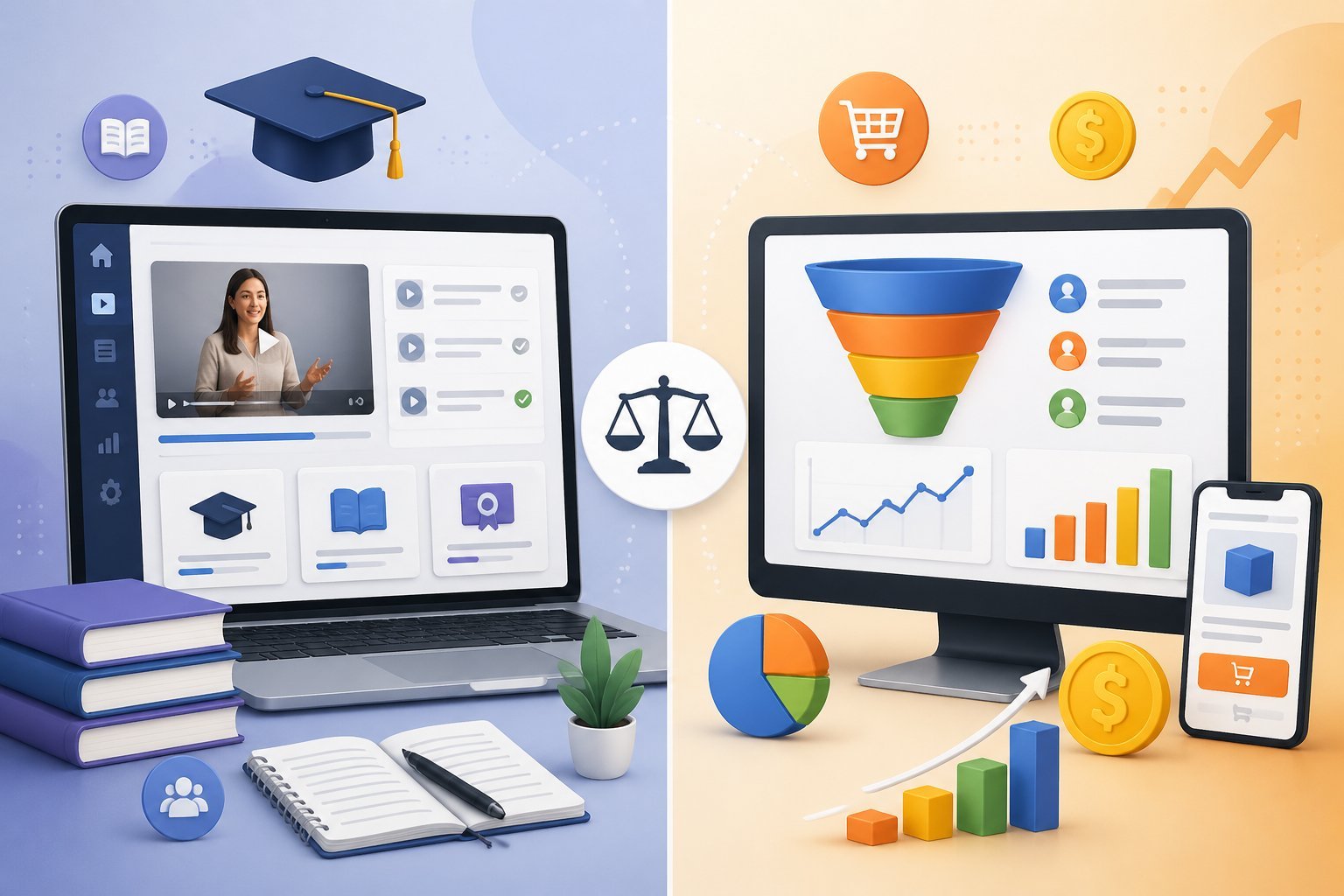
Thinkific works best for educators building structured online courses. ClickFunnels targets marketers who need sales funnels and lead generation tools.
Your choice depends on whether you prioritize teaching or selling.
Who Should Choose Thinkific?
You should pick Thinkific if your main goal is creating and selling online courses with a focus on student learning. The platform gives you tools specifically designed for course creators who want to organize lessons, add quizzes, and track student progress.
Thinkific works well if you plan to build membership sites where students access content over time. You can upload videos, add downloadable resources, and create a structured learning path that guides students through your material step by step.
The platform makes sense for teachers, coaches, and subject matter experts who want their content to be the star. You don’t need advanced marketing knowledge to get started.
Your students get a clean, simple experience that helps them focus on learning instead of getting distracted by sales messages.
Who Should Choose ClickFunnels?
You should choose ClickFunnels if your priority is marketing and selling products through optimized sales funnels. The platform excels at converting visitors into customers through landing pages, email sequences, and upsell offers.
ClickFunnels fits best for entrepreneurs who sell multiple products or services beyond just online courses. You get a powerful tool for testing different sales approaches and tracking which methods bring in the most money.
The platform works for marketers who understand funnel strategy and want control over every step of the buyer journey. You can build webinar funnels, product launch sequences, and membership areas all in one place.
ClickFunnels requires more marketing know-how than Thinkific but gives you more flexibility for complex sales strategies.
Course Creation and Student Experience
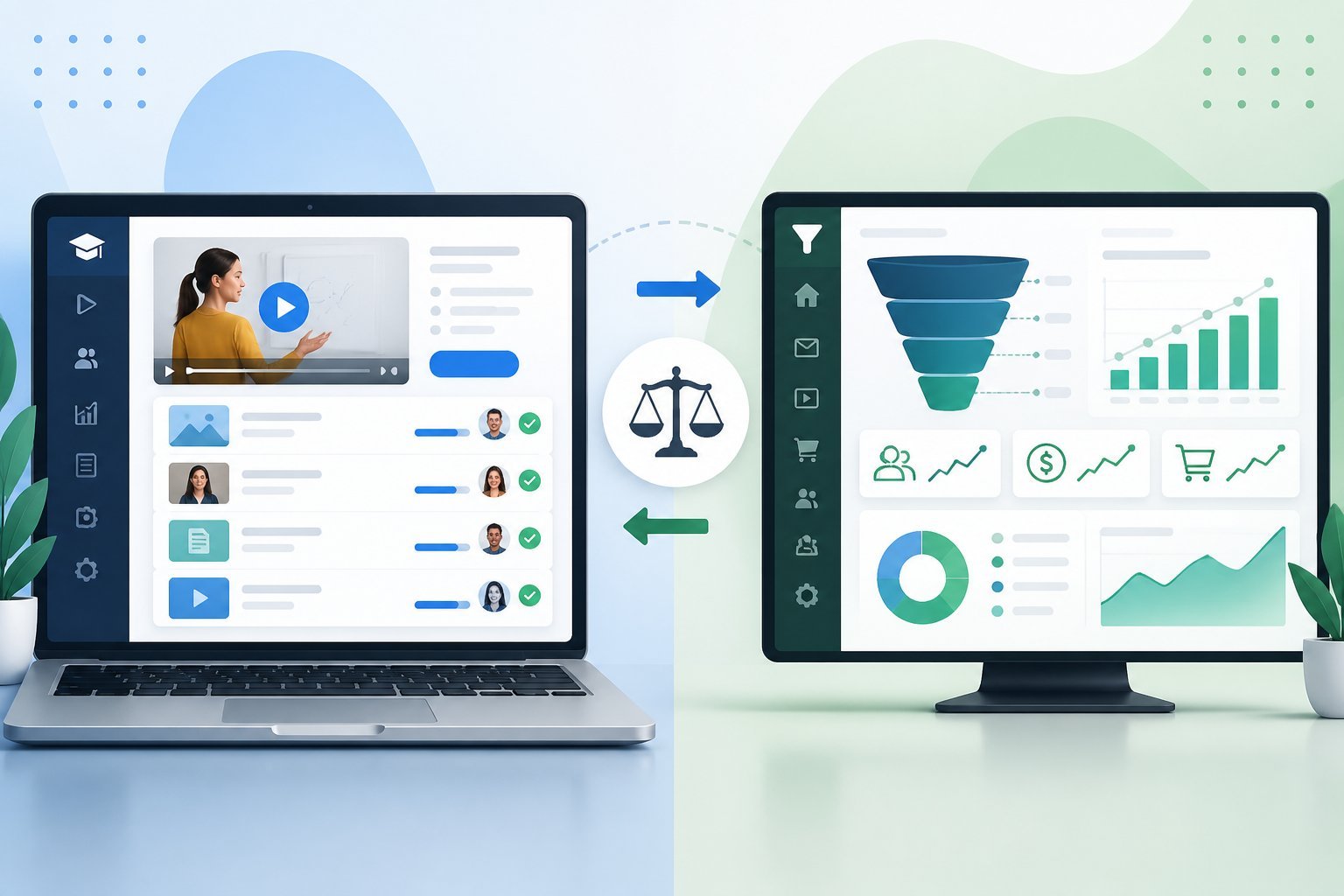
Thinkific gives you specialized tools built specifically for creating and delivering online courses. ClickFunnels treats courses as just one piece of a larger sales funnel.
Your choice affects how easy it is to build courses, engage students, and manage the learning experience.
Course Builder Features
Thinkific provides a drag-and-drop course builder designed for online learning. You can upload videos, PDFs, audio files, and text directly into your course structure.
The platform lets you organize content into chapters and lessons without any coding knowledge. ClickFunnels focuses more on moving customers through sales processes.
You can add course content to your funnels, but the builder is primarily designed for sales pages and checkout flows.
The course creation tools are basic compared to dedicated online course platforms.
Thinkific supports drip content, which releases lessons to students on a schedule you set. You can also create prerequisites that require students to complete certain lessons before accessing new ones.
ClickFunnels requires workarounds or third-party integrations to achieve similar functionality.
Quizzes, Assignments, and Student Engagement
Thinkific offers built-in quiz features with multiple question types including multiple choice, true/false, and short answer. You can set passing grades and allow students to retake quizzes.
The platform also includes assignments where students upload files for review. You can create surveys to gather feedback from your students.
Discussion forums and community features help you build engagement within your courses.
ClickFunnels lacks native quiz and assignment tools. You would need to integrate external tools or use basic workarounds to assess student learning.
The platform doesn’t include community features designed for student interaction around course content.
Membership Site Capabilities
Thinkific creates membership sites where you control access to your online courses based on enrollment. You can offer free courses, one-time purchases, payment plans, or subscriptions.
The platform handles different membership tiers automatically. Your students get a dedicated learning portal where they can access all their enrolled courses.
You can customize the look and feel to match your brand. ClickFunnels builds membership areas as part of your sales funnels.
You get more control over the sales process leading to enrollment, but less functionality for organizing and delivering course content. The membership features work well for simple content libraries but become limiting for complex course structures.
Student Management Tools
Thinkific gives you detailed insights into student progress. You can see which lessons each student has completed, their quiz scores, and how long they spend on content.
The platform lets you manually enroll students, send messages, and track engagement metrics. You can export student data and generate reports on course completion rates.
The system automatically manages student access based on their enrollment status and payment history. ClickFunnels provides basic student tracking through its contact management system.
You can see who purchased access to your funnel content, but you won’t get detailed learning analytics. Student management focuses more on the buyer journey than the learning experience.
You’ll need additional tools or integrations to track actual course progress and engagement.
Sales Funnels and Marketing Automation
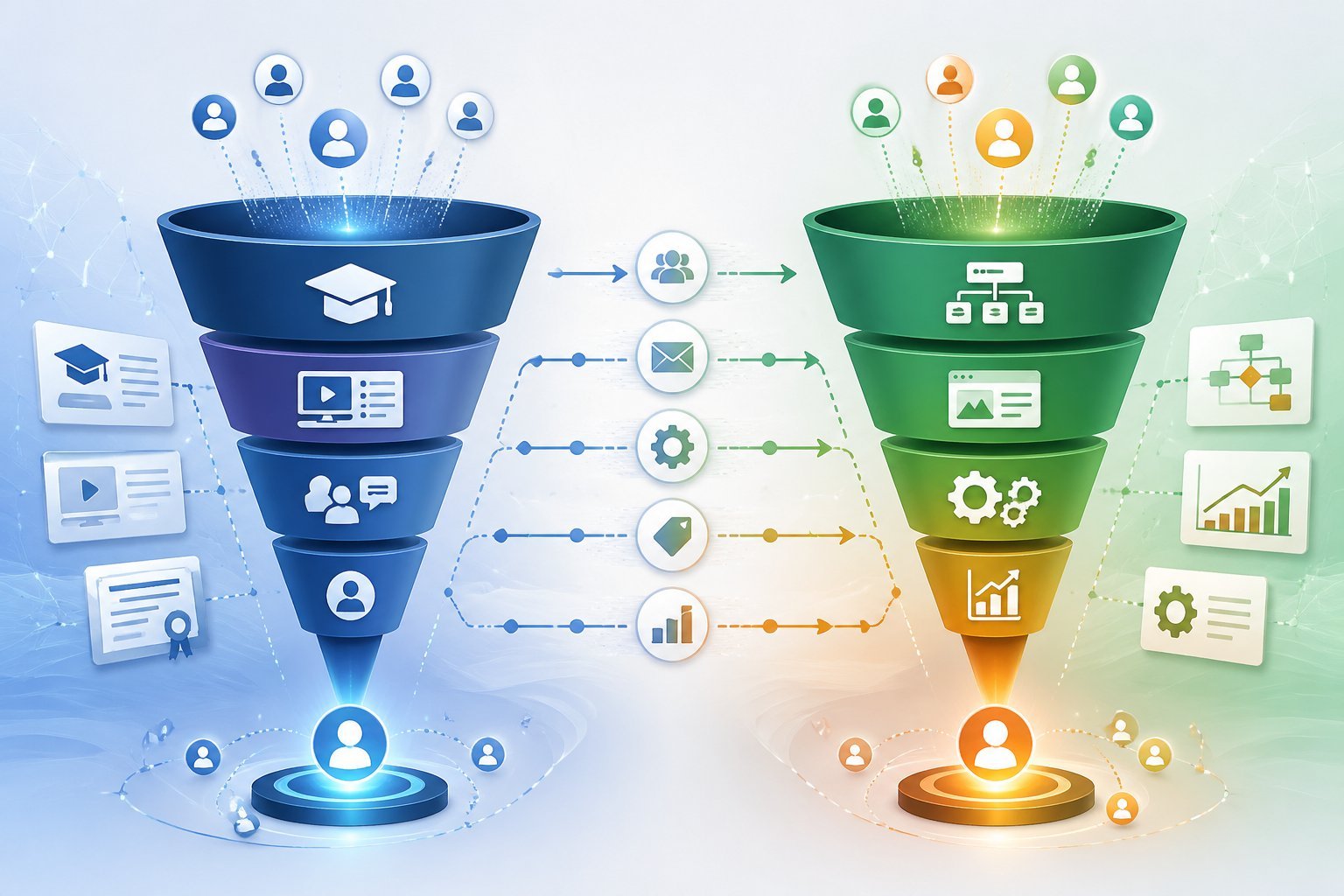
ClickFunnels focuses on sales funnel creation and marketing automation. Thinkific offers basic funnel features that require third-party tools for advanced capabilities.
Your choice depends on whether you need powerful funnel-building tools or simple course delivery.
Funnel Builder and Templates
ClickFunnels provides a dedicated sales funnel builder with drag-and-drop functionality. You get access to pre-built templates designed for different business goals like product launches, webinars, and membership sites.
The platform lets you create complete funnels that guide customers through each step of the buying process. You can customize landing pages, checkout pages, and thank you pages without coding knowledge.
Thinkific has basic funnel capabilities but focuses mainly on course delivery. You can create simple landing pages and checkout flows for your courses.
However, the funnel builder is not as robust as ClickFunnels. If you need complex sales funnels, ClickFunnels is the better choice.
Thinkific works well if you only need straightforward course enrollment pages.
Upsells and Order Bumps
ClickFunnels excels at upselling with built-in features for one-click upsells and downsells. You can add order bumps to your checkout pages, which are additional offers that customers can accept with a single click.
The platform lets you create multiple upsell pages in sequence. If a customer declines one offer, you can present a downsell at a lower price point.
This helps you increase your average order value. Thinkific offers basic upsell options through bundles and course packages.
You can create course bundles, but the upsell process is less automated than ClickFunnels. You need to integrate third-party tools for advanced upsell features.
Email Marketing and Follow-Up Funnels
ClickFunnels includes email marketing automation in higher-tier plans like ClickFunnels Platinum. The Follow-Up Funnels feature lets you send email sequences based on customer actions within your sales funnels.
You can set up automated emails that trigger when someone joins your list, makes a purchase, or abandons their cart. The system ties email campaigns directly to your funnel steps.
Thinkific provides basic email tools for course announcements and student updates. You can send emails to students enrolled in your courses.
However, you need to connect external email marketing services like Mailchimp or ConvertKit for full automation. For advanced email marketing tied to sales funnels, ClickFunnels offers more built-in options.
Thinkific requires additional integrations to match these capabilities.
A/B Testing for Optimization
ClickFunnels includes A/B testing tools that help you optimize your funnels. You can test different versions of your pages to see which ones convert better.
The platform tracks conversion rates and shows you which variation performs best. You can test headlines, images, buttons, and entire page layouts.
This helps you improve your sales funnel performance over time based on real data. Thinkific has limited A/B testing features built into the platform.
You need to use third-party analytics tools or integrations to run split tests on your course pages.
Integrations and Payment Processing

Both platforms connect with major payment processors and third-party tools. They differ in how many native integrations they offer and how much you’ll need to rely on automation tools like Zapier.
Payment Gateways: Stripe and PayPal
Thinkific and ClickFunnels both support Stripe and PayPal as their primary payment gateways. You can accept credit cards, debit cards, and PayPal payments through either platform.
ClickFunnels processes payments directly through its checkout pages. You can set up one-time payments, subscriptions, and payment plans without needing extra tools.
Thinkific also handles payments through your course platform. The payment gateway integration works smoothly for course enrollments and bundles.
You keep your branding throughout the checkout process on both platforms. Both systems let you collect payments in multiple currencies.
This makes it easy to sell to students or customers around the world.
Third-Party Integrations and Automation
Thinkific connects with over 1,000 apps through native integrations and Zapier. You can link it to email marketing platforms like ActiveCampaign, CRM systems, and analytics tools.
These integrations help you automate student enrollment and communication. ClickFunnels offers fewer native integrations than Thinkific.
However, you can still connect it to email services and other tools through Zapier. The platform includes more built-in marketing features, so you might not need as many external tools.
Common automation workflows include enrolling users after purchase, syncing contacts between platforms, and triggering email sequences. Zapier makes it simple to connect both platforms to your existing tech stack without coding.
Affiliate Management and Programs
Both platforms let you run affiliate programs to help grow your business through partners. ClickFunnels includes Affiliate Management in its higher-tier plans with built-in tracking and commission settings.
Thinkific offers affiliate program features that let you recruit partners and track their sales. You can set commission rates and provide affiliates with promotional materials.
Each platform gives your affiliates unique tracking links. You’ll see detailed reports on which affiliates drive the most sales.
This helps you reward top performers and optimize your affiliate strategy.
Customization, Usability, and Support
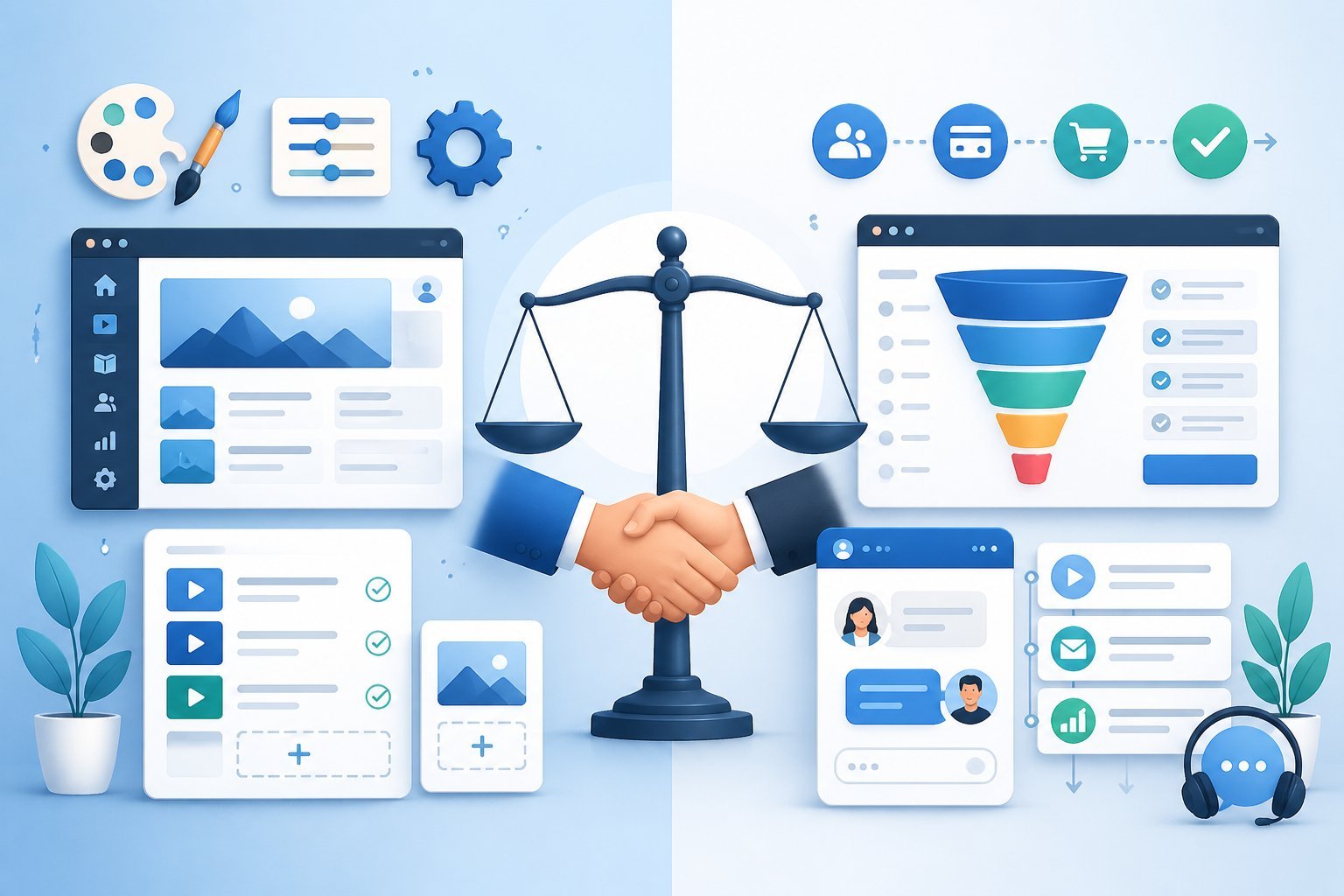
Thinkific offers a user-friendly interface with strong customization options. ClickFunnels provides powerful funnel-building templates but requires more technical knowledge.
Both platforms deliver customer support through different channels. Thinkific offers 24/7 assistance, while ClickFunnels provides extensive knowledge resources.
Templates and Design Flexibility
Thinkific gives you access to customizable templates that let you create a branded learning experience. You can adjust colors, fonts, and layouts using the drag-and-drop editor without needing coding skills.
The platform supports various content formats including videos, PDFs, quizzes, and interactive elements. ClickFunnels provides pre-built funnel templates designed to maximize sales conversions.
These templates are optimized for different business goals like product launches and webinars. You’ll need more technical expertise to customize these templates compared to Thinkific’s simpler approach.
Both platforms let you create custom domains and branding. Thinkific focuses on course page design and student experience.
ClickFunnels emphasizes sales page optimization and conversion elements like countdown timers and order bumps.
Ease of Use and Onboarding
Thinkific makes it easy for beginners to start building courses right away. The platform’s drag-and-drop interface requires minimal training.
You can upload course content, organize lessons, and set up student enrollment within hours of signing up. ClickFunnels has a steeper learning curve because it offers more complex sales automation features.
You’ll spend more time learning how to build effective funnels and set up email sequences. The platform assumes you have some marketing knowledge.
Both platforms offer a free trial so you can test their features before committing. Thinkific’s trial focuses on course creation tools.
ClickFunnels’ trial lets you explore funnel building and marketing automation. The onboarding process differs significantly between the two based on their core purposes.
Customer Support and Community
Thinkific provides 24/7 customer support through email, live chat, and phone. You get access to help regardless of your pricing plan.
The platform also maintains a detailed knowledge base with tutorials and guides. ClickFunnels offers support through a comprehensive knowledge base and an active community forum where users share strategies.
Enterprise customers get dedicated account managers. The platform’s community is particularly strong for learning marketing tactics and funnel optimization.
Both platforms support community building features but in different ways. Thinkific includes discussion forums and student interaction tools within courses.
ClickFunnels focuses on affiliate program management and marketing community connections. You’ll find more course-focused communities with Thinkific and more sales-oriented networks with ClickFunnels.
Pricing and Plans Comparison
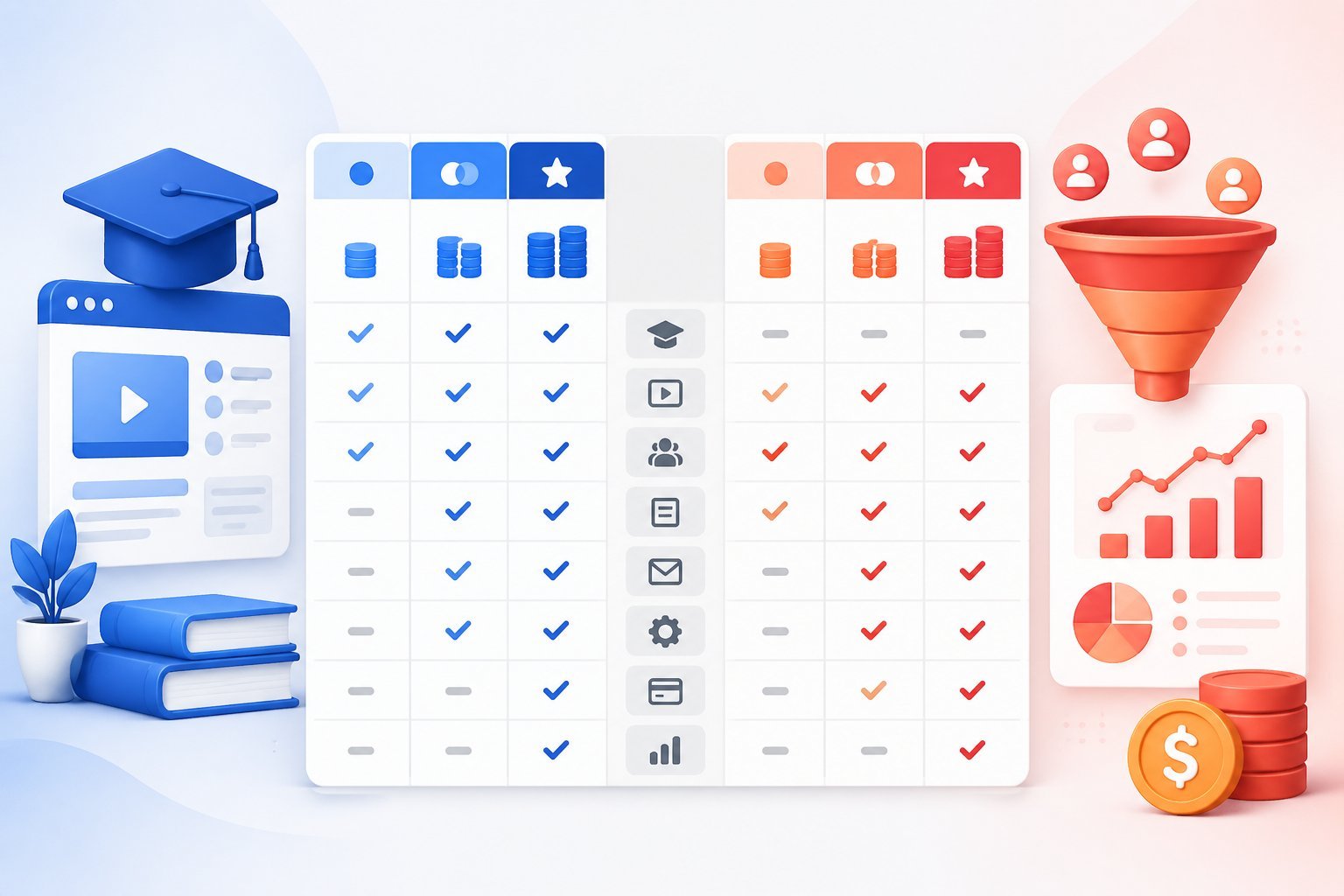
Thinkific and ClickFunnels use different pricing models that reflect their different purposes. Thinkific offers a free plan with basic features and paid plans starting at $36 per month, while ClickFunnels starts at $147 per month with no permanent free option.
Thinkific Pricing Options
Thinkific gives you four main pricing tiers. The Free Plan lets you create up to three courses with unlimited students at no cost.
This plan includes basic features like quizzes, surveys, and content hosting. The Basic Plan costs $36 per month when paid annually or $49 monthly.
You get unlimited courses and students, plus drip content, coupons, and email integrations. The Pro Plan runs $74 per month annually or $99 monthly, adding memberships, bundles, certificates, and priority support.
The Premier Plan costs $374 per month yearly or $499 monthly. This top tier includes up to five site admins and 50 course creators.
It also has single sign-on and advanced admin features. All paid plans come with a 30-day money-back guarantee.
Thinkific doesn’t limit your student numbers on any plan.
ClickFunnels Pricing Breakdown
ClickFunnels has three pricing levels. The Basic Plan costs $147 per month and includes 20 funnels and 100 pages.
You can connect up to three custom domains and use three payment gateways. The Pro Plan runs $197 per month with unlimited funnels and pages.
You get nine payment gateway options and can add up to nine domains. This plan includes follow-up funnels for email automation.
The Funnel Hacker Plan costs $297 per month. It offers unlimited everything plus 27 payment options and 27 domains.
This tier adds priority support and extra training materials. ClickFunnels pricing reflects its focus on sales funnels rather than course delivery.
None of these plans specifically mention course hosting features.
Free Plan and Free Trials
Thinkific’s free plan is permanent and doesn’t require a credit card. You can use it as long as you want with three courses and unlimited students.
This makes it easy to test the platform without any risk. ClickFunnels offers a 14-day free trial instead of a free plan.
You must enter your credit card information to start the trial. The trial gives you full access to the basic plan features, but you’ll be charged after 14 days if you don’t cancel.
The difference matters if you’re just starting out. Thinkific lets you build and launch courses without spending money.
ClickFunnels requires a financial commitment after two weeks.
Value for Unlimited Students
Thinkific includes unlimited students on all plans, even the free one. This means your costs stay the same whether you have 10 students or 10,000 students.
ClickFunnels doesn’t charge based on student numbers either. However, your real cost comes from its higher starting price.
You’ll pay at least $147 per month compared to Thinkific’s $36 basic plan. You get course-specific features like student tracking, certificates, and progress monitoring.
ClickFunnels focuses on sales funnels, which means you might need extra tools for actual course delivery.