
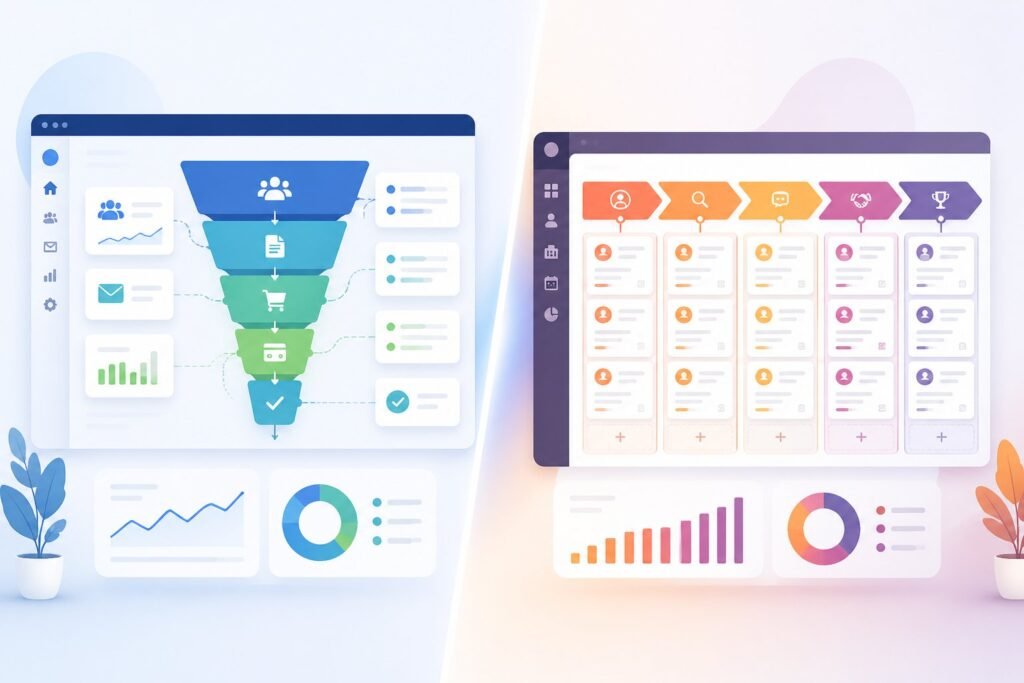
Choosing between ClickFunnels and Pipeline Pro can feel overwhelming when you’re trying to build effective sales funnels for your business. Both platforms promise to help you create pipelines that convert visitors into customers, but they take different approaches to get you there.

ClickFunnels focuses on building complete sales funnels with extensive templates and conversion tools, while Pipeline Pro centers on B2B sales automation with CRM features at a more budget-friendly price point. The platform you choose depends on whether you need advanced funnel-building capabilities or a streamlined sales management system.
This comparison breaks down how these tools handle everything from building your first funnel to managing customer relationships and processing payments. You’ll learn about their core differences, marketing automation features, ease of use, and pricing structures so you can pick the platform that fits your business goals and budget.
Core Differences Between Pipeline Pro and ClickFunnels
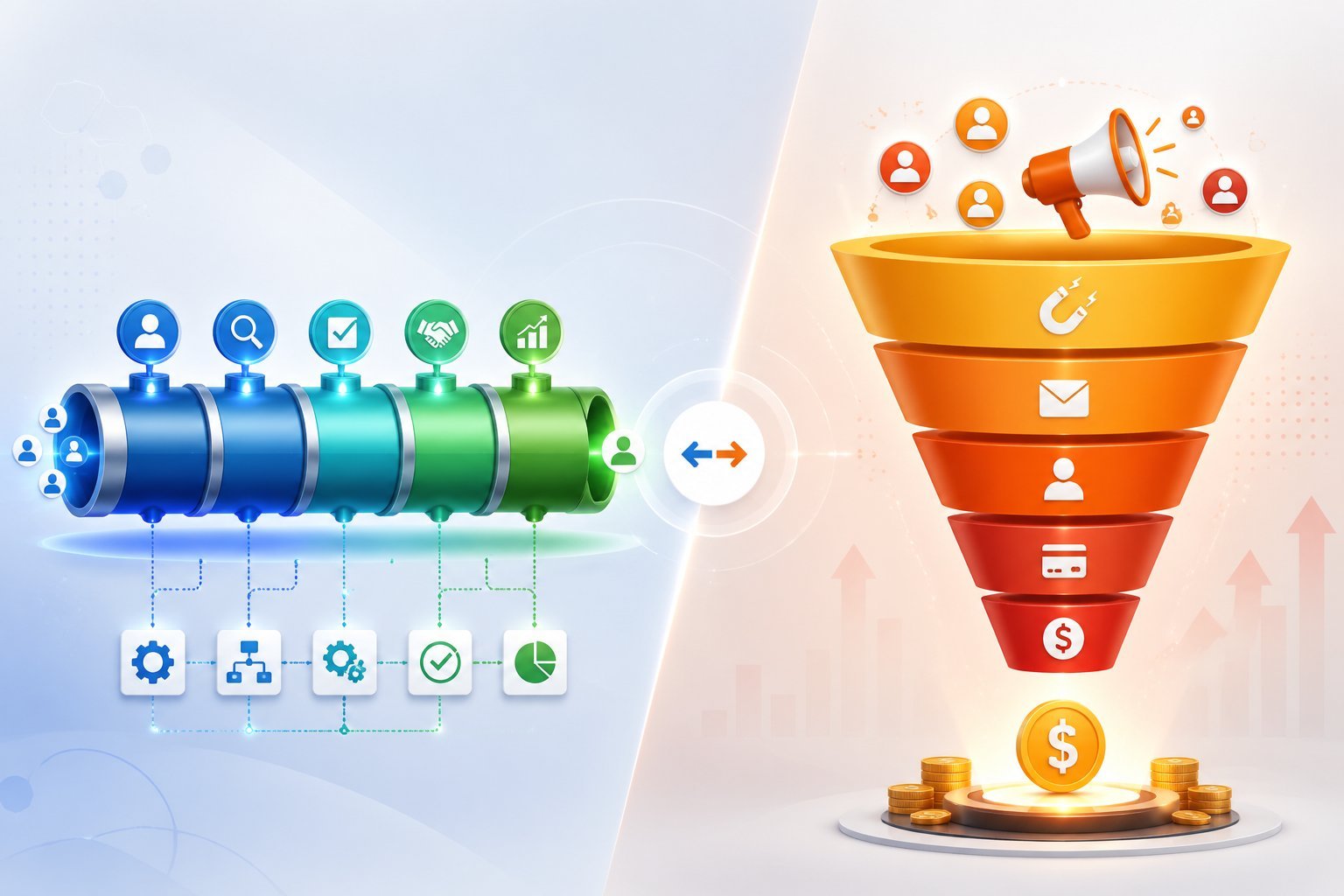
Pipeline Pro and ClickFunnels take different approaches to how they help you manage customer journeys. They operate on completely different business models that affect what you actually own and control.
Sales Funnel vs Sales Pipeline Concepts
A sales funnel is a series of web pages that guide customers toward making a purchase. When you build a funnel in ClickFunnels, you’re creating landing pages, checkout pages, and thank-you pages that move people through specific steps.
The focus is on converting visitors into buyers through targeted content at each stage. A sales pipeline tracks where your leads are in the buying process.
Pipeline Pro shows you which contacts are in different stages like “contacted,” “qualified,” or “ready to buy” on a dashboard. You can see exactly who needs a follow-up call or who’s about to close.
Think of it this way: a marketing funnel is the path you build for customers to walk down. A sales pipeline dashboard is your view of where everyone currently stands.
ClickFunnels excels at creating the path itself. Pipeline Pro gives you better visibility into tracking individual leads through your process.
White-Label vs Proprietary Platforms
Pipeline Pro is actually a white-label resell version of GoHighLevel. This means it’s rebranded software built on another company’s platform.
GoHighLevel SaaS powers Pipeline Pro behind the scenes. You’re essentially using GoHighLevel’s technology with Pipeline Pro’s branding and pricing.
ClickFunnels built its own proprietary software from the ground up. Everything you use belongs to ClickFunnels as a company, and they control all development and updates.
The white-label approach means Pipeline Pro’s features and reliability depend on GoHighLevel’s infrastructure. If GoHighLevel makes changes or has issues, Pipeline Pro users feel the impact.
ClickFunnels controls its own destiny since it owns the entire platform. This difference matters for your long-term planning because you’re betting on different companies when you choose either platform.
Reliability and Long-Term Viability
ClickFunnels has a much stronger track record with 4.6 stars on G2 and thousands of reviews from real users. The platform has been around since 2014 and serves a massive user base.
You’ll find extensive support resources, active communities, and regular feature updates. Pipeline Pro only has 4 reviews on G2 with an average of 1.4 stars.
Users complained about poor customer service and buggy software. The limited feedback suggests either a very small user base or newer presence in the market.
ClickFunnels charges more but offers proven reliability. Pipeline Pro’s $37 lifetime price seems attractive until you consider potential technical problems or lack of support when you need help.
The pricing difference reflects the stability gap between these platforms.
Key Features and Sales Funnel Capabilities

ClickFunnels focuses on complete funnel creation with advanced marketing features. Pipeline Pro emphasizes sales automation and CRM integration.
Both platforms offer drag-and-drop builders and templates. They differ in customization depth and testing capabilities.
Funnel Builder and Website Builder Tools
ClickFunnels provides a comprehensive sales funnel builder with a drag-and-drop editor that lets you create complete marketing funnels without coding. You can build landing pages, sales pages, order forms, and membership sites all in one platform.
The drag-and-drop builder includes elements like countdown timers, progress bars, and pricing tables. You can connect multiple pages together to create complex customer journeys.
Pipeline Pro offers a simpler funnel builder designed for sales automation workflows. The drag-and-drop interface helps you create multi-touch campaigns across email, SMS, and voice channels.
The platform focuses more on CRM functions than website building. You get basic landing page creation tools, but the real strength is in automating your sales process and tracking leads through your pipeline.
Templates, Customization, and Design Options
ClickFunnels gives you access to over 100 pre-designed templates for different business types and goals. These funnel templates cover everything from product launches to webinar registrations and membership sites.
You can fully customize every element of your pages and funnels. The platform allows advanced customization of colors, fonts, layouts, and page flows without restrictions.
Pipeline Pro provides fewer than 10 basic templates in its templates library. The templates focus on simple lead capture and follow-up sequences rather than complete sales funnels.
Your customization options are more limited with Pipeline Pro. You work within preset fields and options, which makes setup faster but gives you less control over funnel design and page layouts.
Landing Pages and Funnel Templates
Both platforms let you create landing pages with visual editors. ClickFunnels offers specialized funnel templates for specific goals like lead generation, product sales, webinar registrations, and membership access.
Each template comes ready with proven layouts designed to improve conversion rates. You can track funnel performance through built-in analytics that show you exactly where visitors drop off.
Pipeline Pro provides basic landing page tools with simple templates. The platform is better suited for creating automation workflows than building elaborate sales funnels with multiple steps and upsells.
A/B Testing and Split Testing
ClickFunnels includes built-in A/B testing and split testing features. You can test different versions of your headlines, images, copy, and offers directly within the platform to optimize conversion rates.
The analytics tools show you which variations perform better. You can track metrics at every stage of your funnel to understand what drives sales and what needs improvement.
Pipeline Pro does not offer native A/B split testing capabilities. If you want to run tests, you need to integrate third-party tools, which adds extra steps to your workflow and may increase costs.
CRM, Marketing Automation, and Integrations

Pipeline Pro positions itself as a sales CRM built for automation. ClickFunnels focuses on funnel building with basic CRM features.
Your choice depends on whether you need robust pipeline management or prefer an all-in-one funnel system with marketing tools.
Sales CRM and Contact Management
Pipeline Pro gives you a dedicated sales CRM designed for tracking deals through your pipeline. You get contact management features that let you organize leads, track interactions, and monitor where each prospect sits in your sales process.
The pipeline dashboard shows you exactly which deals need attention and helps your team stay organized. ClickFunnels takes a different approach.
It includes basic contact management through its Opportunities feature, which helps you track sales opportunities and close deals. You can manage customer information and sales data, but it’s not as robust as a dedicated CRM platform.
Pipeline Pro built its platform around pipeline management and team collaboration for sales teams. ClickFunnels added CRM features to complement its funnel-building tools.
If you need advanced lead segmentation and detailed pipeline tracking, Pipeline Pro offers more depth. If you want simple contact management alongside your funnels, ClickFunnels covers the basics.
Email Marketing and Marketing Automation Suite
ClickFunnels includes a built-in email marketing system that connects directly to your funnels. You can create email campaigns, set up automated follow-ups, and run A/B tests on your messages.
The marketing automation suite lets you build workflows that trigger based on customer actions, so you can nurture leads without manual work. Pipeline Pro specializes in multi-channel automation across email, SMS, and voice campaigns.
You get marketing automation tools designed specifically for B2B sales cycles. The platform helps you create automated sequences that guide prospects through longer sales processes.
ClickFunnels integrates email tightly with landing pages and opt-in forms for quick lead generation. Pipeline Pro emphasizes automation for ongoing relationship building and sales outreach.
Integration Capabilities and API Connections
ClickFunnels connects with major platforms through its integration library. You can link to email tools like Mailchimp, ActiveCampaign, and ConvertKit.
It integrates with CRMs including HubSpot, Keap, and Pipedrive. You also get Zapier access, which opens up thousands of additional app connections for expanded automation possibilities.
Pipeline Pro offers integrations with popular marketing tools and CRM systems. The platform focuses on seamless data transfer between your sales tools to eliminate manual entry work.
ClickFunnels provides more documented integration options for ecommerce, webinars, and marketing platforms. If you need to connect multiple specialized tools, ClickFunnels’ extensive integration ecosystem gives you more flexibility.
Pipeline Pro keeps integrations focused on sales and marketing essentials that B2B teams typically use.
Ecommerce, Payments, and Monetization Tools
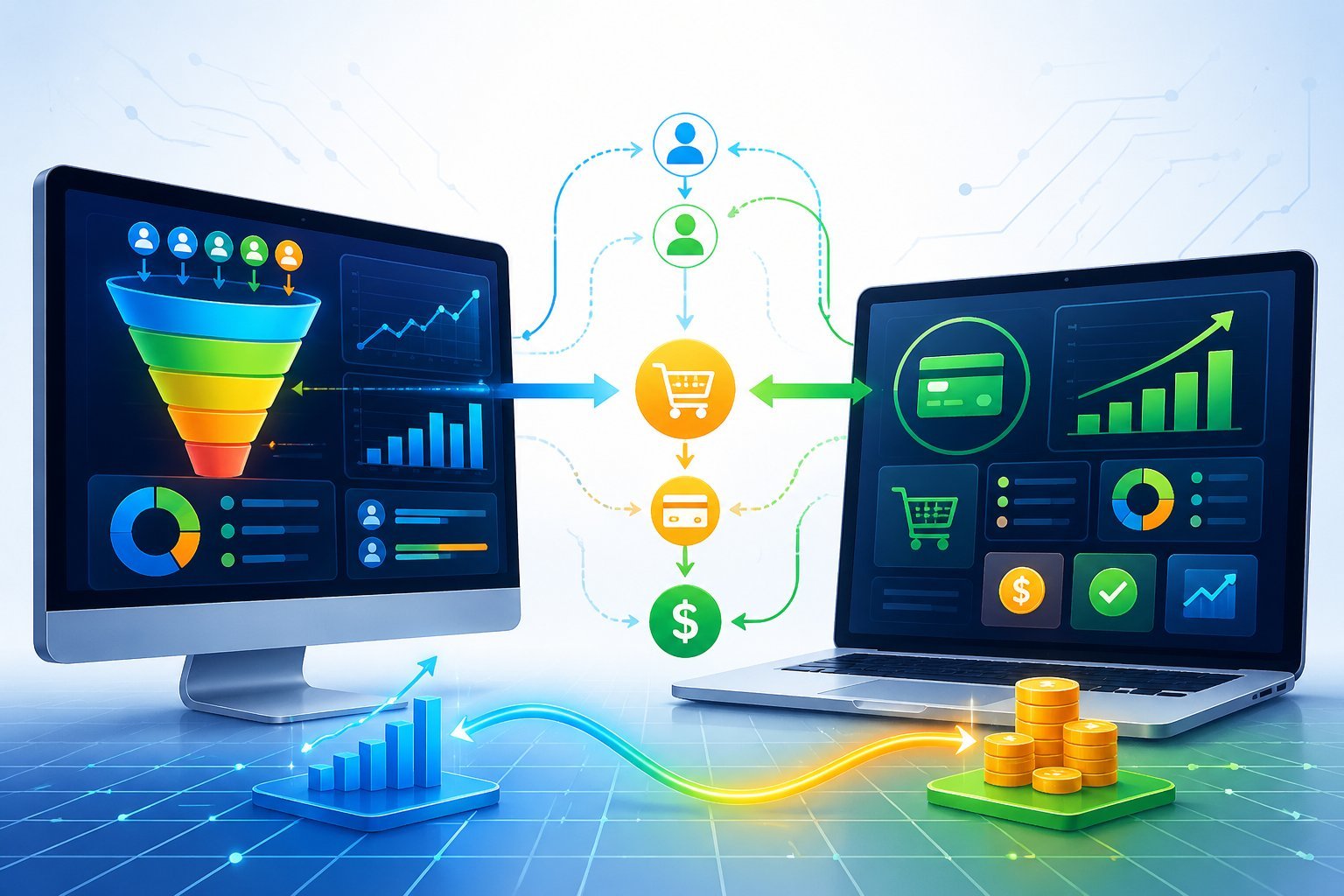
Both platforms let you sell products and collect payments, but they handle ecommerce features differently. ClickFunnels focuses on digital products and automated sales, while Pipeline Pro targets service-based businesses with simpler payment needs.
Shopping Cart and Payment Gateways
ClickFunnels 2.0 comes with a built-in shopping cart that connects directly to major payment gateways like Stripe and PayPal. You can accept credit cards, digital wallets, and other payment methods without leaving the platform.
The system handles taxes, shipping calculations, and order management automatically. Pipeline Pro also integrates with Stripe and PayPal for payment processing.
However, its shopping cart features are more basic and work better for service businesses than product sellers. You’ll need to set up payment gateways manually, which takes a bit more technical knowledge.
If you’re selling physical products or running a full ecommerce store, ClickFunnels gives you more tools to manage your inventory and orders.
Upsells, Downsells, and Order Bumps
ClickFunnels excels at creating upsells and downsells with its 1-click purchase feature. After a customer buys, you can offer them additional products without asking for payment details again.
You can also add order bumps on your checkout page to increase your average order value.
Pipeline Pro includes basic upsells and downsells functionality too. You can create additional offers in your funnel, but the process isn’t as smooth as ClickFunnels.
The order bump feature exists but has fewer customization options.
ClickFunnels offers:
- 1-click upsells and downsells
- Multiple order bump positions
- Advanced split testing for offers
Pipeline Pro provides:
- Basic upsell functionality
- Simple order bumps
- Limited testing options
Membership Sites and Online Course Delivery
ClickFunnels 2.0 includes a full course builder and membership site functionality built into the platform. You can create online courses, drip content over time, and manage student access all in one place.
Your members get their own login portal with organized lessons and materials.
Pipeline Pro doesn’t focus much on membership sites or course delivery. While you can restrict content and create member areas, it lacks dedicated course builder tools.
You’d need to integrate third-party platforms if you want advanced course features.
Affiliate Management and Programs
Both platforms let you run your own affiliate program to get others promoting your products. ClickFunnels makes setting up an affiliate program simple with built-in tracking, custom commission structures, and automated payouts.
Your affiliates get their own dashboard to track sales and earnings.
Pipeline Pro also includes affiliate management features. You can set commission rates and track affiliate sales, but the interface isn’t as detailed.
Some users find it harder to manage large affiliate networks compared to ClickFunnels.
User Experience and Ease of Use

Both platforms make it easy to build sales funnels, but they take different approaches. ClickFunnels focuses on speed with ready-made templates, while Pipeline Pro gives you more control over customization.
Interface Design and Drag-and-Drop Editors
ClickFunnels offers a drag-and-drop editor that lets you customize landing pages and sales funnels without any coding skills. The interface is designed for beginners, so you can navigate it easily even if you’ve never built a funnel before.
You’ll find pre-designed templates for different funnel types, which speeds up the setup process.
Pipeline Pro also includes a drag-and-drop builder with a clean dashboard that makes tracking funnel performance straightforward. The interface is intuitive and simple, though it provides more granular control over individual elements.
This means you might need a bit more time to learn all the features, but you get more flexibility in return.
Both platforms let you manage custom fields and create pages without technical expertise.
ClickFunnels emphasizes quick setup, while Pipeline Pro balances ease of use with advanced customization options for lead generation and lead scoring.
Onboarding, Support, and Training Resources
Pipeline Pro offers multiple support channels including phone, chat support, email, and a support ticket system. You can access live weekly trainings and orientation webinars to learn the platform.
The company promises to respond to support requests during business hours, though some users report slower responses for complex issues.
ClickFunnels provides customer support through chat and telephone, along with a knowledge base and training resources. The platform is known for its supportive community, which gives you access to helpful materials and user forums.
You also get a 14-day free trial to test the features before committing to a paid plan.
Pricing, Value, and Plan Details
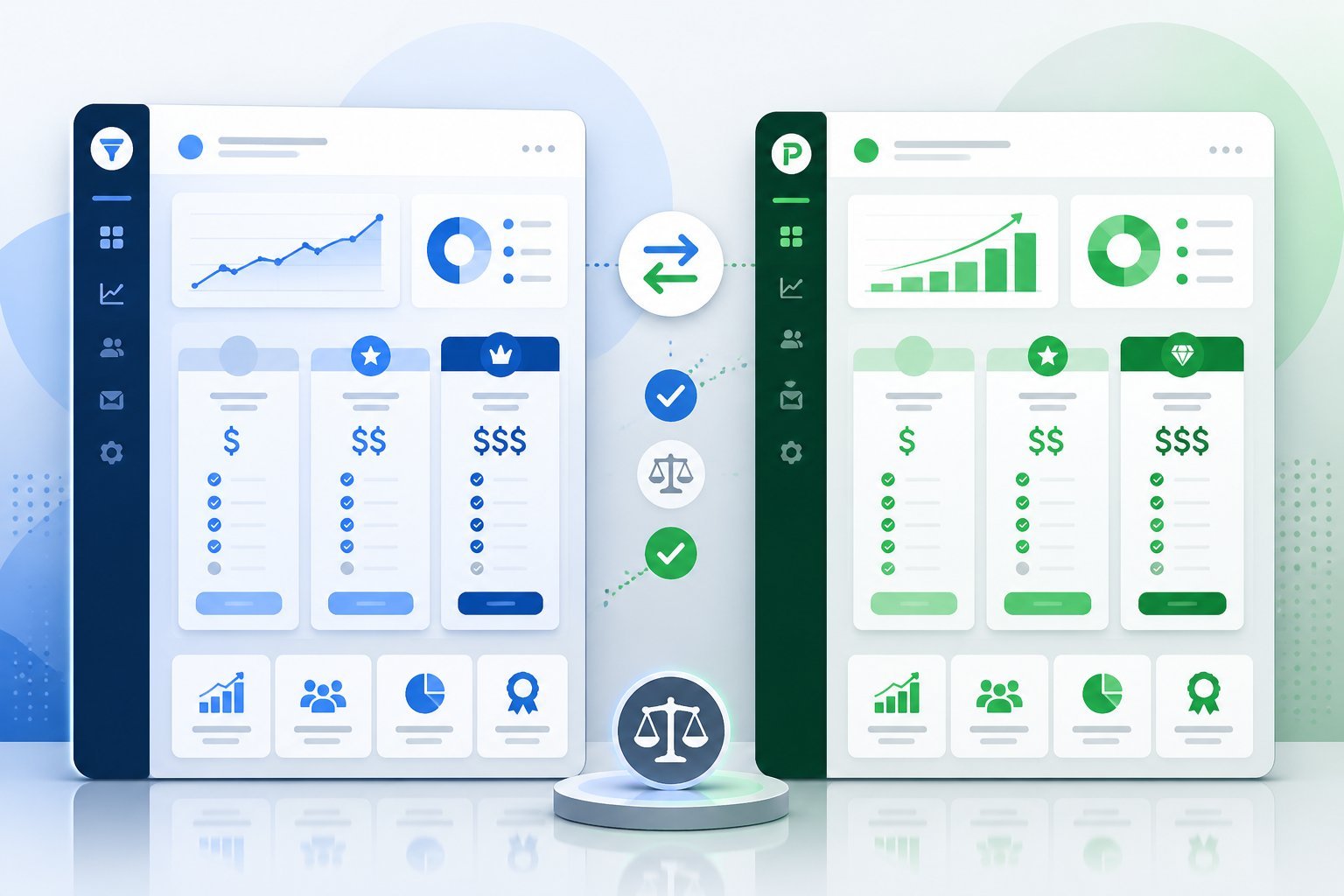
Pipeline Pro charges a one-time fee of $37 for lifetime access. ClickFunnels uses a monthly subscription model starting at $81 per month.
The pricing difference is significant and will impact your total costs over time.
Pricing Plans and Free Trials
ClickFunnels offers two subscription plans you can choose from. The Startup plan costs $81 per month when you pay annually, and it gives you 3 brand workspaces with access for up to 3 team members.
The Pro plan runs $248 per month with annual billing and provides 10 brand workspaces for up to 10 team members.
Both ClickFunnels plans include unlimited funnels, unlimited contacts, and unlimited courses. You’ll pay more if you choose monthly billing instead of annual billing.
ClickFunnels provides a 14-day free trial so you can test the platform before committing. You’ll need to enter your credit card information, but you won’t be charged until the trial period ends.
Pipeline Pro doesn’t offer a free trial. You pay the $37 fee upfront when you sign up.
However, the low price point makes it less risky to try compared to a monthly subscription.
Lifetime Deal vs Subscription Costs
Pipeline Pro’s lifetime deal costs $37 as a one-time payment. This gives you permanent access to all features including unlimited pipelines, unlimited contacts, and unlimited sales funnels.
You won’t face any recurring monthly or annual charges.
The company claims the regular price is $497, but the $37 price appears consistently available. This pricing structure means you’ll never lose access to your funnels and pages if you stop paying.
ClickFunnels uses subscription pricing that continues as long as you use the service. The Startup plan costs $972 per year with annual billing.
The Pro plan runs $2,976 annually. If you stop paying your subscription, you could lose access to everything you’ve built on the platform.
Refunds and Guarantees
Both platforms offer a 30-day money-back guarantee. This gives you protection if you’re unhappy with your purchase within the first month.
ClickFunnels combines this with their 14-day free trial, giving you extra time to evaluate the platform. You can test it for two weeks without any charges, then you still have the money-back guarantee after that.
Pipeline Pro’s 30-day money-back guarantee is your only safety net since there’s no free trial. You’ll pay the $37 upfront, but you can request a refund within 30 days if the platform doesn’t meet your needs.
Value for Money and Total Cost of Ownership
Pipeline Pro offers better value if you’re on a tight budget. You’ll spend just $37 total, and you get access to essential sales and marketing tools including a website builder, sales funnel builder, contact manager, and calendar system.
ClickFunnels costs more but provides additional features Pipeline Pro doesn’t have. You get cart checkout, course creation tools, email marketing automation, A/B testing, and integrations with other platforms.
For a single year, you’ll spend $972 minimum. Over three years, ClickFunnels Startup costs $2,916 compared to Pipeline Pro’s one-time $37 fee.
Pipeline Pro works well if you need basic sales pipeline management and funnel building. ClickFunnels makes sense when you need a comprehensive all-in-one platform with advanced marketing capabilities.