
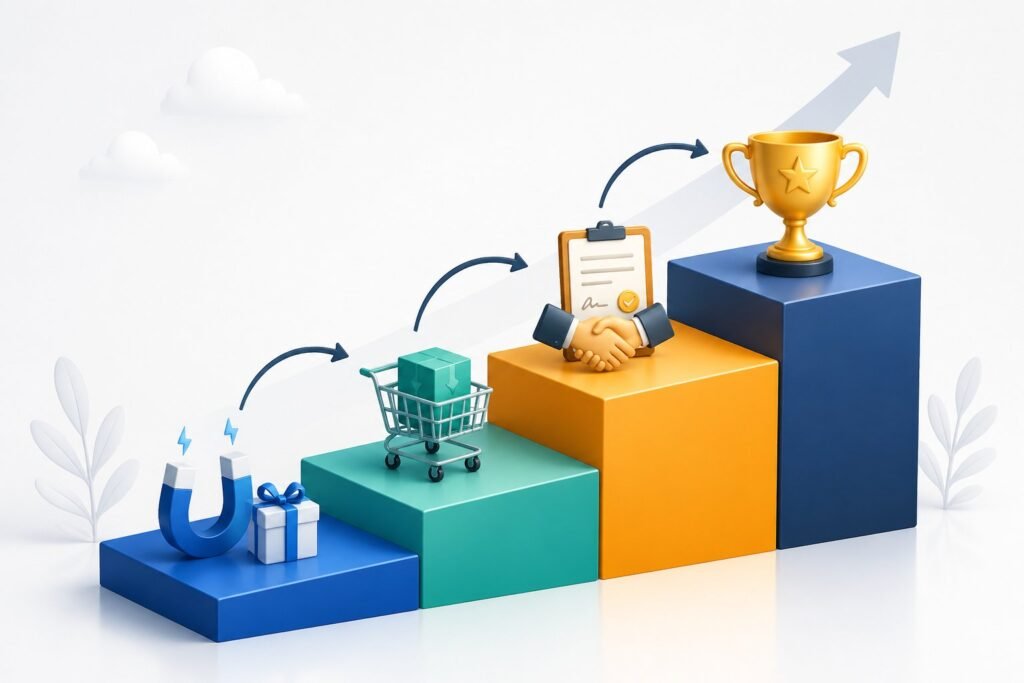
Building a successful online business means offering your customers the right products at the right prices. A value ladder is a system that organizes your business offers from low-cost entry points to high-value premium services, helping you serve customers at different stages while growing your revenue.
Russell Brunson and his company ClickFunnels have made this concept popular by showing how it can transform any business.
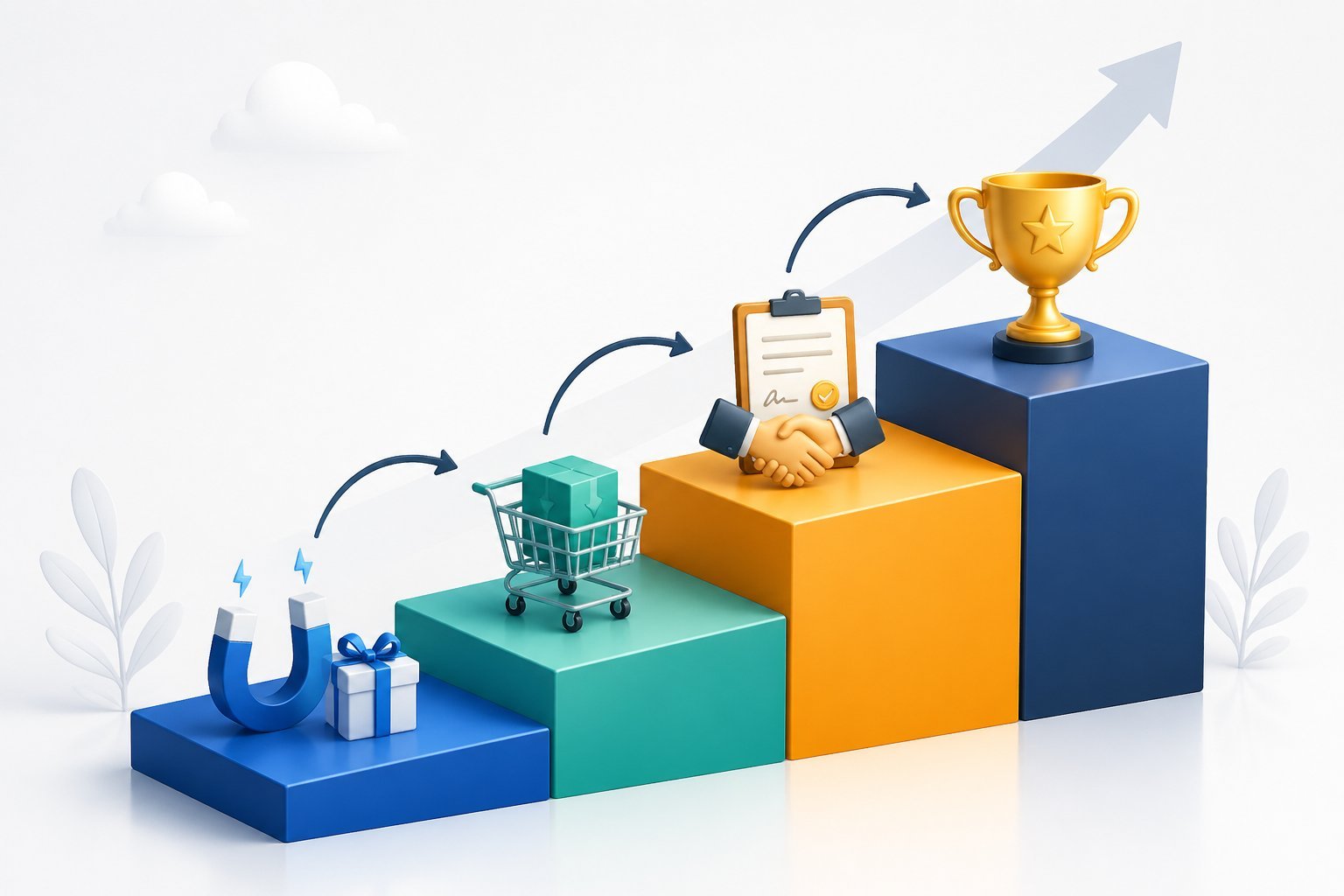
The value ladder works because not every customer is ready to buy your most expensive offer right away. Some people need to start small and build trust with your brand first.
Your job is to create a clear path that takes them from their first purchase to becoming your best customers over time. This guide will show you how ClickFunnels uses the value ladder approach and how you can build one for your own business.
You’ll learn about sales funnels, customer journeys, and practical ways to add upsells and downsells that increase what each customer spends with you.
Understanding the Value Ladder Concept

A value ladder organizes your products and services from lowest to highest price and value. It maps out how customers can move through your business offerings as they grow and invest more.
What Is a Value Ladder?
A value ladder is a structured outline of your business products and services arranged by increasing value and cost. Each step up the ladder offers more value to your customer at a higher price point.
Think of it as a staircase. Your least expensive offer sits at the bottom.
Your most premium product or service sits at the top. Each step between provides more value than the last.
Most value ladders include five stages: bait, front end, middle, back end, and peak. The bait is your free offer that draws people in.
The front end is where they become a paying customer with a low-cost purchase. The middle contains your main products or subscriptions.
The back end features more expensive, specialized offerings. The peak is your highest-value, most expensive service.
For example, a dentist might offer a free consultation (bait), teeth cleaning (front end), cavity filling (middle), braces (back end), and full cosmetic reconstruction (peak).
Macro vs. Micro Value Ladders
Your macro value ladder shows all the products and services your entire business offers. It’s the big-picture view of your customer journey from entry to your most premium offering.
A micro value ladder focuses on one specific product or offer within your business. This is also called a sales funnel.
It includes upsells, downsells, and order bumps for a single campaign or product launch. ClickFunnels uses both types.
Their macro value ladder might include their book, software subscription, training programs, and exclusive inner circle. A micro value ladder might just map out the funnel for their book launch with specific upsells.
What Is a Value Ladder Strategy?
A value ladder strategy helps you serve customers at different income levels and stages of their journey. You don’t need to build every step before launching your business.
The strategy works by letting customers enter at their comfort level and climb up as they get results. Someone might start with your free content, buy a $50 course, then invest in $2,000 coaching.
Start with one offer and scale to $1 million before adding another step. As you grow, you can add more steps to serve customers at different price points and commitment levels.
How ClickFunnels Implements the Value Ladder
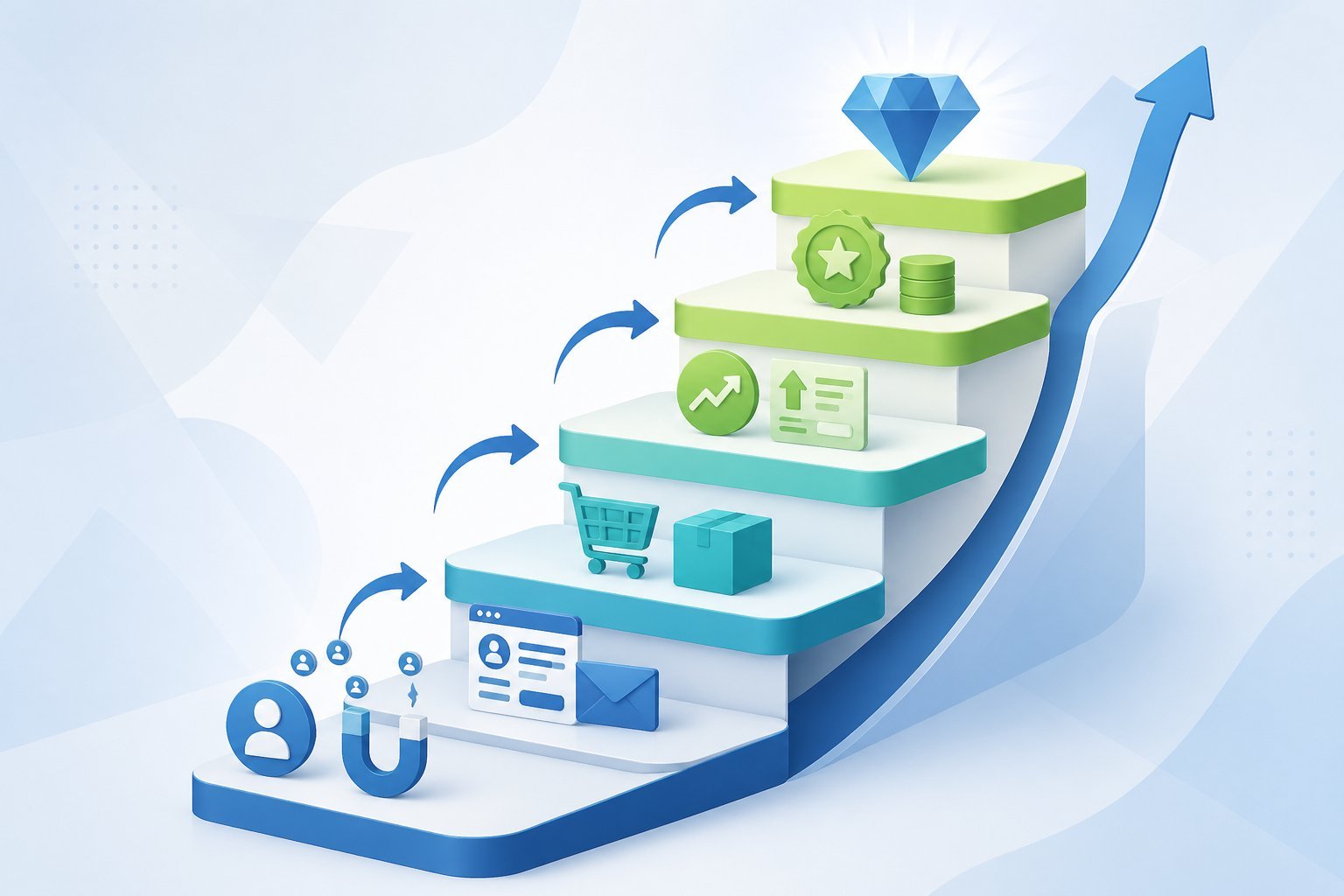
ClickFunnels uses its own value ladder to guide customers from free resources to premium coaching programs. The company practices what it teaches by offering multiple entry points and growth opportunities.
Role of ClickFunnels in the Sales Process
ClickFunnels serves as both a software tool and a business model example. The platform helps you build sales funnels while showing you how to structure your own value ladder.
At the entry level, ClickFunnels offers free resources like quizzes and guides. These attract new prospects to the ecosystem.
The next step is their subscription software, which creates recurring monthly revenue. This is where most customers start their journey with the company.
As you grow with the platform, you can move up to training programs. These cost more but provide additional value through education and support.
The higher tiers include coaching programs with direct access to experts. The peak of their value ladder is the Inner Circle.
This program limits membership to 100 people at a time. It offers one-on-one value and costs significantly more than other offerings.
Each level builds on the previous one and prepares you for the next step up.
Examples from DotCom Secrets and One Funnel Away Challenge
Russell Brunson’s book DotCom Secrets sits near the bottom of the ClickFunnels value ladder. You can get a free copy by paying shipping costs.
This book introduces core concepts like the value ladder itself and serves as your entry point. The book funnel includes upsells to other training materials.
It qualifies prospects and moves them toward the software subscription. Many customers who read DotCom Secrets become ClickFunnels users.
The One Funnel Away Challenge represents a mid-tier offering. This 30-day training program costs more than the book but less than premium coaching.
It teaches you to build your first sales funnel from scratch. The challenge includes daily training videos and workbooks to guide your progress.
Both products demonstrate how online business value ladders work in digital marketing. Each offer sells the next step up the ladder.
Designing a Value Ladder for Your Online Business
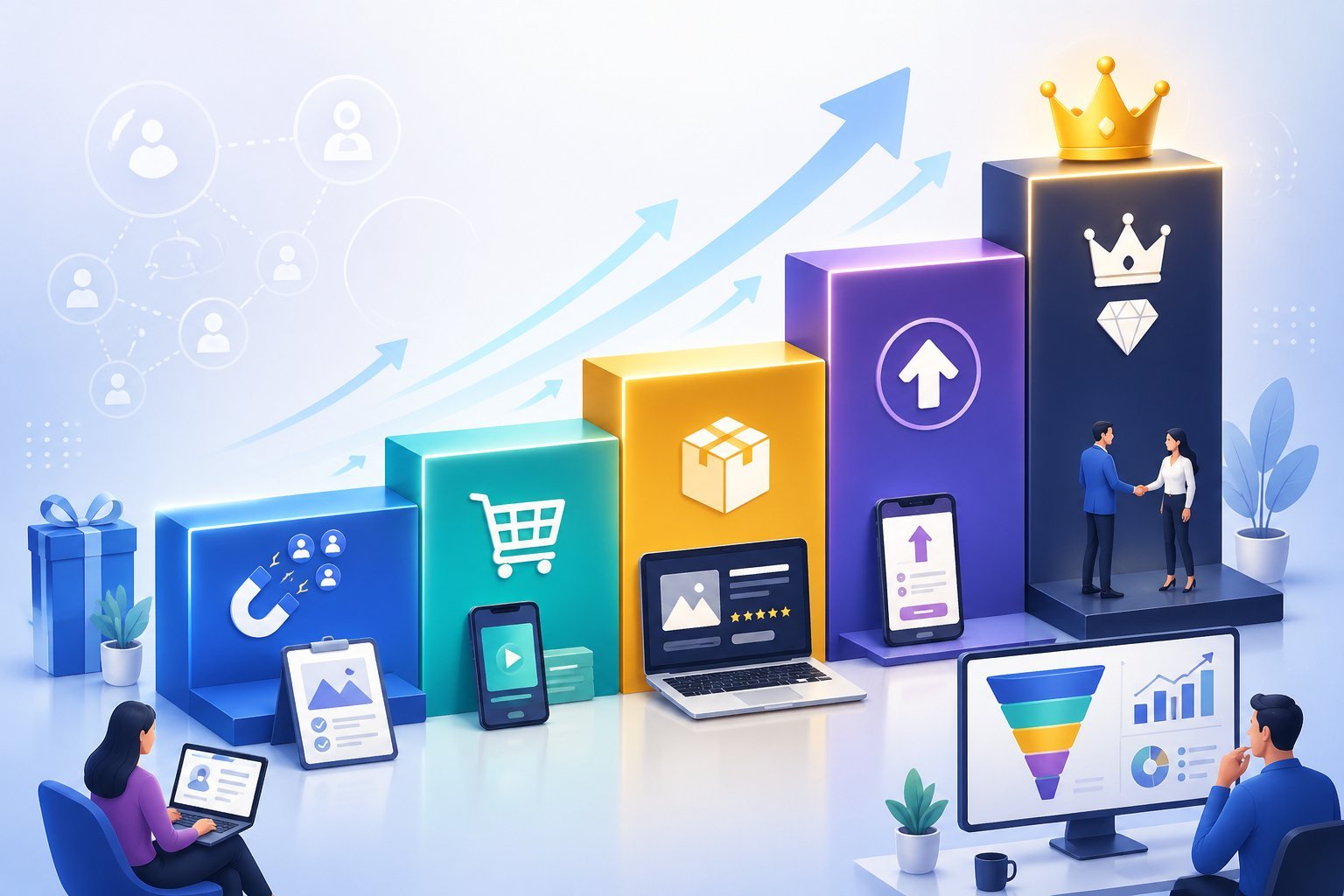
Creating a value ladder means mapping out products at different price points that guide customers from free offers to premium services. Each stage builds trust while increasing the value you deliver.
Identifying Offers for Each Stage
Start by listing what you can offer at each price level. Your bait should be a free resource like an ebook, checklist, or mini-course that solves a small problem for your audience.
This gets people into your world without risk. Next comes your front-end offer.
This is typically a low-ticket product priced between $7 and $97. Think of it as your entry-level paid product that proves you can deliver results.
Your middle tier holds your core product. This is what you really want people to buy.
It might be priced from $197 to $997 and could include things like a comprehensive course, membership site, or digital products bundle. The back-end features high-ticket products starting around $1,000 to $5,000.
This often includes group coaching programs where customers get more personalized attention and support from you or your team. Finally, your peak offer is your premium high-ticket offer.
This could be one-on-one coaching, done-for-you services, or mastermind programs priced at $5,000 and up. Only a small percentage of customers will reach this level, but they generate significant revenue.
Free, Low-Ticket, and High-Ticket Product Examples
Free offers work best when they’re specific and actionable. A digital marketing agency might offer a free traffic audit.
Course creators could provide a free 5-day email challenge or PDF guide that teaches one specific skill. Low-ticket items ($7-$97) include tripwire offers that convert free users into paying customers.
Examples include starter courses, templates, toolkits, or physical books where customers pay shipping. These products should deliver quick wins.
Mid-range products ($197-$997) represent your main business offering. A fitness coach might sell a 12-week transformation program.
An online educator could offer a complete certification course with modules, worksheets, and community access. High-ticket offerings ($1,000+) provide intensive support and results.
Group coaching programs typically run 6-12 weeks with weekly calls, while one-on-one coaching packages offer personalized strategy sessions. Done-with-you services where you implement solutions alongside clients also fit this tier.
Here’s a value ladder example for a social media consultant:
| Stage | Offer | Price |
|---|---|---|
| Bait | Instagram Growth Checklist | Free |
| Front-End | Instagram Reels Template Pack | $27 |
| Middle | Complete Social Media Course | $497 |
| Back-End | 90-Day Group Coaching Program | $2,997 |
| Peak | One-on-One Strategy & Management | $10,000 |
Sales Funnels and the Customer Journey
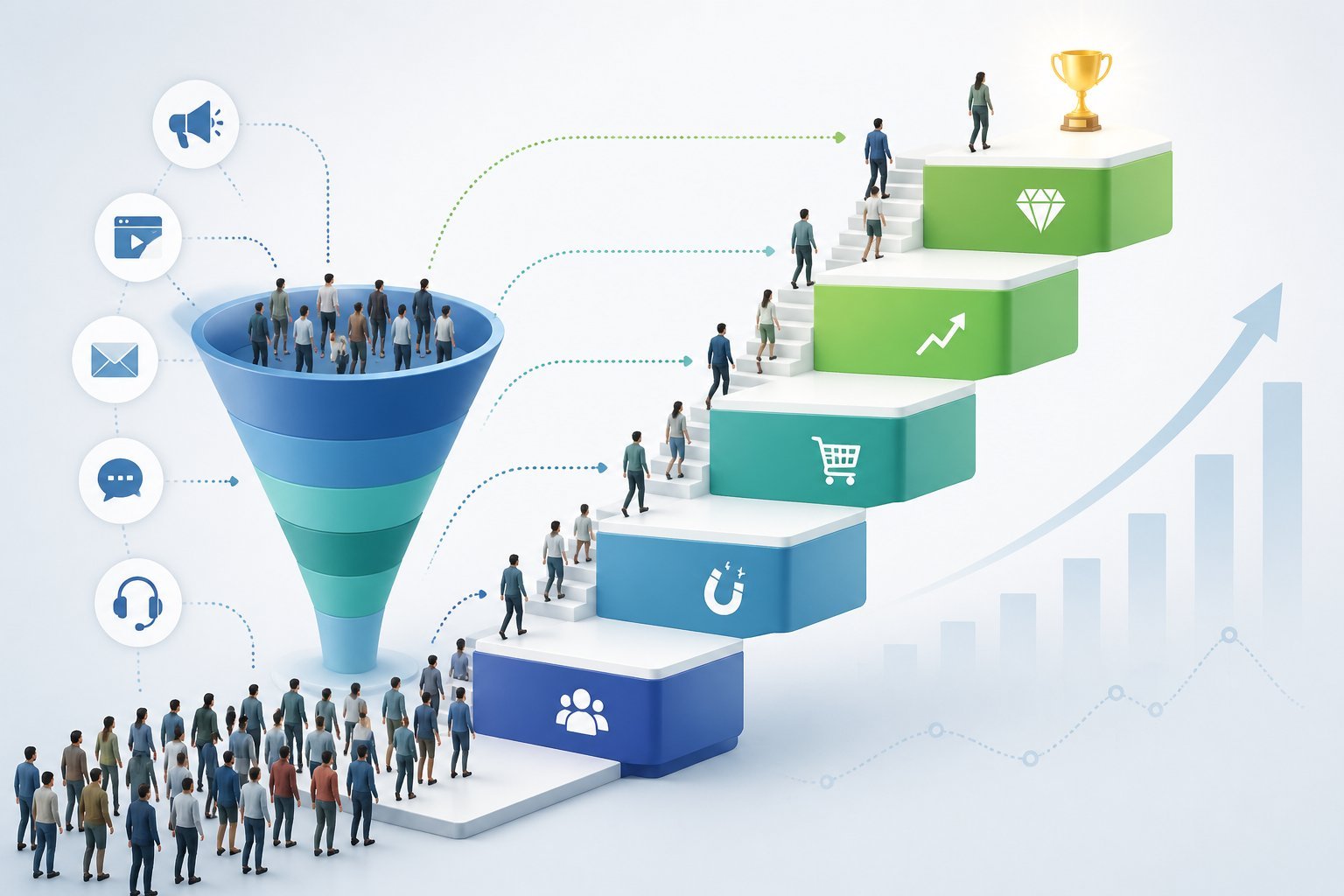
Sales funnels guide potential customers through specific steps that lead from first contact to final purchase. Different funnel types work at various stages of your value ladder to move people forward in their journey with your business.
From Lead Generation to Purchase
Lead generation starts when you attract cold traffic to your business. Cold traffic means people who don’t know you yet.
You need to warm them up before they’ll buy from you. Landing pages are where this process begins.
These pages offer something free or low-cost to get someone’s attention. You might give away a mini-course, a quiz, or a helpful guide.
The goal is to collect their email address so you can stay in touch. Email marketing takes over after someone joins your list.
You send helpful content that builds trust over time. Each email moves them closer to becoming a customer.
Some people will buy after one email. Others need weeks or months of emails before they’re ready.
The customer journey isn’t a straight line. People might visit your landing pages multiple times before they act.
They might read your emails for weeks before clicking a link. Your job is to keep showing up with value until they’re ready to move forward.
Funnels that Support the Value Ladder
Three main sales funnels work well at different points on your value ladder. Each one serves a specific purpose in moving customers up your ladder.
The tripwire funnel works best for front-end offers. You attract people with free content, then offer a low-priced product right away.
This funnel turns cold traffic into paying customers quickly. The low price makes it easy for people to say yes.
A webinar funnel fits in the middle of your value ladder. You teach something valuable on the webinar, then pitch a higher-priced course or program.
Webinars give you time to build trust and show your expertise. They work well for products between $100 and $2,000.
The application funnel belongs at the top of your ladder. People fill out a form before they can schedule a call with you.
This funnel filters out people who aren’t serious. It works perfectly for expensive coaching or consulting services.
Optimizing Your Value Ladder: Upsells, Downsells, and More
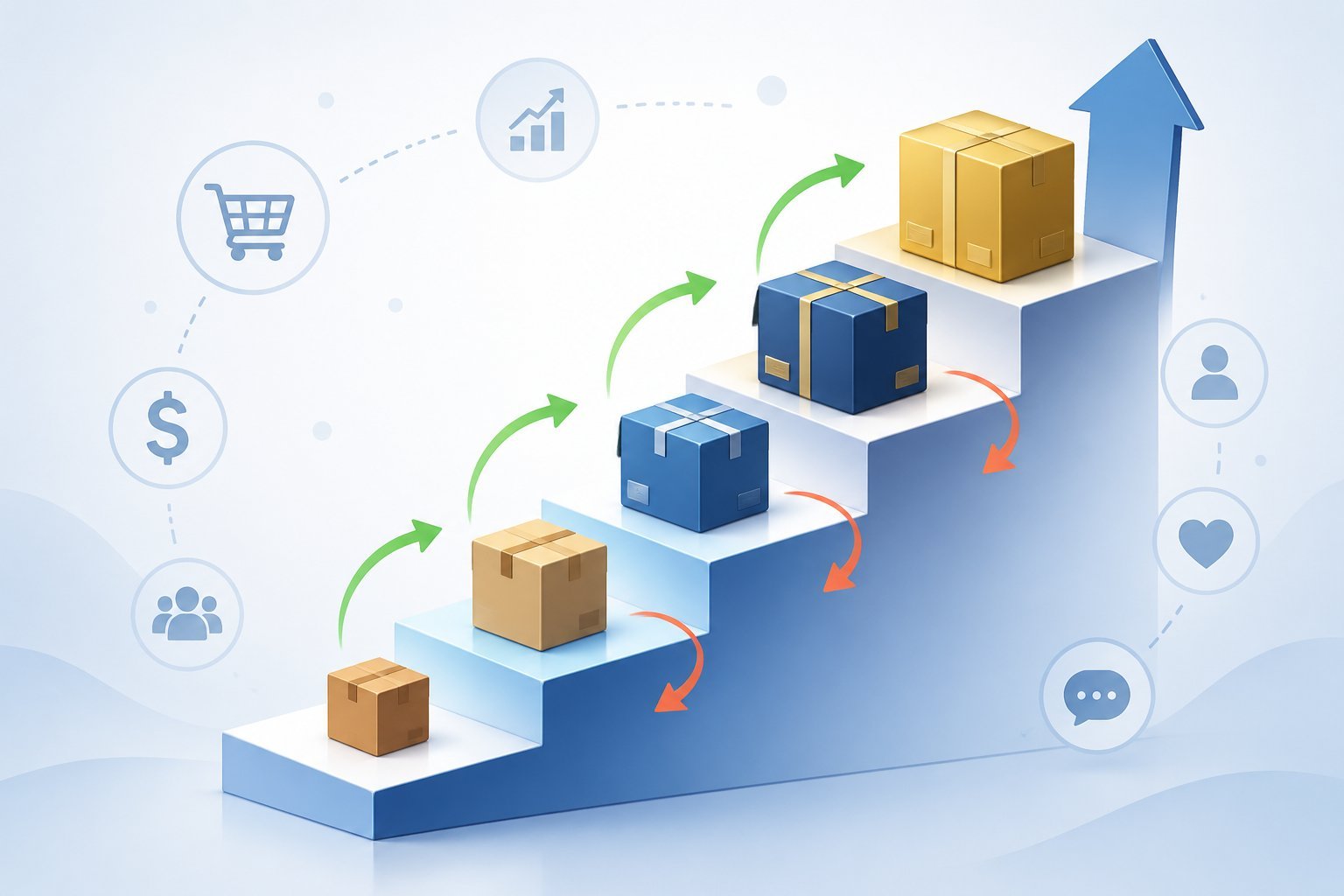
Once you have your value ladder set up, you can boost your revenue by adding strategic offers at key points in the customer journey. These additional offers help you serve customers better while increasing the money each person spends with your business.
How to Use Order Bumps, Upsells, and Downsells
An order bump appears on your checkout page as a small add-on that customers can click to add to their purchase. This works best when the order bump relates directly to what they’re already buying.
If someone buys a course on writing, you might offer a templates pack as an order bump for $20 more.
Upsells come right after someone makes a purchase. You show them a more expensive or advanced version of what they just bought.
The key is timing and relevance. If they bought a basic course for $50, offer them an advanced course for $150 with one-click purchasing.
Downsells appear when someone says no to an upsell. You give them a less expensive option instead.
Maybe they rejected your $150 advanced course, so you offer a $75 mid-level option. This gives them another chance to buy something that fits their budget.
All three of these tools work together in your sales funnel. They turn a single purchase into multiple purchases without annoying your customers.
Increasing Customer Lifetime Value
Customer lifetime value measures how much money one person spends with your business over time. Your value ladder directly impacts this number.
When you have multiple offers at different price points, customers can keep buying from you as they grow. Start by tracking what each customer buys and when they buy it.
This helps you understand their path through your value ladder. You can then create better offers that match where they are in their journey.
Use a lead magnet with a clear CTA to bring people into your value ladder at the bottom. Once they’re in, guide them up through your offers.
Each upsell and downsell gives them a chance to get more value from you. Your goal is to move customers from your free or low-cost offers up to your premium products and services.
This only works if each step truly helps them solve their problems.
Best Practices and Real-World Value Ladder Examples

Looking at successful value ladders helps you understand what works and what doesn’t. By studying proven examples and common mistakes, you can build a ladder that moves customers from free offers to premium services smoothly.
Inspiring Value Ladder Examples
ClickFunnels built one of the most successful value ladders in the online business world. They start with a free 14-day trial of their funnel-building software.
Next comes their monthly subscription at different price tiers. From there, customers can buy books like “DotCom Secrets” for just shipping costs.
These books introduce bigger offers through the funnel guide approach. The middle tier includes courses like the One Funnel Away Challenge.
This sits between $100-$500 and teaches funnel strategy. Their backend offer is Two Comma Club X coaching, which costs several thousand dollars.
At the peak sits the Inner Circle. This limited membership costs over $50,000 per year and includes direct access to Russell Brunson.
Only 100 people can join at once. A dentist’s value ladder looks different but follows the same pattern.
Free teeth cleaning brings people in. Basic checkups cost $150.
Whitening services run $500. Braces or implants sit at $3,000-$8,000.
Full smile makeovers top the ladder at $15,000+..
Mistakes to Avoid When Building Ladders
Don’t try to build your entire value ladder before launching. You only need one solid offer to start making money.
Focus on reaching $1 million in revenue with one step before adding more. Building too many offers spreads you too thin and slows your growth.
Another common error is making price jumps too big between steps. If you sell a $50 course and then jump to a $5,000 program, most customers won’t make that leap.
Add a middle offer around $500-$1,000 to bridge the gap.
Skipping the free bait step also hurts your ladder. Without a way to build trust first, cold traffic won’t buy from you.
Give real value upfront through free ebooks, quizzes, or webinars.
Don’t forget about your continuity program. Monthly subscriptions create steady income that funds the rest of your online business growth.